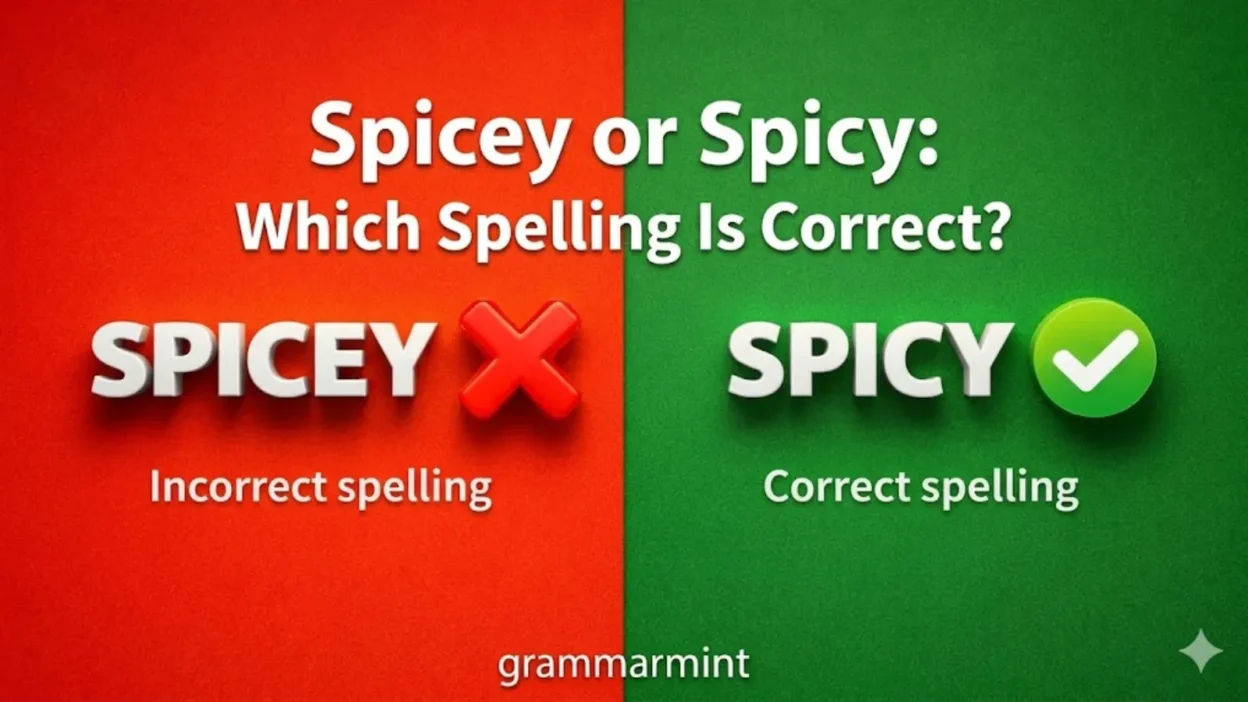
Many writers, students, chefs, and food lovers face the common question: Spicey or Spicy? Both spellings may be recognizable, but Spicy is the accepted standard in US English. Spicey is considered an uncommon or nonstandard variant.
Using the correct spelling is crucial for clarity and professionalism. Whether describing food, figurative “heat” in language, humor, lively stories, or dramatic situations, Spicy ensures readers immediately understand your meaning and take your writing seriously.
In this article, we’ll examine why people confuse the spellings, explain the differences, and provide clear examples, usage guidance, and dictionary-style details to help you confidently choose the correct form.
Quick Answer
The safe choice is always Spicy.
Use Spicy in almost all contexts:
- Food: Spicy salsa, spicy chicken wings, spicy ramen
- Figurative language: Spicy humor, spicy debate, spicy commentary
- Professional writing: Recipes, restaurant menus, schoolwork, articles
Avoid Spicey unless it is used intentionally in a proper name, brand, username, or quoted text.
Example:
- ✅ Correct: The curry is incredibly spicy.
- ❌ Avoid: The curry is incredibly spicey.
Even if readers understand Spicey, it looks like a typo and can distract from your writing.
Why People Confuse Them
The confusion arises because the root word is spice, ending with an e. Many assume the adjective form should keep the e: Spicey.
However, English spelling rules generally drop the final e before adding y:
- spice → spicy
- ice → icy
- juice → juicy
Other factors causing confusion include:
- Hearing vs seeing: Both Spicy and Spicey are pronounced SPY-see. Visual recognition, not pronunciation, causes uncertainty.
- Autocorrect suggestions: Some devices or software may suggest Spicey based on phonetics or past typing habits.
- Stylistic choices: Some brands or social media accounts intentionally use Spicey for memorability.
Despite these factors, Spicy is the widely accepted, standard form.
Key Differences At A Glance
| Context | Best Choice | Why |
|---|---|---|
| Food writing | Spicy | Standard spelling for hot or seasoned food |
| Restaurant menus | Spicy | Looks professional and polished |
| Recipes | Spicy | Readers expect this spelling |
| Schoolwork | Spicy | Standard US English form |
| Product labels | Spicy | Ensures clarity and credibility |
| Social media | Spicy | Most readers recognize it immediately |
| Brand names | Spicey | Acceptable if part of a specific name |
| Usernames | Spicey | Correct only if intentionally used |
Compact comparison:
- Spicey: Uncommon variant; usually avoided.
- Spicy: Standard, correct form for food, figurative language, and professional writing.
- Key difference: Reader acceptance and visual correctness, not meaning.
Meaning and Usage Difference
Food Context
Spicy refers to food with heat, bold seasoning, or strong flavor:
- ✅ The tacos are spicy, with just the right amount of chili.
- ✅ She enjoys a spicy curry with fresh peppers.
- ✅ That ramen is spicy, but balanced with flavor.
Spicey conveys the same meaning but appears nonstandard in modern US English:
- ❌ The salsa is spicey.
- ✅ The salsa is spicy.
Figurative Context
Spicy can describe situations, language, humor, or commentary that is bold, lively, or provocative:
- The debate became spicy quickly.
- The email contained a spicy remark.
- The movie had some spicy dialogue.
Spicey may appear in casual or online contexts but is rarely accepted in formal writing.
Pronunciation
Both Spicy and Spicey are pronounced SPY-see, so the confusion is visual, not phonetic.
Tone, Context, and Formality
Spicy fits all registers:
- Casual: Texts, social media captions, and friendly emails
- Formal: School assignments, professional articles, recipe books
- Creative: Story descriptions, humor, blogs, and marketing copy
Spicey is nonstandard. Using it outside intentional branding or stylized contexts can reduce credibility.
Examples:
- ✅ Spicy wings for dinner tonight
- ✅ That debate had a few spicy points
- ❌ Spicey wings for dinner tonight (appears incorrect)
Which One Should You Use?
Always default to Spicy.
Use Spicy for:
- Spicy chicken wings
- Spicy ramen
- Spicy salsa
- Spicy jokes
- Spicy stories
Use Spicey only when:
- It is a proper noun (restaurant, brand)
- A username or handle (e.g., @SpiceyChef)
- Quoting text that intentionally uses that spelling
Do not “correct” proper nouns or usernames.
When One Choice Sounds Wrong
Spicy is immediately recognized. Spicey appears unusual and may be perceived as a typo.
Examples:
- Awkward: The wings are spicey.
- Better: The wings are spicy.
- Awkward: This chili is too spicey for kids.
- Better: This chili is too spicy for kids.
Even if readers understand Spicey, it distracts from readability and professionalism.
Common Mistakes (and Quick Fixes)
| Mistake | Fix |
|---|---|
| Keeping the e: spice → spicey | Drop the e → spicy |
| Mixing spellings | Use Spicy consistently |
| Thinking Spicey is more fun or “extra hot” | Add descriptive words instead of changing spelling |
| Menu items: “Spicey sauce” | Correct to “Spicy sauce” |
| Figurative use: “Spicey story” | Correct to “Spicy story” |
Rule of thumb: When in doubt, choose Spicy.
Everyday Examples
Food:
- The salsa is spicy but not overwhelming.
- He enjoys spicy ramen after work.
- The chili has a spicy kick from fresh peppers.
- Spicy wings are her favorite dinner choice.
- The soup is spicy enough to bring out the flavor.
Figurative:
- The group chat got spicy fast.
- That story included a few spicy twists.
- The debate had some spicy arguments.
- The email contained a spicy remark that made everyone laugh.
- The podcast segment became spicy during the discussion.
Avoid these:
- The salsa is spicey.
- That debate was spicey.
- She loves spicey ramen.
Dictionary-Style Word Details
Verb
- Spicey: Not used as a verb in standard US English.
- Spicy: Not a verb. Use spice as the verb instead.
Example:
- ❌ Please spicy the soup.
- ✅ Please spice the soup lightly.
Noun
- Spicey: Not used as a noun except in names or brands.
- Spicy: Not a noun. Use spice or spiciness.
Example:
- The spice level is high.
- The spiciness builds gradually.
Synonyms
- Spicy: hot, peppery, piquant, zesty, seasoned, bold, lively
- Spicey: no separate synonyms; same as spicy
Opposites:
- mild, bland, plain, unseasoned
Example Sentences
- Spicy: The chicken wings are spicy and delicious.
- Spicey: Rarely used; appears as a nonstandard variant.
- Spicy figurative: That conversation became spicy fast.
Word History
- Spicey: Rare variant spelling; often seen in stylized or online contexts.
- Spicy: Derived from spice + y, dropping the e; standard US spelling.
Phrases Containing
- Spicy food, spicy sauce, spicy chicken, spicy ramen, spicy salsa, spicy snack, spicy language, spicy joke, spicy debate, spicy details
- Spicey: Only acceptable in proper names or stylistic uses.
FAQs
1. Is “Spicey” ever correct?
“Spicey” is considered a rare variant spelling of “Spicy.” It is generally not correct in standard US English writing. The only time it is acceptable is in proper names, brand names, usernames, or quoted text that intentionally uses that spelling.
Example:
- Correct: The wings are spicy.
- Acceptable (brand): The food truck is called “Spicey Bites.”
2. Why do people write “Spicey” instead of “Spicy”?
The confusion comes from the base word spice, which ends with e. Many assume the adjective should keep the e and become “Spicey.” English spelling rules, however, require dropping the final e before adding y: spice → spicy.
3. Can “Spicy” be used for non-food situations?
Yes. Spicy can describe figurative heat, liveliness, or boldness in situations, language, humor, or writing.
Examples:
- That group chat got spicy quickly.
- The article contained a few spicy comments.
- The debate was spicy with unexpected arguments.
4. How do you pronounce “Spicy”?
Both Spicy and the variant Spicey are pronounced the same: SPY-see. The difference is visual, not phonetic. Using the correct spelling ensures your writing looks polished.
5. Is “Spicy” used as a noun or verb?
No. Spicy is normally an adjective. If you need a verb, use spice. If you need a noun, use spice or spiciness.
Examples:
- Verb: Please spice the soup lightly.
- Noun: The spiciness of the sauce is perfect.
6. What are common mistakes with “Spicy”?
- Writing Spicey instead of Spicy in standard text
- Mixing both spellings in one document
- Assuming “Spicey” means “extra hot” (it doesn’t)
Fix: Always use Spicy consistently unless it’s part of a proper name or brand.
7. Are there synonyms or opposites for “Spicy”?
Synonyms: hot, peppery, piquant, zesty, seasoned, bold, lively
Opposites: mild, bland, plain, unseasoned
These apply to both food and figurative uses.
Conclusion
In modern US English, Spicy is the correct choice for nearly all contexts. Spicey exists as a rare variant, acceptable only in proper nouns, brands, usernames, or quoted text.
Key takeaways:
- Drop the e when forming adjectives: spice → spicy
- Use Spicy for food, figurative expression, humor, lively writing, and professional contexts
- Use Spicey only in intentional stylized cases
Using Spicy ensures clarity, professionalism, and reader confidence in your writing.