Choosing Mrs or Ms can feel tricky when you want to sound polite, modern, and sure. These small titles show respect, but they also touch on marriage, identity, etiquette, emails, invitations, letters, and everyday introductions.
The good news is simple: you don’t need to guess a woman’s personal life. In most modern U.S. writing, “Ms.” is the safest choice when you don’t know someone’s preferred title. Still, “Mrs.” is correct when a married woman uses it or clearly prefers it. This guide explains the difference with clear examples you can use right away.
Quick Answer
Mrs or Ms depends on preference and context. Use Ms. when marital status is unknown or irrelevant, and use Mrs. when you know a married woman prefers that title.
TL;DR
• Use Ms. when unsure.
• Use Mrs. for known preference.
• Don’t guess marital status.
• Miss usually sounds younger.
• Ask politely when needed.
• Match the person’s own wording.
Mrs Or Ms
Mrs or Ms comes down to respect, not guessing. A courtesy title should help your message feel thoughtful, not nosy or outdated.
Because marital status is often private, personal preference matters most. Therefore, when you’re unsure, Ms. is usually the cleanest choice.
• Use Ms. when you don’t know.
• Use Mrs. when she prefers it.
• Avoid guessing from age alone.
• Follow her email signature exactly.
• Match invitation wording she provided.
• Don’t ask about marriage casually.
• Choose Ms. for workplace messages.
• Choose Mrs. for traditional forms.
• Use Miss mainly for girls.
• Ask politely when context matters.
• Keep the tone warm.
• Stay consistent across the message.
Mrs Vs Ms
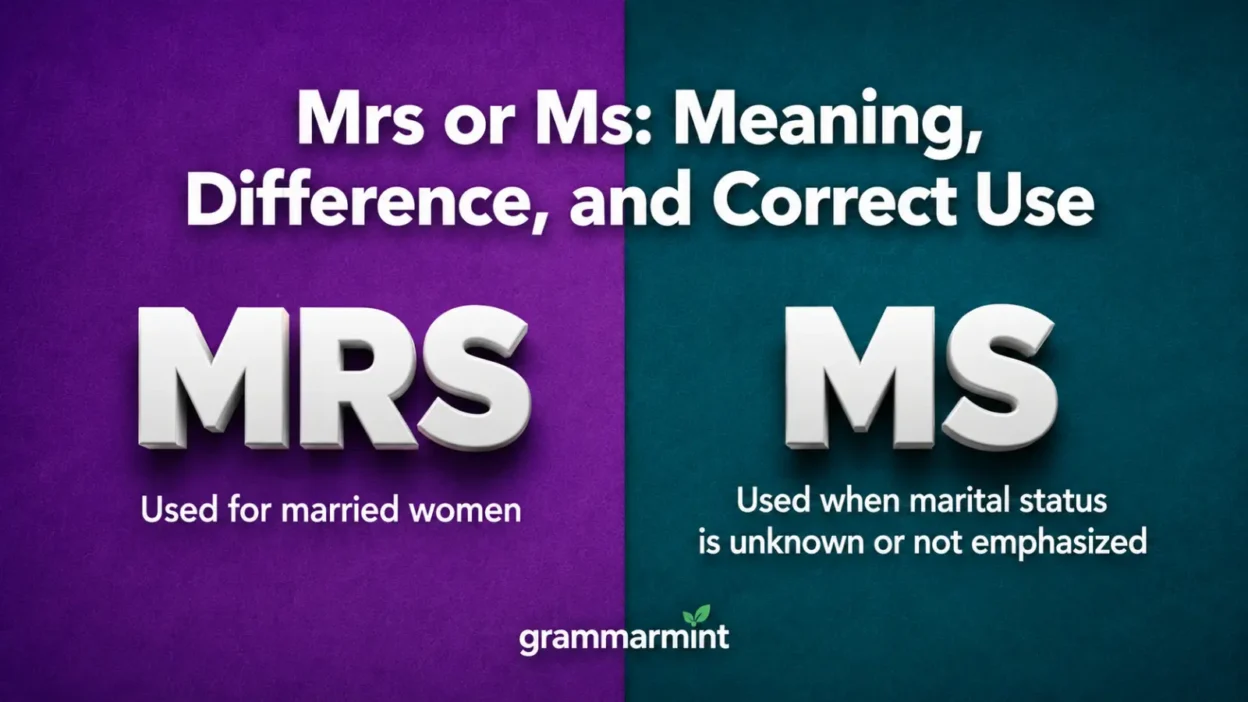
Mrs. and Ms. are both respectful, but they don’t say the same thing. Mrs. is a formal address linked with a married woman, while Ms. is a neutral option.
So, the easiest rule is this: Mrs. points to marriage, and Ms. avoids that detail. However, preference can override the general rule.
• Mrs. usually means married.
• Ms. does not reveal marriage.
• Mrs. sounds more traditional.
• Ms. sounds more modern.
• Mrs. may suit invitations.
• Ms. suits business writing.
• Mrs. can feel personal.
• Ms. keeps things neutral.
• Mrs. works when requested.
• Ms. works when unsure.
• Mrs. may imply spouse status.
• Ms. avoids that assumption.
Ms Vs Mrs
Ms vs Mrs often appears backward because modern writing starts with Ms. first. In a professional setting, that order makes sense.
For business writing, Ms. is usually the respectful choice unless someone chose another title. As a result, it helps you sound polished without overstepping.
• Use Ms. for first contact.
• Use Mrs. after confirmation.
• Prefer Ms. in job applications.
• Prefer Ms. in client emails.
• Keep Mrs. for stated preference.
• Use Ms. in public introductions.
• Avoid Mrs. for unknown recipients.
• Let signatures guide replies.
• Let forms guide records.
• Keep greetings simple.
• Don’t correct someone’s choice.
• Update saved contact details.
Miss Ms Mrs
Miss, Ms., and Mrs. form the main set of feminine titles. Miss usually points to a young or unmarried person, while Mrs. points to marriage.
Meanwhile, Ms. stays neutral and often feels best for adult women. Therefore, it works well when age or relationship status is not your focus.
• Miss often sounds youthful.
• Ms. works for adults.
• Mrs. signals married status.
• Miss has no period.
• Ms. uses a period.
• Mrs. uses a period.
• Miss may feel old-fashioned.
• Ms. feels more flexible.
• Mrs. feels more traditional.
• Miss fits school settings.
• Ms. fits office settings.
• Mrs. fits known preference.
Ms Meaning
Ms. is a neutral title used before a woman’s last name or full name. It can refer to any adult woman without naming her marital status.
Because of that, Ms. is often the safest default. It keeps the focus on the person, not her private life.
• Ms. is pronounced mizz.
• Ms. can fit married women.
• Ms. can fit unmarried women.
• Ms. can fit divorced women.
• Ms. can fit widowed women.
• Ms. does not mean Miss.
• Ms. pairs with last names.
• Ms. fits formal greetings.
• Ms. works in records.
• Ms. avoids personal assumptions.
• Ms. mirrors Mr. closely.
• Ms. respects privacy well.
Mrs Meaning
Mrs. is a title for a married woman or a woman who chooses that title. It is pronounced missus and usually appears before a family name or full name.
However, not every married woman uses Mrs. Some prefer Ms. in work, public writing, or everyday life.
• Mrs. is traditionally marital.
• Mrs. goes before surnames.
• Mrs. can use full names.
• Mrs. may reflect preference.
• Mrs. can feel formal.
• Mrs. often appears on invitations.
• Mrs. may appear on forms.
• Mrs. should not be guessed.
• Mrs. suits traditional wording.
• Mrs. can be deeply personal.
• Mrs. needs a period.
• Mrs. is not Miss.
Miss Vs Ms
Miss vs Ms is mostly about age, tone, and privacy. Miss often refers to an unmarried woman, but it can sound young.
For an adult woman, Ms. is usually safer and more current. Still, use Miss when someone clearly chooses it.
• Miss often fits girls.
• Ms. fits adult women.
• Miss can sound youthful.
• Ms. sounds neutral.
• Miss may feel personal.
• Ms. keeps privacy intact.
• Miss has no period.
• Ms. has a period.
• Miss can imply unmarried.
• Ms. avoids that implication.
• Miss suits student contexts.
• Ms. suits formal messages.
Mrs Or Ms For Married Woman
For a married woman, both Mrs. and Ms. can be correct. The best answer depends on her preferred title, not just her last name.
Therefore, don’t assume marriage automatically means Mrs. Many married women use Ms. professionally or personally.
• Use Mrs. if she uses it.
• Use Ms. if unsure.
• Don’t assume name changes.
• Check her signature first.
• Check the invitation list.
• Respect hyphenated surnames.
• Respect retained birth names.
• Use professional titles first.
• Avoid asking invasive questions.
• Update records after confirmation.
• Keep couples’ names accurate.
• Let her preference lead.
Ms Or Mrs For Email
In a business email, Ms. is usually the safest opening when you know the last name. “Dear Ms. Taylor” is a clean formal salutation.
However, if she signs as Mrs. Taylor, reply that way. Matching her own style shows attention and respect.
• Start with Dear Ms. Smith.
• Use Mrs. only when known.
• Prefer Dr. over Ms.
• Prefer Professor when applicable.
• Avoid first names if formal.
• Use Hello for warmer tone.
• Skip titles when invited.
• Check the email signature.
• Review previous messages.
• Keep the greeting short.
• Don’t use Miss casually.
• Mirror her chosen wording.
Ms Or Mrs On Wedding Invitations
For wedding invitations, title choices can feel more formal than email. The outer envelope and guest list should reflect known preferences.
When you don’t know a guest’s preference, Ms. is usually a safe choice. Still, Mrs. can be right for a guest who uses it.
• Use Ms. for unknown status.
• Use Mrs. for known preference.
• Use Miss for young guests.
• Confirm family naming styles.
• Avoid assuming shared surnames.
• Spell full names carefully.
• Keep envelope wording consistent.
• Review RSVP card titles.
• Ask close relatives discreetly.
• Use professional titles first.
• Match formal invitation tone.
• Keep guest comfort central.
Mrs Or Ms After Marriage
After marriage, Mrs or Ms is a personal choice. A newly married woman may use Mrs., Ms., Dr., or no title.
A name change doesn’t automatically decide the title either. So, the right choice is the one she uses for herself.
• She may keep Ms.
• She may choose Mrs.
• She may use both.
• Work records may differ.
• Social cards may differ.
• Legal names may differ.
• Don’t assume her surname.
• Don’t assume her title.
• Ask with simple wording.
• Update contact lists carefully.
• Follow announcements exactly.
• Respect changes over time.
Ms Or Mrs If Divorced
For a divorced woman, Ms. is often the safest choice unless you know otherwise. The same care applies to a widowed woman or someone separated.
A respectful address avoids making her explain personal history. Therefore, let her own wording guide you.
• Use Ms. when unsure.
• Use Mrs. if preferred.
• Don’t use Miss by default.
• Avoid mentioning divorce.
• Avoid mentioning widowhood.
• Check cards or signatures.
• Ask only when necessary.
• Keep forms private.
• Don’t correct her title.
• Use her current surname.
• Respect emotional context.
• Choose warmth over tradition.
Mrs Or Ms Pronunciation
Mrs. and Ms. look close, but they sound different. Ms. is pronounced mizz, while Mrs. is pronounced missus in American English.
In U.S. writing, both Ms. and Mrs. usually take periods. Miss normally does not.
• Ms. rhymes with quiz.
• Mrs. sounds like missus.
• Miss sounds like kiss.
• Say Ms. clearly aloud.
• Don’t say M-S.
• Write Ms. with period.
• Write Mrs. with period.
• Write Mr. with period.
• Usually write Miss plain.
• Use U.S. punctuation here.
• Keep titles before names.
• Avoid spelling pronunciations formally.
Mrs Or Ms In A Letter
In a formal letter, the safest greeting is often Ms. plus the last name. This works when the recipient is an adult woman and no stronger title appears.
However, the salutation should change when you know her preference or professional title. For example, Dr. or Judge should come first.
• Use Dear Ms. Johnson.
• Use Dear Mrs. Lee.
• Use Dr. when earned.
• Use Professor when relevant.
• Avoid Dear Madam today.
• Avoid guessing marriage status.
• Check the return address.
• Check the sender’s records.
• Keep envelopes consistent.
• Use full names when unsure.
• Skip title if invited.
• Proofread before mailing.
Ms Mrs Miss Mx
Ms., Mrs., Miss, and Mx. are all forms of address. Mx. is a gender-neutral title for people who use it.
Because title choice can connect with identity, the kindest rule is simple: use the title someone gives you. If you don’t know, ask gently.
• Use Mx. when requested.
• Pronounce Mx. like mix.
• Don’t replace someone’s title.
• Respect nonbinary recipients.
• Respect title-free preferences.
• Let forms offer options.
• Avoid forcing marital labels.
• Avoid forcing gender labels.
• Match official records carefully.
• Keep greetings inclusive.
• Ask privately when needed.
• Use names when safer.
Mr Mrs Ms Miss
Mr. is used for men and does not show marriage status. Other personal titles can carry more context, so formal writing needs extra care.
That’s why Ms. became useful: it gives women a title closer to Mr. in privacy. Still, every title should follow the person’s preference.
• Mr. fits adult men.
• Mrs. fits chosen married use.
• Ms. fits neutral use.
• Miss fits younger use.
• Mx. fits requested neutral use.
• Dr. overrides social titles.
• Judge overrides social titles.
• Professor overrides social titles.
• Titles precede surnames.
• Initials need careful spacing.
• Records should stay current.
• Preference beats old habits.
FAQs
What Is The Difference Between Mrs. And Ms.?
Mrs. usually refers to a married woman or someone who chooses that title. Ms. does not show whether a woman is married, unmarried, divorced, or widowed.
Should I Use Mrs. Or Ms. If I Don’t Know?
Use Ms. if you don’t know someone’s preference. It avoids guessing and works well in emails, letters, forms, and professional messages.
Is Ms. For Married Or Unmarried Women?
Ms. can be used for both married and unmarried women. Its main purpose is to avoid making marital status part of the address.
Is Mrs. Only For A Married Woman?
Mrs. is traditionally used for a married woman. However, some divorced or widowed women may still choose Mrs., so preference matters most.
What Does Ms. Stand For?
Ms. is a title, not a short form of Miss. It is used before a woman’s name without saying whether she is married.
How Do You Pronounce Ms.?
Ms. is pronounced “mizz,” like “quiz.” Mrs. is pronounced “missus,” and Miss sounds like “kiss.”
Do You Use Ms. Or Mrs. In An Email?
Use Ms. in an email unless you know the person prefers Mrs. If she uses Mrs. in her signature, reply with the same title.
Conclusion
Mrs or Ms is simple once you stop guessing and start following preference. Use Ms. when unsure, use Mrs. when she chooses it, and keep your wording respectful.