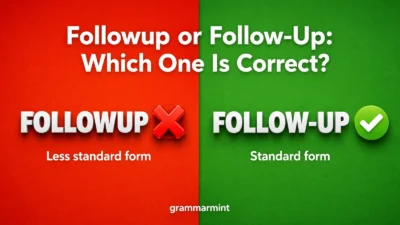
Vocabulary6 Min Read Madison HarperonJune 12, 2026 Followup or Follow-Up: Which One Is Correct? If you are choosing between Followup or Follow-Up, use Follow-Up in most standard US writing when you need a noun or adjective. The one-word…

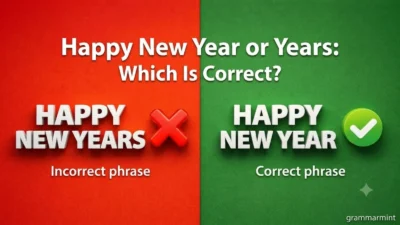
Vocabulary6 Min Read Madison HarperonJune 10, 2026 Happy New Year or Years: Which Is Correct? The correct holiday greeting is Happy New Year. Use years only when you mean more than one year, as in “three years,” “many years,” or “the…
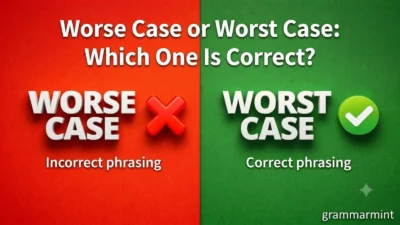
Vocabulary6 Min Read Emily CarteronJune 9, 2026 Worse Case or Worst Case: Which One Is Correct? Worst case is the correct choice when you mean the most negative possible situation. Most of the time, worse case is a mistake. The common…
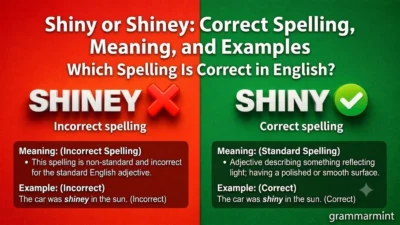
Vocabulary7 Min Read Madison HarperonJune 6, 2026 Shiny or Shiney: Correct Spelling, Meaning, and Examples Anyone checking shiney or shiny wants a fast, clear answer they can trust. The correct word is “shiny,” an adjective used for something…
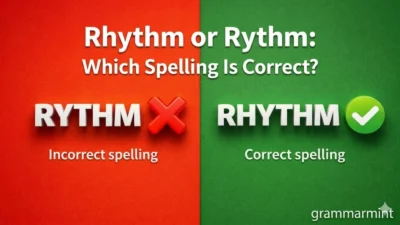
Vocabulary9 Min Read Emily CarteronJune 5, 2026 Rhythm or Rythm: Which Spelling Is Correct? The correct spelling is rhythm. Rythm is not the standard spelling in American English. It is a common misspelling of rhythm, usually caused…
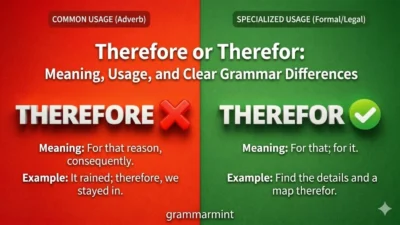
Vocabulary5 Min Read Madison HarperonJune 3, 2026 Therefore or Therefor: Meaning, Usage, and Clear Grammar Differences “Therefore” and “therefor” are two words that look almost identical but behave very differently in English. Most people assume the extra “e”…
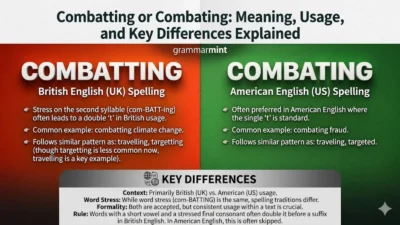
Vocabulary5 Min Read Madison HarperonJune 3, 2026 Combatting or Combating: Meaning, Usage, and Key Differences Explained At first glance, combatting and combating look like two equally valid spellings of the same word. In many ways, they are. Both come from the…
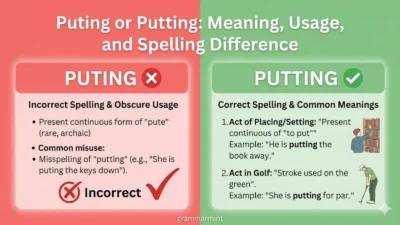
Vocabulary6 Min Read Emily CarteronJune 2, 2026 Puting or Putting: Meaning, Usage, and Spelling Difference The confusion between “puting” and “putting” is very common for English learners and even native speakers in casual writing. At first glance,…
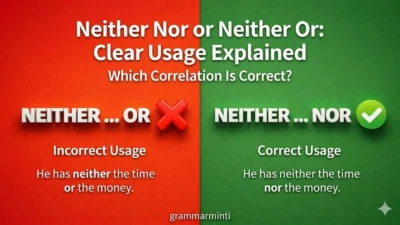
Vocabulary5 Min Read Emily CarteronJune 1, 2026 Neither Nor or Neither Or: Clear Usage Explained English has many small grammar pairs that look simple but confuse a lot of people in real writing and speaking. One of the most common is…
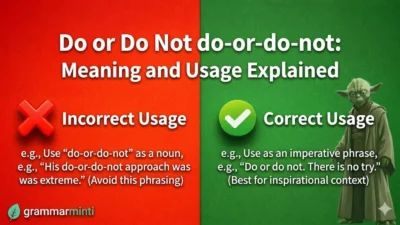
Vocabulary6 Min Read Emily CarteronMay 31, 2026 Do or Do Not do-or-do-not: Meaning and Usage Explained The difference between Do or Do Not do-or-do-not looks small, but it changes the meaning of a sentence in a big way. Both forms come from the…