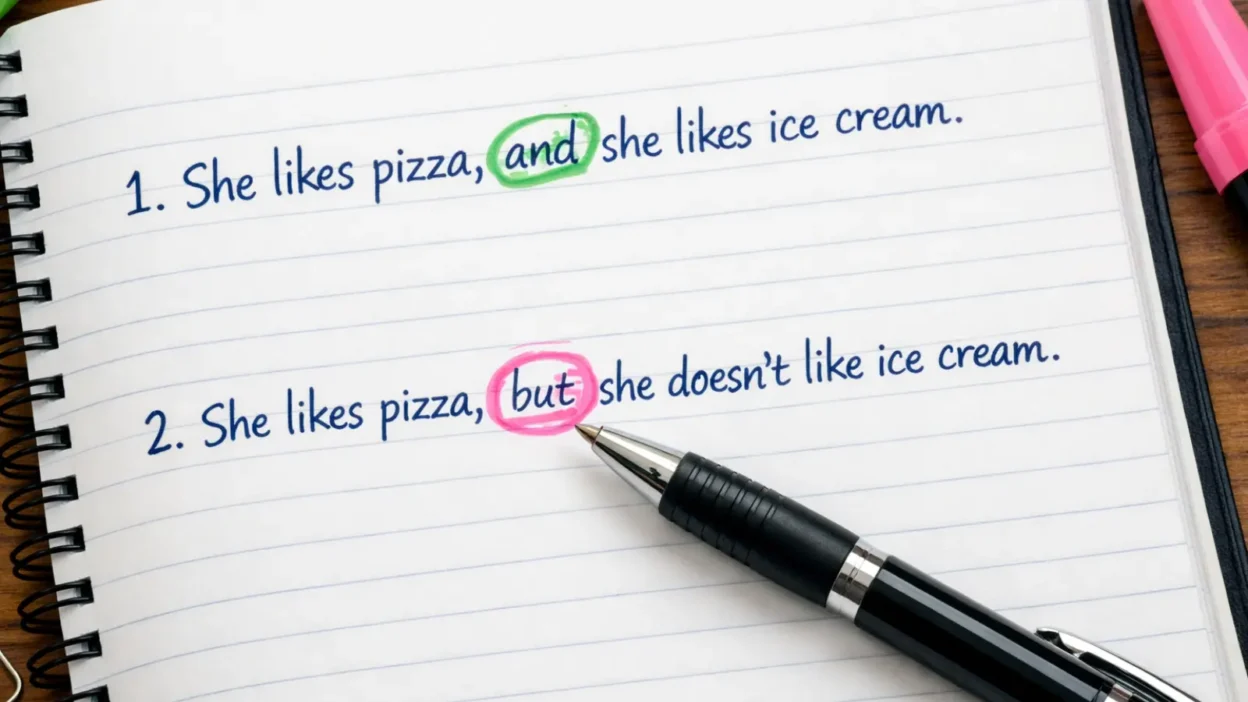
Many writers hesitate between and and but because both words connect ideas. They can join words, phrases, or complete clauses, but they express different relationships.
You will see these conjunctions in essays, emails, text messages, social media posts, and everyday conversations. Changing and to but can completely change a sentence’s meaning.
The key is simple: decide whether the second idea adds information or contrasts with the first. This guide explains the difference, covers punctuation rules, fixes common mistakes, and provides practical examples.
Quick Answer
Use and to add information, connect related ideas, or continue a thought.
Use but to show contrast, limitation, disagreement, exception, or an unexpected result.
Both are coordinating conjunctions, but they are not interchangeable. Use and for addition and but for contrast.
Key Differences at a Glance
- And adds similar or related information.
- But introduces contrast.
- And suggests continuation or combination.
- But signals difference, limitation, or surprise.
Compare these examples:
- Maya opened the window and turned on the fan.
- Maya opened the window, but the room remained hot.
The first sentence joins two related actions. The second shows an unexpected result.
What Does “And” Mean?
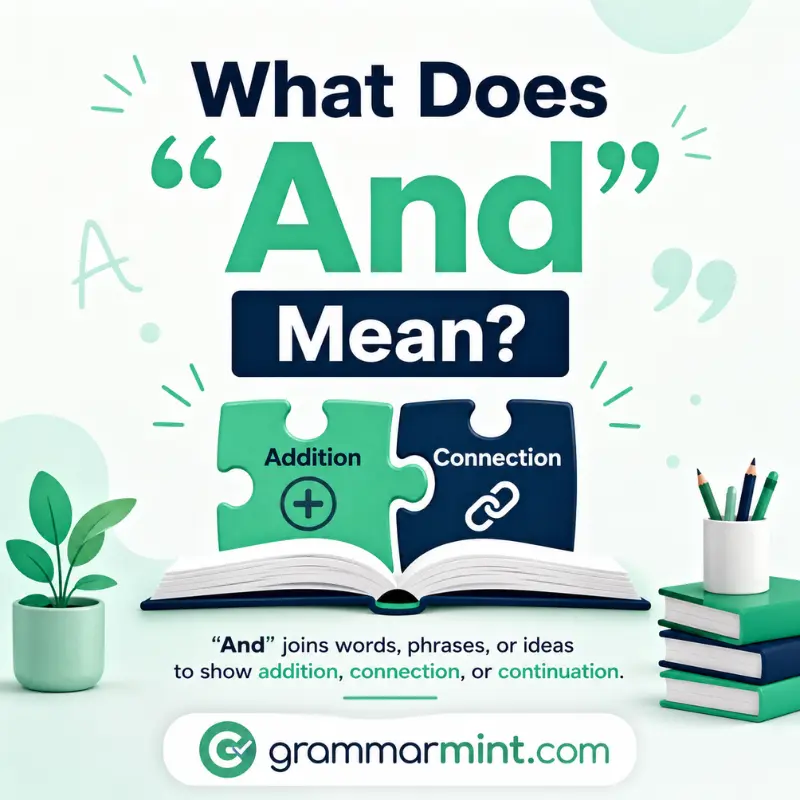
And joins ideas that belong together. It can connect nouns, verbs, adjectives, phrases, and complete clauses.
- We bought bread and milk.
- She smiled and waved.
- I finished the report, and my manager reviewed it.
Use and when you want to add a fact, connect actions, show a sequence, or combine related details.
Avoid using too many instances of and in one sentence.
Weak:
- I woke up and got dressed and ate breakfast and checked my email and left.
Better:
- I woke up, got dressed, and ate breakfast. After checking my email, I left.
What Does “But” Mean?
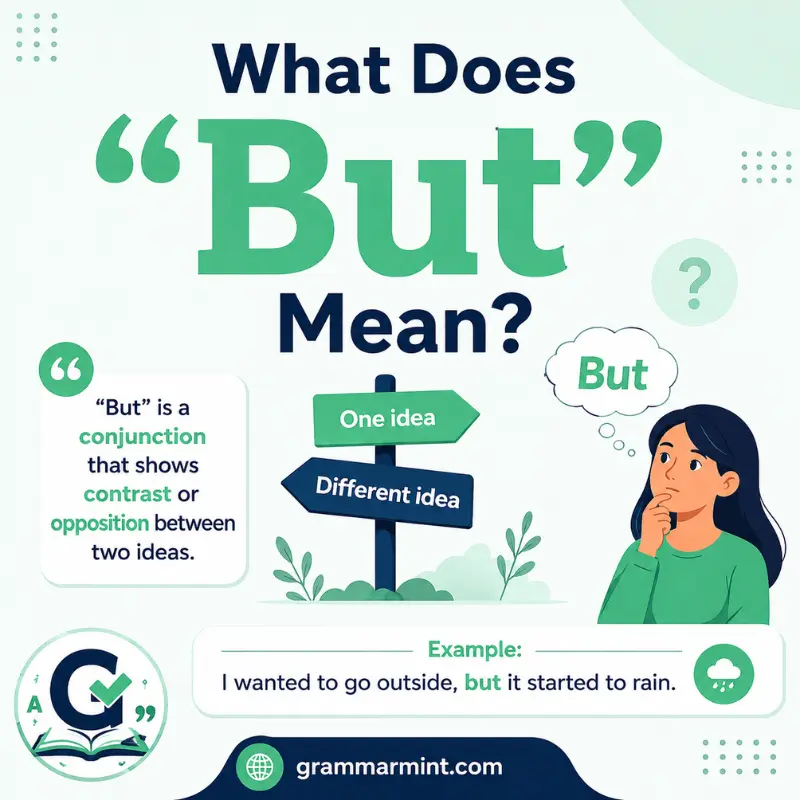
But connects ideas that contrast. It often introduces an unexpected fact, a limitation, or a change in direction.
- The apartment is small but comfortable.
- He studied all week, but he did not pass.
- I agree with the idea, but I dislike the method.
Use but when you need to show contrast, correct an expectation, add a restriction, or present an unexpected outcome.
Compare:
- Ella is talented and hardworking.
- Ella is talented but inexperienced.
The first sentence adds two qualities. The second contrasts a strength with a limitation.
How “And” and “But” Change Meaning
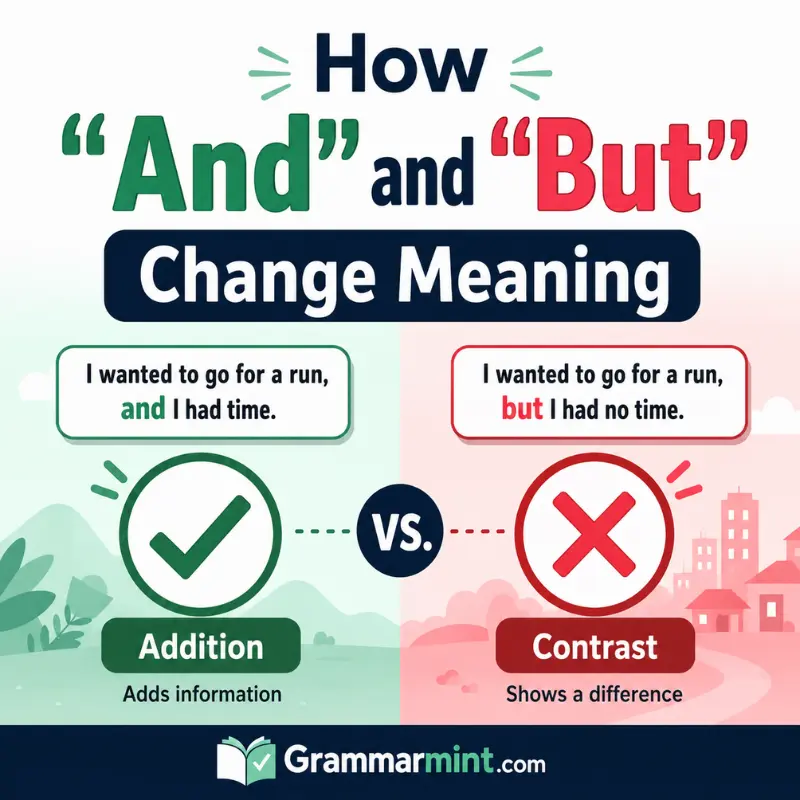
Choosing a different conjunction can change the entire message.
Consider these sentences:
- I called him, and he answered.
- I called him, but he did not answer.
The first sentence describes a normal sequence of events. The call was made, and the person answered.
The second sentence introduces an unexpected result. The speaker called, but the expected response did not happen.
Here is another example:
- The restaurant was crowded and noisy.
- The restaurant was crowded but comfortable.
In the first sentence, and connects two related descriptions. In the second, but contrasts the crowded environment with the surprising level of comfort.
Comma Rules for “And” and “But”
Use a comma before and or but when the conjunction joins two independent clauses. An independent clause can stand alone as a complete sentence.
- I completed the draft, and Sarah edited it.
- We arrived early, but the doors were locked.
Both parts could be written as separate sentences, so the comma is appropriate.
For example:
- I completed the draft.
- Sarah edited it.
Because both parts are complete, a comma should appear before and when they are combined.
A comma is usually unnecessary when the conjunction joins individual words, phrases, or verbs that share the same subject.
- She bought notebooks and pens.
- He entered the room and sat down.
- The presentation was brief but informative.
Incorrect:
- He opened the file, and printed it.
Correct:
- He opened the file and printed it.
The subject he applies to both verbs, so no comma is needed.
Do not insert a comma simply because a sentence contains and or but. First determine whether both sides of the conjunction are complete clauses.
Can You Start a Sentence with “And” or “But”?
Yes. Starting a sentence with and or but is grammatically acceptable.
- I thought the problem was solved. But another error appeared.
- The team met every deadline. And it stayed under budget.
Writers use this structure for emphasis or a natural transition. In formal writing, use it purposefully because repetition can sound choppy.
For example, this paragraph sounds repetitive:
- And we completed the project. And we sent the files. And the client approved them.
A smoother version would be:
- We completed the project and sent the files. The client then approved them.
Starting with and or but is not wrong, but it should improve the flow or emphasis of the passage.
Common Mistakes and Quick Fixes
Using “And” When the Ideas Contrast
Incorrect:
- I wanted to leave early, and my manager asked me to stay.
Correct:
- I wanted to leave early, but my manager asked me to stay.
The manager’s request conflicts with the speaker’s plan, so but is the clearer choice.
Using “But” When Simply Adding Information
Incorrect:
- She ordered soup but a salad.
Correct:
- She ordered soup and a salad.
There is no contrast between the two items. They are simply being added together.
Forgetting a Comma Between Complete Clauses
Incorrect:
- I sent the message but she did not reply.
Correct:
- I sent the message, but she did not reply.
Both parts are complete sentences, so a comma is needed before but.
Adding an Unnecessary Comma
Incorrect:
- He washed the dishes, and cleaned the kitchen.
Correct:
- He washed the dishes and cleaned the kitchen.
The verbs washed and cleaned share the same subject, so the comma is unnecessary.
Using “And But” Together
Incorrect:
- I liked the idea, and but I disagreed with the plan.
Correct:
- I liked the idea, but I disagreed with the plan.
Choose one conjunction based on the relationship between the ideas.
Creating a Long Sentence with Too Many Conjunctions
Weak:
- We went to the store and bought snacks and met a friend and talked for an hour and then went home.
Better:
- We went to the store and bought snacks. While there, we met a friend and talked for an hour before going home.
Breaking the sentence into smaller parts improves readability.
Everyday Examples
- “I made coffee and toasted some bread.”
- “The movie was long, but the ending was worth it.”
- “I reviewed the proposal and added several comments.”
- “The study was carefully designed, but the sample was small.”
In each example, and adds related information, while but introduces a contrast or limitation.
And vs. But in Formal Writing
Both conjunctions are acceptable in professional and academic writing.
Less formal:
- I wanted to attend the meeting, but I had another commitment.
More formal:
- Although I wanted to attend the meeting, I had another commitment.
The version with but is not incorrect. The second version simply uses a more formal sentence structure.
Similarly:
- The study was detailed, but its sample was limited.
- Although the study was detailed, its sample was limited.
Choose the structure that best matches your audience, tone, and purpose.
Comparison Table
| Situation | Best Choice | Reason |
|---|---|---|
| Adding information | And | Continues the same idea |
| Joining list items | And | Connects related words |
| Showing contrast | But | Signals a difference |
| Showing an unexpected result | But | Changes the expected direction |
| Connecting actions | And | Shows addition or sequence |
| Adding a restriction | But | Limits the first statement |
| Combining similar qualities | And | Links compatible descriptions |
| Correcting an expectation | But | Introduces opposing information |
Frequently Asked Questions
Can “And” and “But” Replace Each Other?
No. And adds information, while but introduces contrast. Replacing one with the other can change the meaning of the sentence.
Do You Always Need a Comma Before “But”?
No. Use a comma when but joins two complete clauses. Do not normally use one when it connects individual words or short phrases.
- Complete clauses: I called her, but she did not answer.
- Short descriptions: The room was small but clean.
Do You Always Need a Comma Before “And”?
No. Use a comma when and joins two independent clauses. It is usually unnecessary when connecting words, phrases, or verbs with the same subject.
- Complete clauses: I wrote the article, and she edited it.
- Shared subject: I wrote and edited the article.
Is It Wrong to Start a Sentence with “But”?
No. Beginning a sentence with but is grammatically correct and can create emphasis.
Are “And” and “But” Formal Words?
Both words are neutral and standard. They appear in casual conversations, business writing, academic essays, journalism, and professional communication.
Mini Quiz
Choose and or but.
- I wanted to go outside, ___ it was raining.
- She bought apples ___ oranges.
- He studied hard, ___ he failed the test.
- The hotel was clean ___ comfortable.
- I called twice, ___ nobody answered.
Answer Key
- but
- and
- but
- and
- but
Conclusion
Choosing between and and but depends on the relationship between your ideas. Use and when the second word, phrase, or clause adds information, continues a thought, or combines related details. Use but when the second idea contrasts with the first, limits it, or creates an unexpected result.
Both conjunctions are correct and essential. Clear writing comes from choosing the word that accurately expresses your meaning.
When you are unsure, ask one question: Does the second idea continue the first, or does it change direction? If it continues the idea, use and. If it changes, limits, or challenges the idea, use but.