If you’re checking a text, caption, email, essay, or work message, this guide will help you choose with confidence. The phrase better then or than causes confusion because better than, better then, comparison, time, sequence, sentence examples, and grammar mistake all sound close in fast speech. Still, the rule is simple once you see it.
Most of the time, you want “better than.” It compares people, places, things, choices, or results. However, “better then” can work when “then” means “at that time.”
Quick Answer
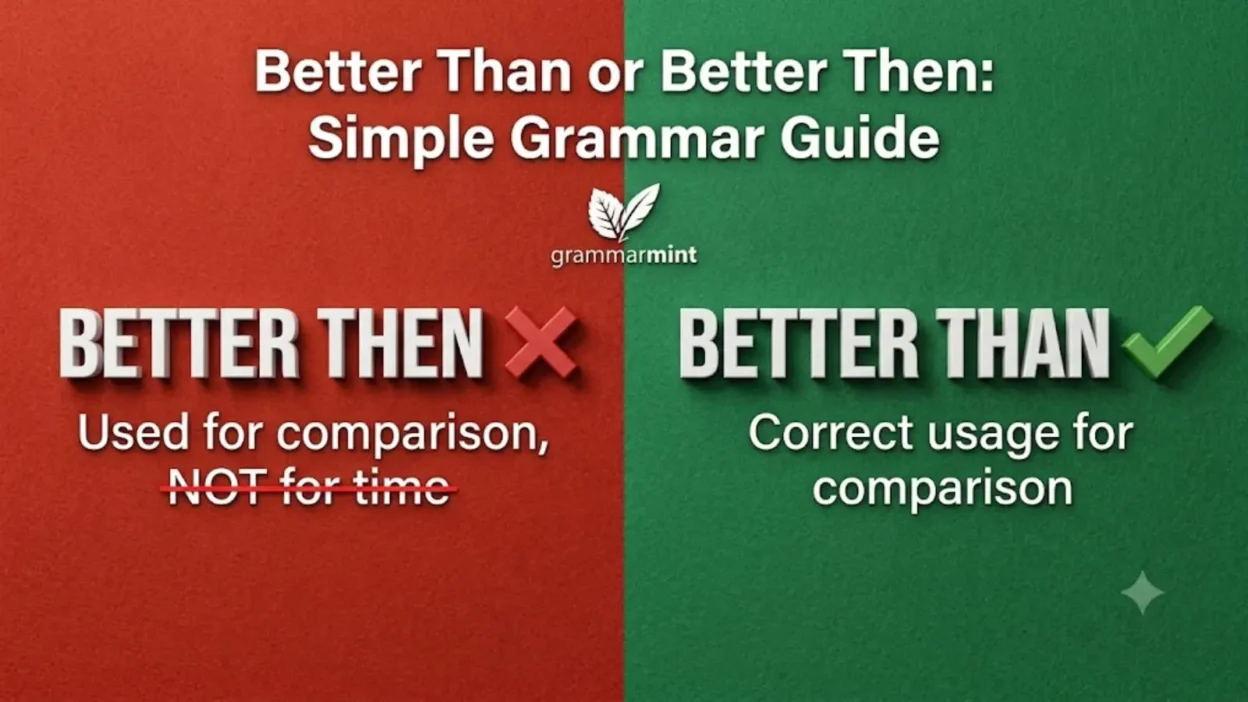
Better than or better then depends on meaning: use “better than” for a comparison, and use “better then” only when “then” means “at that time.”
TL;DR
• Use “better than” for comparisons.
• Use “then” for time.
• “Better then” is rare but possible.
• “Than” does not mean “next.”
• “Then” does not compare things.
• When unsure, replace “than” with “compared with.”
Better Than Or Better Then
“Better than” is the correct phrase when you compare two things. In contrast, “better then” usually creates a grammar mistake unless it points to time.
• This phone is better than my old one.
• Her idea sounds better than mine.
• Today feels better than yesterday.
• That caption is better than the first draft.
• Your answer was better than expected.
• This route is better than the highway.
• The sequel was better than the original.
• Coffee sounds better than soda right now.
• This deal is better than last week’s price.
• Your photo looks better than before.
• The new plan works better than ours.
• Use than after better for comparison.
Than Vs Then
“Than” handles comparison, while “then” handles time or sequence. Therefore, the right word depends on what your sentence is doing.
• Than compares one thing with another.
• Then shows what happens next.
• Than follows words like better and taller.
• Then often follows first or next.
• Say “better than,” not “better then.”
• Say “first this, then that.”
• Than can compare people, choices, or numbers.
• Then can point to a past moment.
• Than belongs in most comparison phrases.
• Then belongs in timelines and steps.
• Than answers “compared with what?”
• Then answers “when or next?”
Then Vs Than Examples
Examples make the usage much easier to see. So, compare each sentence example with its surrounding context before choosing.
• I’d rather walk than drive today.
• We ate dinner, then watched TV.
• This app loads faster than that one.
• Finish homework, then play outside.
• She sings better than I remembered.
• Back then, rent was lower.
• Your caption reads cleaner than mine.
• Call me then, not now.
• My laptop runs better than before.
• We talked, then made a plan.
• This photo is brighter than the last.
• If it rains, then stay inside.
Better Then Meaning
“Better then” can be correct when it means better then, or better at that time. However, that meaning is different from a comparison.
• The lighting was better then.
• I felt better then than now.
• Prices were better then.
• The team played better then.
• Life seemed better then.
• The weather was better then.
• Her mood was better then.
• That neighborhood was quieter then.
• The camera worked better then.
• Your timing was better then.
• The plan looked better then.
• Use “then” for that time.
Than Meaning
“Than” is a comparison word. It connects one side of a sentence to another through difference, contrast, or degree.
• Better than means higher in quality.
• Faster than means greater in speed.
• Taller than means greater in height.
• Cheaper than means lower in price.
• Rather than shows a preferred choice.
• Other than introduces an exception.
• More than shows a larger amount.
• Less than shows a smaller amount.
• Stronger than compares strength.
• Earlier than compares time points.
• Than often follows comparative adjectives.
• Than never means afterward.
Then Meaning
“Then” is a time word. It can mean next, afterward, at that time, or in that case.
• We studied, then took the test.
• Back then, phones were simpler.
• Finish the form, then submit it.
• If you agree, then sign here.
• She smiled, then waved goodbye.
• The lights flickered, then went out.
• We can talk then.
• Add flour, then mix slowly.
• He was the then manager.
• Since then, things changed.
• Stop there, then turn left.
• Then can show a result.
Better Than Me Or Better Than I
Both forms appear in real English, but they feel different. “Better than I” sounds more formal writing, while “better than me” sounds more natural in conversation.
• She is better than me at chess.
• She is better than I am.
• “Than I am” sounds complete.
• “Than me” sounds casual and normal.
• Use “than I am” in essays.
• Use “than me” in friendly speech.
• Avoid “better then me.”
• Pronouns change tone, not the core rule.
• “Than me” works after comparison.
• “Than I” may sound stiff alone.
• Add “am” for smoother formality.
• Choose the version your audience expects.
Rather Than Or Rather Then
The standard phrase is “rather than.” It shows preference, choice, or an alternative instead of another option.
• I’d rather text than call.
• Choose clarity rather than cleverness.
• She stayed home rather than travel.
• We cooked rather than ordering food.
• Use “rather than,” not “rather then.”
• He smiled rather than arguing.
• Try revising rather than deleting everything.
• Pick simple words rather than fancy ones.
• I prefer tea rather than soda.
• They walked rather than drive.
• Save money rather than spend it.
• “Rather then” breaks the comparison.
Other Than Or Other Then
The correct phrase is “other than.” It introduces an exception, meaning except for something outside the main group.
• Everyone came other than Jake.
• I need nothing other than sleep.
• Other than that, we’re ready.
• No one answered other than Maya.
• Use “other than,” not “other then.”
• Other than price, it’s perfect.
• She packed everything other than shoes.
• Nothing changed other than the title.
• Other than weather, the trip was great.
• I saw nobody other than him.
• Other than spelling, your sentence works.
• “Other then” is usually wrong.
More Than Or More Then
Use “more than” for amount, degree, or any larger number. Even when you mention time, “than” still compares the limit.
• It costs more than ten dollars.
• She waited more than an hour.
• We need more than luck.
• He posted more than once.
• This matters more than views.
• The box weighs more than expected.
• Use “more than,” not “more then.”
• More than five people joined.
• I care more than you know.
• That took more than effort.
• More than half agreed.
• Then cannot compare amounts.
No Later Than Or No Later Then
The correct phrase is “no later than.” It gives a deadline, time limit, or due date.
• Submit it no later than Friday.
• Arrive no later than noon.
• Pay no later than June 10.
• Reply no later than tomorrow morning.
• Use “than” because it compares lateness.
• “No later then” is incorrect.
• The report is due no later than Monday.
• Send files no later than 5 p.m.
• Apply no later than the deadline.
• Start no later than eight.
• Finish no later than tonight.
• This phrase sounds formal and clear.
Different Than Or Different From
“Different from” is usually the safest choice. Still, American English often accepts “different than” in natural comparison and everyday style.
• This version is different from mine.
• Her answer is different than expected.
• Different from sounds more formal.
• Different than can sound conversational.
• Use “from” in school papers.
• Use “than” when a clause follows.
• This feels different than I imagined.
• The design differs from the sample.
• Avoid “different then” completely.
• Then does not show difference.
• Choose clarity over sounding fancy.
• Check house style for formal work.
Use Of Than In A Sentence
Use “than” when you compare two sides. It often appears after words like stronger than, better than, less than, and more than.
• Your draft is clearer than mine.
• The blue shirt is cheaper than red.
• She arrived earlier than expected.
• This answer is shorter than yours.
• My dog is louder than yours.
• The room looks brighter than before.
• He is calmer than his brother.
• This caption feels warmer than that one.
• We sold more than planned.
• She works harder than most students.
• The result was better than hoped.
• Keep than beside the comparison.
Use Of Then In A Sentence
Use “then” when something happens next, happens at a time, or follows a condition. It often appears in first then patterns, a next step, or a result.
• Wash your hands, then eat.
• First save the file, then close it.
• We laughed, then got serious.
• If you’re ready, then start.
• Back then, summers felt longer.
• She paused, then answered slowly.
• Finish the intro, then write examples.
• Click send, then check replies.
• The sky darkened, then rain started.
• I was younger then.
• Add salt, then stir again.
• Then can begin a new step.
How To Remember Then And Than
Use a simple spelling trick when you pause. A good memory rule becomes a quick test before you publish.
• Than has “a,” like compare.
• Then has “e,” like next.
• Better compares, so choose than.
• Time moves, so choose then.
• Replace than with “compared with.”
• Replace then with “at that time.”
• If both work, check meaning.
• If comparing, never choose then.
• If sequencing, never choose than.
• Read the sentence aloud slowly.
• Look for better, more, less.
• Look for first, next, later.
Than Vs Then Quiz
Now test the rule with quick practice. After each quiz item, use the answer key in your head before checking.
• This pizza is better than mine.
• We ate, then left quickly.
• She runs faster than Jack.
• Call me then.
• I’d rather read than scroll.
• First breathe, then reply.
• More than twenty people waited.
• The light was better then.
• Other than Anna, nobody knew.
• No later than Friday works.
• He is taller than me.
• Back then, we lived nearby.
FAQs
Is It Better Than Or Better Then?
Use “better than” when you compare one thing with another. Use “better then” only when “then” means “at that time.”
When Should I Use “Better Than”?
Use “better than” when something is higher in quality, value, skill, comfort, or fit. For example, “This plan is better than the old one.”
When Should I Use “Better Then”?
Use “better then” when you mean something was better at that time. For example, “The weather was better then.”
Can “Then” Ever Mean “Than”?
No, “then” does not mean “than.” “Then” points to time, order, or result, while “than” compares.
Why Do People Confuse “Then” And “Than”?
They look similar and often sound close in fast speech. Also, typing quickly can turn a small vowel difference into a common mistake.
Is It Rather Than Or Rather Then?
The correct phrase is “rather than.” It compares choices, as in “I’d rather walk than wait.”
Conclusion
Better then or than gets easier once you separate comparison from time. Use “better than” for almost every comparison, and save “better then” for “better at that time.” When in doubt, test the sentence before you post, send, or publish.