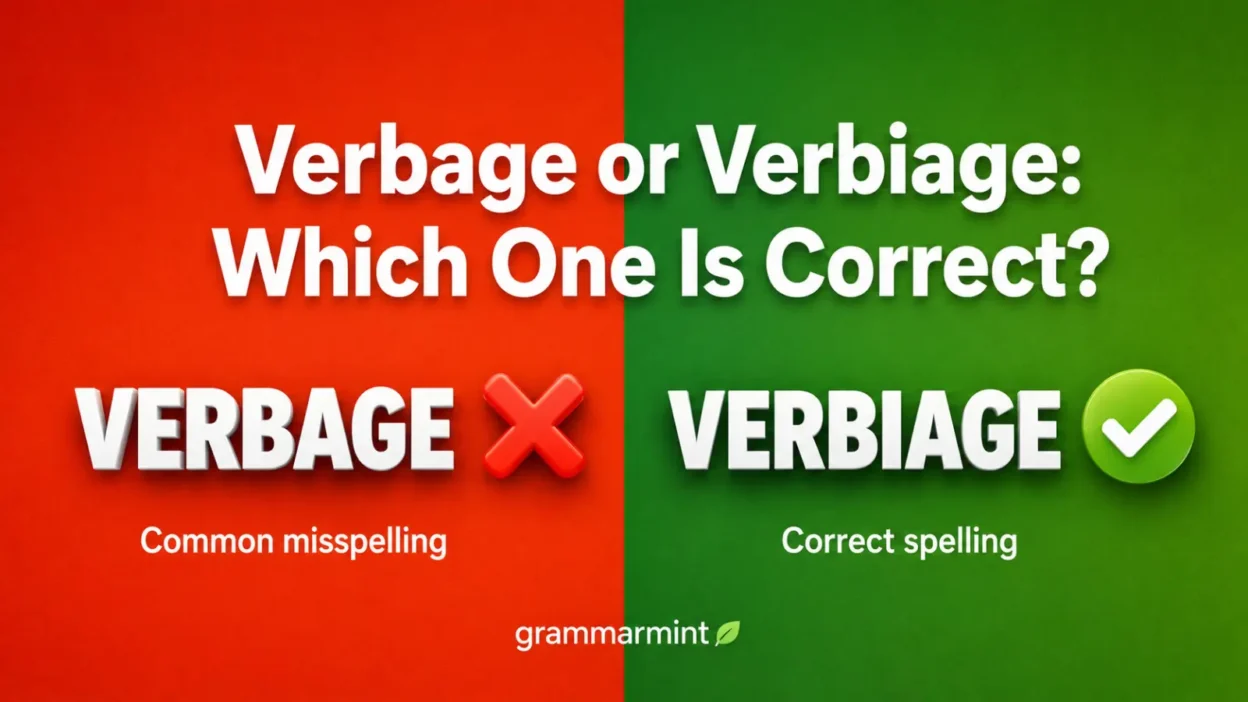
Verbage or verbiage is a common word-choice question because the two forms look almost the same. The clear answer is this: verbiage is the standard word in modern US English. Verbage is usually treated as a misspelling or nonstandard form.
Use verbiage when you mean wordy language, complicated wording, or the way something is expressed in words. Avoid verbage in school papers, emails, reports, resumes, business documents, and published writing.
The tricky part is that people do say and write verbage sometimes. However, that does not make it the safer choice. In most real writing situations, readers will see verbage and think you meant verbiage.
Quick Answer
Use verbiage, not verbage.
Correct: The contract has too much verbiage.
Incorrect: The contract has too much verbage.
Verbiage is a noun. It can mean too many words, especially words that feel unclear, formal, or unnecessary. It can also mean wording or style of expression, especially in workplace settings.
Verbage is not the form most readers expect. Even when someone uses it to mean “wording,” it is still risky because many teachers, editors, and careful readers will mark it as an error.
Why People Confuse Them
People confuse verbage and verbiage because verbiage does not always sound the way it looks. Many speakers say it like VER-bee-ij, but some say it more quickly. When the middle sound is weak, the spelling verbage starts to look natural.
The word verbage also looks connected to verb, so it may seem logical. That logic is tempting, but it does not make the spelling standard.
The safe way to remember it is simple: verbiage has an i in the middle. If you are writing for readers who expect polished English, keep the i.
Key Differences At A Glance
| Feature | Verbage | Verbiage |
|---|---|---|
| Standard modern use | Usually nonstandard | Standard |
| Main role | Usually treated as a misspelling | Noun |
| Meaning | Often intended to mean verbiage | Wordy language, wording, or diction |
| Best for formal writing | No | Yes, when the meaning fits |
| Reader reaction | May look like an error | Usually accepted |
| Example | Avoid: The policy has confusing verbage. | Use: The policy has confusing verbiage. |
The real difference is not a deep meaning split. Verbiage is the accepted word. Verbage is usually an attempted spelling of that word.
Meaning and Usage Difference
Verbiage has two useful meanings.
First, it can mean too many words or needlessly complicated language. This is the meaning many people have in mind when they criticize a document.
Example: The report buried the main point under pages of verbiage.
That sentence means the report used too many words and made the message harder to understand.
Second, verbiage can mean wording, phrasing, or the way something is expressed. This use is common in business, legal, and office contexts.
Example: Please review the verbiage before we send the email.
That sentence means “Please review the wording.” Still, wording is often clearer and less loaded. If you do not mean “too many words,” consider using wording, text, or language instead.
Verbage does not add a separate useful meaning in standard modern writing. Do not use it as a special word for “wording.”
Tone, Context, and Formality
Verbiage can sound formal. It can also sound negative because it often suggests wordiness or clutter.
In a school essay, verbiage may work if you are discussing wordy writing. In a business email, it may work when people are talking about exact wording. However, it can sound stiff if a simpler word would do.
For example, “Please review the wording” sounds clearer and friendlier than “Please review the verbiage.” On the other hand, “The instructions contain too much verbiage” works well if you are criticizing the instructions for being too wordy.
Verbage has a different problem. It usually sounds like a spelling mistake. Even if the reader understands what you mean, the form can make the sentence look less careful.
Pronunciation also matters here. Verbiage is commonly said like VER-bee-ij. Some speakers use a shorter sound, but the spelling still keeps the middle i.
Which One Should You Use?
| Context | Best Choice | Why |
| School paper | Verbiage | It is the standard form. |
| Business email | Verbiage or wording | Use verbiage for wordy language; use wording for neutral phrasing. |
| Legal document discussion | Verbiage or wording | Verbiage is common, but wording is often clearer. |
| Resume or cover letter | Wording | Verbiage may sound negative or stiff. |
| Editing feedback | Verbiage | It works when you mean too many words. |
| Casual conversation | Wording | It sounds more natural. |
| Published article | Verbiage | Use the accepted spelling when the word fits. |
| Any polished writing | Avoid verbage | Readers may see it as an error. |
The best general rule is this: write verbiage if you need that word, but choose wording when you only mean the exact words used.
When One Choice Sounds Wrong
Verbage sounds wrong in most polished writing because it looks like verbiage with a missing letter.
Incorrect: The brochure has too much verbage.
Correct: The brochure has too much verbiage.
Incorrect: Send me the final verbage for the ad.
Better: Send me the final wording for the ad.
The second example shows another issue. Even verbiage may not be the best choice when the meaning is neutral. If you simply mean “the exact words,” wording is usually cleaner.
Verbiage sounds right when the sentence is about wordiness, heavy language, or official phrasing.
Good: The manual is hard to read because of all the technical verbiage.
Good: The editor cut the verbiage and made the article easier to follow.
Common Mistakes (and Quick Fixes)
A common mistake is dropping the i and writing verbage. The fix is easy: write verbiage.
Another mistake is using verbiage when a plain word would sound better. If the tone feels too formal, replace it with wording, text, language, or phrasing.
Weak: Can you approve the verbiage for the flyer?
Better: Can you approve the wording for the flyer?
A third mistake is using verbiage as if it always means “extra words.” It often does, but it can also mean wording or diction. Because of that, the sentence should make your meaning clear.
Clear: The editor removed unnecessary verbiage from the introduction.
Clear: The team revised the wording in the customer notice.
Everyday Examples
The contract was full of dense verbiage, so we asked for a plain-English summary.
Please cut the verbiage in the opening paragraph.
The teacher said my essay had strong ideas but too much verbiage.
The product page uses technical verbiage that may confuse new customers.
We changed the wording in the email so it sounded warmer.
The policy’s verbiage made the rule seem stricter than it really was.
Avoid writing verbage in these examples. Even when the meaning is clear, the spelling can distract the reader.
Dictionary-Style Word Details
Verb
Verbage: Not commonly used as a verb in standard US English.
Verbiage: Not commonly used as a verb in standard US English. It is normally a noun.
Do not write sentences like “I will verbiage the document.” Use write, word, phrase, revise, or edit instead.
Noun
Verbage: Usually treated as a nonstandard spelling of verbiage in modern writing. Avoid it in careful work.
Verbiage: A noun meaning wordy language, unnecessary wording, or the manner of expressing something in words.
Example: The proposal had useful ideas, but the verbiage made it hard to read.
Synonyms
Verbage: No strong standard synonyms apply because the form itself is not the recommended word. If you meant verbiage, use the alternatives below.
Verbiage: Closest plain alternatives include wording, phrasing, language, text, diction, wordiness, and verbosity.
Use wording, phrasing, language, or text for a neutral meaning.
Use wordiness, verbosity, or excess language when the meaning is negative.
A useful opposite for the negative sense is brevity. Another plain contrast is conciseness.
Example Sentences
Verbage: Avoid this spelling in standard writing.
Example to avoid: The memo has confusing verbage.
Verbiage: Use this spelling when the word fits.
Example: The memo has confusing verbiage.
Verbage: If you only mean “exact words,” do not use this form.
Better: Please check the wording before we publish it.
Verbiage: The training guide lost readers because of its heavy verbiage.
Word History
Verbage: The form appears in some records and informal use, but it is not the expected modern choice for standard US writing. Many uses of verbage appear to come from dropping the middle i in verbiage.
Verbiage: The word comes through French and is connected to the idea of words or chatter. In modern English, it developed the sense of wordy language and also the broader sense of wording or diction.
The history does not create two separate modern choices. For everyday writing, verbiage is the form readers expect.
Phrases Containing
Verbage: There are no common standard phrases that require verbage. If you see phrases such as “legal verbage” or “technical verbage,” the intended spelling is usually verbiage.
Verbiage: Common phrases include legal verbiage, technical verbiage, excess verbiage, confusing verbiage, contract verbiage, and policy verbiage.
Use these carefully. If the phrase sounds too formal or negative, choose wording instead.
Example: The contract wording is unclear.
Example: The contract has too much legal verbiage.
Conclusion
For modern US writing, the correct choice is verbiage. Verbage is usually a misspelling or nonstandard form, so it is best to avoid it.
Use verbiage when you mean wordy, complicated, or official-sounding language. Use wording when you simply mean the exact words in a sentence, email, policy, or document.