
If you have received a message saying “WYM?”, you may wonder what those three letters mean. You will often see them in text messages, group chats, direct messages, and social conversations.
WYM is an informal abbreviation connected with the question “What do you mean?” People use it when they want clarification or more information.
The meaning is usually simple, but the tone can change. Depending on the conversation, WYM may sound curious, surprised, confused, playful, or slightly challenging.
This guide explains the WYM meaning in plain English. You will learn how people use it, what it means in different contexts, how to respond, and when a full sentence is better.
Quick Answer: What Does WYM Mean?
WYM usually means “What do you mean?” It is a casual abbreviation used when someone wants you to explain or clarify something.
For example:
Person A: “I don’t think we should go tonight.”
Person B: “WYM?”
Here, Person B is asking, “What do you mean?”
TL;DR
• WYM usually means “What do you mean?”
• It is common in casual texting and online chats.
• It asks for clarification or an explanation.
• Tone depends on context, punctuation, and wording.
• “Watch Your Mouth” is a less common meaning.
• Use the full phrase in formal communication.
WYM Meaning in Plain English
In simple terms, WYM means “What do you mean?”
Someone may use it after reading something unclear, surprising, or confusing. They want you to explain the idea behind your message.
For example:
You: “I think you already know.”
Friend: “WYM?”
You: “I mean you know why I left early.”
The abbreviation does not usually ask for a dictionary definition. It asks about the meaning of something you just said.
WYM can also be understood as “Can you explain?” or “What are you talking about?” The exact feeling depends on the conversation.
What Type of Expression Is WYM?
WYM is an informal abbreviation or initialism used in digital communication. It represents the words in a shortened expression rather than functioning as a normal English word.
The letters are normally understood individually as W-Y-M.
The underlying phrase is usually “What do you mean?” In casual texting, people often shorten common questions because the context makes the missing words obvious.
WYM is not standard formal English. It belongs mainly to casual messaging and online conversation.
How WYM Is Used in Texting
WYM is most useful when a person wants a quick clarification.
You might see it in:
• Text messages
• Group chats
• Direct messages
• Gaming conversations
• Social media replies
• Casual conversations with friends
For example:
Alex: “You need to change your plan.”
Sam: “WYM?”
Alex: “I mean you should leave earlier.”
It can also appear inside a longer message:
“WYM you already left?”
Here, the sender is asking for clarification about the other person’s statement.
The lowercase form wym usually has the same meaning as WYM. Capitalization does not create a different definition.
WYM and Tone: Confusion, Surprise, or Disagreement
WYM has a basic meaning, but its tone can change.
A simple “WYM?” may sound neutral. It can simply mean that the sender did not understand you.
Consider this example:
You: “The meeting is not happening tomorrow.”
Friend: “WYM?”
You: “It was moved to Friday.”
The reply shows confusion.
WYM can also express surprise:
You: “I’m moving to another city.”
Friend: “WYM?!”
The extra punctuation makes the reaction feel stronger.
It can even show disagreement:
You: “That movie was terrible.”
Friend: “WYM? I loved it.”
Here, WYM is closer to “What do you mean?” or “How can you say that?”
The important point is that WYM itself does not automatically mean anger or disagreement. Context creates the tone.
How Punctuation Changes the Feeling
Compare these examples:
| Message | Likely feeling | Why |
|---|---|---|
| “WYM?” | Curious or confused | Simple clarification |
| “wym” | Relaxed | Very casual style |
| “WYM?!” | Surprised | Stronger reaction |
| “WYM 😂?” | Playful | Emoji softens the message |
A short message can sometimes feel blunt. Adding a few words can make your intention clearer.
WYM in Different Social Contexts
WYM has the same basic meaning whether a girl or guy sends it. There is no separate standard definition based on the sender’s gender.
If a girl texts:
“WYM?”
She is usually asking, “What do you mean?”
If a guy sends:
“WYM?”
The meaning is generally the same.
The surrounding conversation matters more than who sent the message.
For example:
You: “You seem different today.”
Them: “WYM?”
You: “I mean you seem quieter than usual.”
This could be a friendly conversation, a serious discussion, or even a playful exchange. The abbreviation alone does not tell you which one.
Does WYM Mean Something Flirty?
Not by itself.
Someone may use WYM during a playful or romantic conversation, but the abbreviation does not automatically indicate flirting.
For example:
You: “You already know why I like talking to you.”
Them: “WYM? 😂”
The conversation may have a playful tone. Still, WYM simply asks for clarification.
Look at the surrounding messages instead of assigning a hidden meaning to the abbreviation.
WYM as “Watch Your Mouth”
WYM has a less common meaning: “Watch Your Mouth.”
In this use, it is a warning about someone’s language or behavior.
For example:
Person A: “Your brother is an idiot.”
Person B: “WYM. Don’t talk about him like that.”
Here, the context may support the “Watch Your Mouth” interpretation.
However, this meaning is much less common than “What do you mean?” in ordinary texting.
If someone sends WYM after a normal statement, assume “What do you mean?” first. Consider the secondary meaning only when the surrounding conversation clearly involves disrespectful or inappropriate language.
How to Use WYM Naturally
Use WYM when you are chatting casually with someone who understands texting abbreviations.
It works especially well when you need a quick explanation.
Asking for clarification
Friend: “I don’t think that plan will work.”
You: “WYM?”
Friend: “I think we need more time.”
Asking about a specific statement
Friend: “You should talk to her.”
You: “WYM?”
Friend: “I mean, you should explain what happened.”
Reacting to surprising news
Friend: “I’m leaving the team.”
You: “Wait, WYM?!”
Adding “Wait” makes the reaction clearer.
Playful use
Friend: “You’re finally on time.”
You: “WYM? I’m always on time 😂”
Here, WYM helps create a joking response.
When Not to Use WYM
WYM is best kept for informal communication.
Avoid it in situations where clear, professional wording matters.
Examples include:
• Job applications
• Formal emails
• School assignments
• Business documents
• Professional complaints
• Important workplace messages
Instead of:
“WYM?”
Use:
“What do you mean?”
Or:
“Could you clarify what you mean?”
The full wording is easier for everyone to understand and sounds more appropriate in formal settings.
WYM vs. WDYM and Similar Expressions
WYM and WDYM are closely related.
Both are commonly used to mean “What do you mean?”
The main difference is the abbreviation itself:
| Expression | Meaning | Style |
|---|---|---|
| WYM | What do you mean? | Very casual |
| WDYM | What do you mean? | Casual |
| What do you mean? | Complete question | Neutral |
| Could you clarify? | Request for explanation | More formal |
WYM is shorter because it leaves out the D from “do.”
WDYM includes the D, making the connection to the full question more obvious.
Neither form changes the basic idea.
Do not confuse WYM with WYD, which commonly means “What are you doing?” WYM asks about someone’s meaning, while WYD asks about their activity.
How to Reply When Someone Says WYM
If someone sends WYM, they usually want you to explain your previous message.
The easiest response is to clarify your point directly.
For example:
Them: “WYM?”
You: “I mean we should leave before six.”
You can also say:
“I mean…”
“What I meant was…”
“Sorry, I wasn’t clear.”
“I was talking about the meeting time.”
If your original message was vague, give one specific detail.
For example:
Them: “WYM?”
You: “I mean the appointment on Friday, not today’s appointment.”
This approach keeps the conversation clear.
If the topic is serious, avoid answering with another vague abbreviation. A complete explanation usually prevents further confusion.
Common Mistakes With WYM
Mistake 1: Assuming WYM Is Always Rude
WYM is not automatically rude.
A short “WYM?” may sound blunt, but it can simply show confusion.
Mistake 2: Assuming It Always Means “Watch Your Mouth”
The primary meaning is “What do you mean?”
The secondary meaning depends on a specific context involving someone’s language.
Mistake 3: Assuming WYM Is Flirty
WYM does not have a built-in romantic meaning.
A person may use it during flirting, but the surrounding conversation creates that tone.
Mistake 4: Using WYM in Formal Writing
WYM is informal.
Use “What do you mean?” or “Could you clarify?” when the setting requires professional language.
Mistake 5: Confusing WYM With WYD
WYM asks what someone means.
WYD usually asks what someone is doing.
They are different abbreviations with different purposes.
FAQs
WYM usually means “What do you mean?” It is an informal abbreviation used when someone wants clarification.
The sender may be confused, surprised, curious, or questioning your statement.
WYM is commonly understood as “What You Mean?” It represents the conversational question “What do you mean?”
The complete question is more natural in standard English
Yes. WYM is informal texting language and an abbreviation used in digital conversations.
It is common in casual messages but is not suitable for formal writing.
Not necessarily. WYM can be completely neutral when someone simply wants clarification.
However, a very short “WYM?” or “WYM?!” can sound impatient or confrontational depending on the context.
It normally means “What do you mean?”
It does not automatically signal flirting, attraction, anger, or another special intention. The surrounding conversation determines the tone.
It usually means “What do you mean?”
He may be confused, surprised, curious, or challenging something you said. The abbreviation itself does not provide a special gender-based meaning.
You may also encounter WYM as “Watch Your Mouth,” but that interpretation is much less common and depends on context.
Use WYM naturally in casual conversations. For professional, academic, or formal communication, write the complete question instead
Conclusion
The WYM meaning is usually “What do you mean?” It is a short, informal way to ask someone to clarify a message.
You may also encounter WYM as “Watch Your Mouth,” but that interpretation is much less common and depends on context.
Use WYM naturally in casual conversations. For professional, academic, or formal communication, write the complete question instead.
Use up and down arrow keys to resize the meta box pane.
Move upMove downShow or hide panel
Optimize your content for discovery or get new content suggestions.Get content suggestions
Focus keyphrase
Focus keyphrase
Use the main word or phrase you want your content found for across search, AI, and beyond. Learn more about best practices for keyphrases.(Opens in a new browser tab)
Discover related keyphrases(Opens in a new browser tab)
Search appearance
Determine how your post should look in the search results.Google preview
MobileGoogle preview: Switch to desktop preview. Currently showing mobile preview.
Desktop
Url preview:

grammarmint.comgrammarmint.com
SEO title preview:
WYM Meaning: What It Means, Usage, Slang & Text Examples – grammarmint.com
Meta description preview:
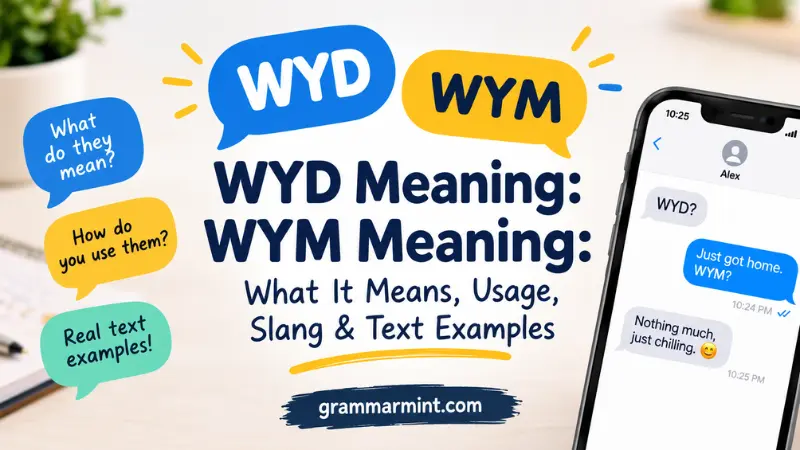
Sep 14, 2026 - Learn the WYM meaning in text, its common uses, tone, examples, secondary meaning, and how to reply naturally in casual conversations.
SEO titleInsert variableGenerate SEO title
Title Page Separator Site title
Slug
Meta descriptionInsert variableGenerate meta description
Learn the WYM meaning in text, its common uses, tone, examples, secondary meaning, and how to reply naturally in casual conversations.
SEO analysisGoodwym meaning
Add related keyphrasePremiumTrack SEO performance
Content blocksNew
Internal linking suggestionsPremium
Cornerstone content
Advanced
Insights
Move upMove downShow or hide panel
Move upMove downShow or hide panelFilter by DateFilter by KeywordSort By Suggestion Score Publish Date Inbound Internal Links Outbound Internal Links Outbound External Links Desc Asc Show Expanded Post DetailsOnly Link to Orphaned PostsOnly Link to Category PagesOnly Suggest Links to Posts With the Same Parent as This PostOnly Link in This Post’s CategoriesSelect Linking Post Types
Want to use AI Powered Suggestions?
Please connect Link Whisper AI, and then run an AI Scan.Regenerate Suggestions
Export Support Data
Export Links to Excel
Export Suggestion Data to CSVInsert links into post
| Add Internal Outbound Links | Posts to link to |
|---|---|
| • Social media replies | Edit Sentence | Title: Mutuals Meaning: What It Means on Social Media and in TextAI Content Relatedness: Unknown URL: /mutuals-meaning | | Ignore Suggested Page |
| • It is common in casual texting and online chats | Edit Sentence | Title: Feral Meaning Slang: What It Means in Text and Online PostsAI Content Relatedness: Unknown URL: /feral-meaning-slang | | Ignore Suggested Page |
| For professional, academic, or formal communication, write the complete question instead | Edit Sentence | Title: Bear or Bare With Me: Complete Usage Guide for Clear WritingAI Content Relatedness: Unknown URL: /bear-or-bare-with-me | | Ignore Suggested Page |
Insert links into post
Move upMove downShow or hide panel
Post without related posts
Move upMove downShow or hide panel Display Link Whisper Related Posts widget on this post
(Unchecking this will disable the Related Posts widget for this post, but will not turn it off for other posts)
Current Related Posts:
(To remove a related post, uncheck it and click the “Update Related Posts” button)
Search For Posts:
(Type a few letters/words to search for posts to link to)
Move upMove downShow or hide panel
| Disable the automatic insertion of the table of contents. | |
| Header Label | Eg: Contents, Table of Contents, Page Contents |
| Position | Select Position Before first heading (default) After first heading After first paragraph After paragraph number After Image number Top Bottom Choose where where you want to display the table of contents. |
| Word Count Limit | Minimum word count to display TOC. Set to 0 for unlimited words (default). |
| Appearance: | NOTE:Using the appearance options below will override the global Appearance settings. |
| Device Target | Select Mobile Desktop |
| Alignment | None (Default) Left Right Center |
| Advanced: | NOTE:Using the advanced options below will override the global advanced settings. |
| Headings: | Heading 1 (h1) Heading 2 (h2) Heading 3 (h3) Heading 4 (h4) Heading 5 (h5) Heading 6 (h6) Select the heading to consider when generating the table of contents. Deselecting a heading will exclude it. |
| Initial View | Initially hide the table of contents. |
| Hide Counter | Do not show counters for the table of contents. |
| Alternate Headings | Specify alternate table of contents header string. Add the header to be replaced and the alternate header on a single line separated with a pipe <code>|</code>. Put each additional original and alternate header on its own line. |
Examples:Level [1.1]|Alternate TOC Header Replaces Level [1.1] in the table of contents with Alternate TOC Header.Note:This is case sensitive. | |
| Exclude Headings | Specify headings to be excluded from appearing in the table of contents. Separate multiple headings with a pipe <code>|</code>. Use an asterisk <code>*</code> as a wildcard to match other text. |
Examples:Fruit*Ignore headings starting with “Fruit”.*Fruit Diet*Ignore headings with “Fruit Diet” somewhere in the heading.Apple Tree|Oranges|Yellow BananasIgnore headings that are exactly “Apple Tree”, “Oranges” or “Yellow Bananas”.Note: This is not case sensitive. |
PostBlock
WYM Meaning: What It Means, Usage, Slang & Text Examples
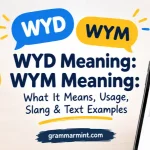 ReplaceRemoveAdd an excerpt…
1,754 words, 9 minutes read time.
Last edited a second ago.
StatusDraft
PublishImmediately
Slugwym-meaning
AuthorMadison Harper
TemplateDefault template
DiscussionOpen
FormatStandardMove to trash
Layout Options
Yoast SEO
SEO analysis: Good
Readability analysis: OKImprove your post with Yoast SEO
Categories
MeaningGrammarSpelling ChoiceVocabularyWord ChoiceAdd Category
Tags
Open publish panel
- Post


