You may see “feral” in texts, comments, captions, memes, or videos. Someone might say, “I’m going feral,” after seeing a concert clip, a celebrity photo, great food, or a dramatic plot twist.
The word matters because it can sound playful or rude. It depends on the person, the setting, and the tone. In standard English, “feral” means wild or untamed. In slang, it often means intensely excited, chaotic, obsessed, or unfiltered.
This guide explains the slang meaning, the plain English meaning, pronunciation, examples, and safe ways to use it. You will also learn when the word may sound too strong.
Quick Answer
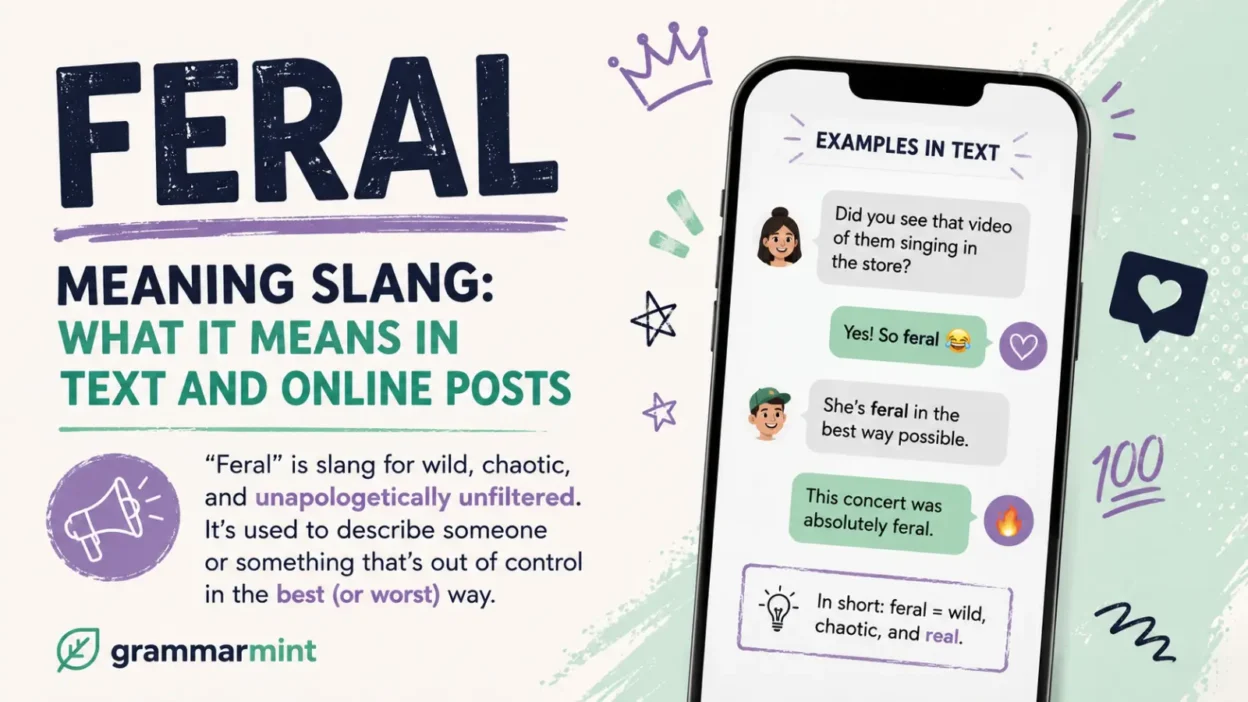
Feral meaning slang refers to acting wild, intense, chaotic, or extremely excited in a playful way. It often describes someone losing control over a funny, attractive, shocking, or thrilling moment.
TL;DR
• “Feral” means wild or untamed.
• In slang, it means intensely excited.
• It can also mean chaotic or unfiltered.
• “Going feral” is usually playful.
• Context decides if it sounds rude.
• Avoid it in formal writing.
What Does Feral Mean in Slang?
In slang, “feral” describes a person who is acting wildly emotional, excited, obsessed, or chaotic. It does not usually mean someone is literally wild like an animal.
People often use it as an exaggerated reaction. It can mean, “I cannot act normal right now.”
Examples:
• “That trailer made me go feral.”
• “The crowd was feral after the final song.”
• “I’m feral for those garlic fries.”
• “Her fans went feral in the comments.”
The tone is usually funny, dramatic, or playful. Still, it can sound harsh if aimed at someone’s behavior.
Feral Meaning in Plain English
The plain English meaning of “feral” is wild, untamed, or not controlled by people. It often describes animals, especially animals that once came from domestic life.
For example, a feral cat lives outside and avoids people. A feral dog may survive without regular human care.
When used for people, the word becomes more figurative. It suggests behavior that seems wild, fierce, uncontrolled, or outside normal manners.
In slang, that wild idea becomes emotional. The person is not truly wild. They are just reacting with huge energy.
Pronunciation and Part of Speech
“Feral” is usually pronounced FEH-ruhl or FEER-uhl. In simple sound form, you can say it like “FEH-rul.”
The word is mainly an adjective. It describes a noun.
Examples:
• “a feral cat”
• “a feral grin”
• “feral energy”
• “feral behavior”
It can also work as a noun in limited uses. For example, people may talk about “ferals” when referring to feral animals. That use is less common in everyday slang.
In slang, “feral” is still usually an adjective. It describes a person, mood, reaction, crowd, or comment section.
How to Use Feral in Texts and Posts
Use “feral” when you want to sound casual, funny, and dramatic. It works best in texts, social posts, fandom comments, captions, and friendly chats.
Common patterns include:
• “I’m going feral.”
• “This made me feral.”
• “The comments are feral.”
• “That scene was feral.”
• “Feral behavior, honestly.”
The phrase “going feral” means becoming wildly excited or unable to stay calm. It is usually not serious.
Example:
“I saw the concert tickets drop, and I went feral.”
That means the person became very excited. It does not mean they behaved dangerously.
Common Contexts for Feral
“Feral” appears often in online reactions. It is popular when people react to music, shows, food, fashion, sports, celebrities, or nightlife.
You may see it in these contexts:
• Fandom: “The fandom went feral over the finale.”
• Food: “These nachos made me feral.”
• Music: “The bass drop had everyone feral.”
• Sports: “The crowd went feral after the goal.”
• Fashion: “That outfit has the comments feral.”
It can also describe a mood. Someone might say, “I feel feral today,” meaning they feel messy, restless, bold, or hard to control.
When Not to Use Feral
Do not use “feral” in formal writing, work emails, school essays, or polite professional settings. It sounds too casual and dramatic.
Be careful when using it about another person. Calling someone “feral” can sound insulting. It may suggest they are rude, dirty, uncivilized, or out of control.
Better choices in serious settings include:
| Context | Best Choice | Why |
|---|---|---|
| Work email | excited | Clear and professional |
| School writing | uncontrolled | More precise |
| Polite comment | energetic | Softer and respectful |
| Strong criticism | aggressive | More direct |
| Friendly text | feral | Casual and funny |
A safe rule: use “feral” about yourself, your mood, or a playful group reaction. Avoid using it to label someone you do not know.
Feral Examples in Modern English
Here are natural examples that show different tones.
Playful slang:
• “I’m going feral over this new album.”
• “That dessert made the whole table feral.”
• “The group chat turned feral after the news.”
• “This sale has me acting feral.”
Excited reaction:
• “Fans went feral when she walked onstage.”
• “The crowd was feral during overtime.”
• “That plot twist made everyone feral.”
• “His guitar solo had people feral.”
Too strong or rude:
• “Your kids are feral.”
Correction: “Your kids have a lot of energy today.”
• “She looked feral at the meeting.”
Correction: “She looked stressed at the meeting.”
• “Those customers were feral.”
Correction: “Those customers were angry and loud.”
The correction depends on what you really mean. Use exact words when respect matters.
Synonyms, Antonyms, and Related Terms
“Feral” has different close meanings in standard English and slang. Choose the word that fits your tone.
Close synonyms:
• Wild: broad and common
• Untamed: more poetic
• Uncontrolled: clear and direct
• Chaotic: messy or intense
• Unfiltered: honest or not restrained
• Unhinged: very dramatic and casual
• Savage: harsher and sometimes rude
Possible antonyms:
• Tame
• Calm
• Controlled
• Civilized
• Polished
• Restrained
Related slang terms include “unhinged,” “chaotic,” “wild,” and “messy.” These words are close, but not identical.
“Unhinged” sounds more extreme. “Chaotic” sounds messy. “Wild” is more general. “Feral” feels more instinctive and dramatic.
Mini Quiz
Choose the best answer.
- In slang, what does “I’m going feral” usually mean?
A. I am becoming an animal.
B. I am extremely excited or chaotic.
C. I am going outside. - Which sentence is safest for work?
A. “The team is feral.”
B. “The team is excited.”
C. “The team went feral.” - What part of speech is “feral” in “feral cats”?
A. Adjective
B. Verb
C. Adverb - Which word is a close slang match for “feral”?
A. Chaotic
B. Silent
C. Polished
Answer key:
- B
- B
- A
- A
FAQs
What does feral mean in slang?
In slang, “feral” means wild, chaotic, intensely excited, or hard to control. It is often used as a funny exaggeration.
Someone might say they are “going feral” because they love something. The phrase usually shows strong emotion, not real danger.
What does going feral mean?
“Going feral” means losing your calm in a dramatic or playful way. It often describes excitement, obsession, anger, hunger, or shock.
For example, “I went feral over that song” means the song caused a huge reaction.
Is feral an insult?
It can be an insult, depending on context. Calling someone “feral” may suggest they are rude, wild, or uncivilized.
Among friends, it can sound funny or affectionate. With strangers, coworkers, or serious topics, it can sound disrespectful.
Is feral a compliment?
Sometimes, yes. In casual online slang, “feral” can praise someone’s bold, fearless, intense, or unfiltered energy.
Still, not everyone hears it that way. Use it carefully when describing another person.
What does feral mean in text?
In text, “feral” usually means emotionally intense, excited, chaotic, or dramatic. It often appears in reactions like “I’m feral” or “This made me feral.”
The meaning depends on what caused the reaction. Food, music, fashion, romance, and fandoms are common triggers.
Can feral describe a person?
Yes, but it can sound strong. In standard English, it suggests someone seems wild, fierce, or uncontrolled.
In slang, it can mean the person is excited, messy, bold, or acting without restraint. Tone matters a lot.
What is the difference between feral and wild?
“Wild” is broader and more common. It can mean exciting, natural, uncontrolled, or extreme.
“Feral” is more specific. It suggests untamed, instinctive, or uncontrolled energy. In slang, it feels more dramatic than “wild.”
Conclusion
Feral meaning slang is about wild, intense, chaotic, or unfiltered energy. It is usually playful in texts and online posts.
Use it with friends, reactions, and casual comments. Avoid it when a softer or more respectful word fits better.