
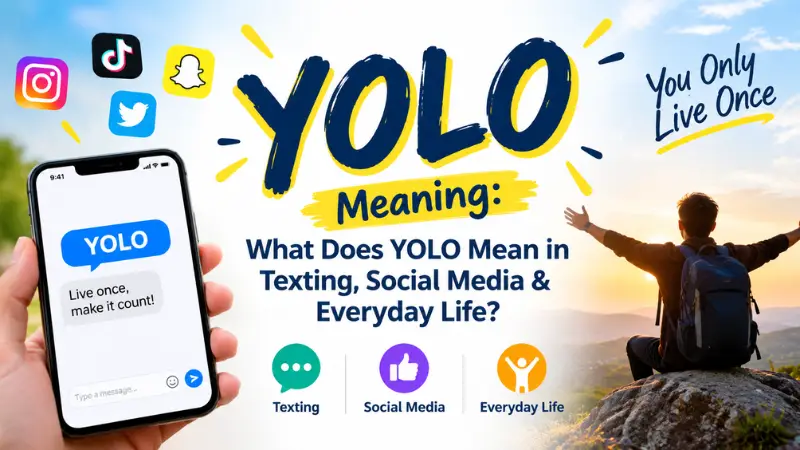
YOLO means “You Only Live Once.” It is a popular acronym used in texting, social media, conversations, and everyday life to express the idea that life is short, so you should enjoy meaningful experiences and sometimes take a chance.
For example, someone might say, “I booked the trip—YOLO!” They are essentially saying, “You only live once, so I decided to go for it.”
Depending on the situation, YOLO can describe anything from trying a new restaurant to making a spontaneous decision. It can be used seriously, humorously, or ironically.
What Does YOLO Mean?
YOLO stands for “You Only Live Once.”
The phrase encourages people to make the most of their lives rather than constantly worrying about what might happen in the future.
| Term | Meaning |
|---|---|
| YOLO | You Only Live Once |
| Type | Acronym / slang |
| Common use | Texting, social media, casual conversation |
| Tone | Casual, playful, motivational, or humorous |
| Example | “I’m going skydiving this weekend. YOLO!” |
The exact meaning can depend on context. Sometimes YOLO is a genuine expression of adventure or spontaneity. Other times, people use it jokingly to justify a small indulgence or impulsive decision.
What Does YOLO Mean in Texting?
In texting, YOLO usually means that someone wants to do something because they do not want to miss an opportunity.
For example:
Person 1: “Should we go out for pizza tonight?”
Person 2: “Sure, YOLO 😂”
Here, YOLO has a lighthearted meaning. The person is basically saying that they should enjoy themselves instead of overthinking the decision.
You may also see YOLO in messages such as:
- “I’m buying the concert tickets. YOLO!”
- “Let’s try that new restaurant. YOLO.”
- “I finally signed up for the class. YOLO!”
- “I’m taking the weekend trip. YOLO ✈️”
- “I ordered dessert even though I’m full. YOLO 😂”
In casual texting, the acronym often adds a playful or spontaneous tone.
What Does YOLO Mean on Social Media?
On social media, YOLO is commonly used in captions, comments, posts, and memes about experiences, adventures, celebrations, or spontaneous choices.
Someone might post a picture from a vacation with a caption such as:
“Booked the flight and figured out the rest later. YOLO!”
In this context, YOLO communicates a willingness to enjoy the moment and embrace an experience.
It can also be used ironically. For example, someone posting a picture of an unusually large dessert might write:
“I probably didn’t need this much cake, but YOLO.”
The person is not necessarily making a major life decision. They are using the phrase humorously to say they decided to enjoy themselves.
YOLO Meaning in Everyday Life
YOLO is not limited to the internet. People also say it in everyday conversations.
You might hear someone say:
“I’ve always wanted to learn guitar. YOLO, so I’m signing up for lessons.”
The idea is that you have one life, so it can be worthwhile to pursue experiences that matter to you.
YOLO can apply to many situations, including:
- Traveling somewhere new
- Trying a new hobby
- Going to a concert
- Meeting new people
- Learning a skill
- Taking a memorable trip
- Celebrating a special occasion
- Trying something outside your normal routine
However, YOLO does not automatically mean “do anything without thinking.” In many modern contexts, people use it more broadly to mean enjoying life while accepting reasonable opportunities.
YOLO Examples in Texting
Here are some natural examples of how people may use YOLO in messages.
Example 1: Travel
“I found a cheap flight for this weekend. Should I go?”
“YOLO! Go for it.”
Meaning: Take advantage of the opportunity and enjoy the experience.
Example 2: Food
“I’m getting the chocolate cake too.”
“YOLO 😂”
Meaning: Enjoy the treat instead of worrying too much about it.
Example 3: Trying Something New
“I’m nervous about joining the dance class.”
“Just try it. YOLO!”
Meaning: Don’t let fear stop you from trying something new.
Example 4: Social Media Caption
“Sunset, good friends, and no plans for tomorrow. YOLO.”
Here, YOLO emphasizes enjoying the present moment.
Example 5: Humor
“I stayed up until 2 a.m. watching movies. YOLO.”
This use is usually playful rather than a serious statement about life.
What Is the Origin of YOLO?
The idea behind “you only live once” is much older than the acronym itself. However, YOLO became especially popular in modern culture during the early 2010s.
The acronym was strongly popularized by Canadian rapper Drake, particularly through his 2011 song “The Motto.” The phrase subsequently spread widely through music, social media, memes, and everyday speech.
As the expression became mainstream, people began using YOLO for everything from major adventures to humorous everyday decisions.
Today, YOLO is widely recognized as casual internet and conversational slang.
Is YOLO an Acronym or an Abbreviation?
YOLO is generally described as an acronym because each letter represents a word:
- Y = You
- O = Only
- L = Live
- O = Once
The full phrase is “You Only Live Once.”
Because YOLO is pronounced as a word (“YO-lo”), it is commonly treated as an acronym rather than simply spelling out each letter.
YOLO vs. Similar Expressions
YOLO is related to several other phrases that encourage people to enjoy life or take opportunities.
| Expression | Meaning |
|---|---|
| YOLO | You Only Live Once; enjoy life or take an opportunity |
| Carpe diem | Seize the day |
| Live in the moment | Focus on and appreciate the present |
| Go for it | Take the opportunity and try |
| Make the most of it | Get the most value or enjoyment from an experience |
| Life is short | A reminder that time is limited |
Although these expressions are similar, they are not always interchangeable.
For example, “carpe diem” can sound more formal or philosophical, while YOLO is usually casual and conversational.
Is YOLO Positive or Negative?
The meaning of YOLO is generally positive or playful, but its tone depends on context.
Positive use
Someone might say:
“I’ve always wanted to travel alone, so I’m finally doing it. YOLO!”
Here, YOLO expresses enthusiasm and a willingness to try something meaningful.
Humorous use
Someone might say:
“I ate the entire pizza. YOLO.”
This is usually a joke.
Risky use
YOLO can also be used to justify reckless behavior. In those situations, the phrase may suggest acting without considering consequences.
That is why the context matters. Saying YOLO before trying a new hobby is very different from using it to justify dangerous or irresponsible behavior.
When Should You Use YOLO?
YOLO works best in casual conversations with friends, family, or people who are familiar with internet slang.
Good situations include:
- Text messages
- Social media captions
- Casual comments
- Memes
- Informal conversations
- Jokes between friends
For example:
“I’m finally going to see my favorite band live. YOLO!”
The phrase sounds natural because the situation is casual and personal.
When Should You Avoid Using YOLO?
YOLO is informal slang, so it may not fit professional or formal communication.
For example, using YOLO in a formal business email, academic paper, or official document would usually sound out of place.
Instead of:
“YOLO, let’s approve the proposal.”
a professional message could simply explain the reasoning behind the decision.
The key is to consider your audience and the setting before using slang.
Does YOLO Mean Being Reckless?
Not necessarily.
The original idea behind YOLO is about recognizing that life is limited and making the most of it. It does not inherently mean ignoring consequences or making dangerous choices.
In everyday online communication, people often use YOLO for harmless decisions, such as:
- Ordering dessert
- Taking a spontaneous trip
- Trying a new activity
- Buying tickets to an event
- Starting a new hobby
So, the phrase can represent spontaneity without necessarily implying recklessness.
Why Is YOLO Still Used?
Although YOLO became especially popular in the early 2010s, the expression remains recognizable because its underlying idea is simple: time is limited, so experiences and opportunities can be worth pursuing.
People also continue to use YOLO because it is short and easy to add to a text, caption, or comment.
Instead of writing:
“Life is short, and I think I should take advantage of this opportunity.”
someone can simply write:
“YOLO.”
That makes the acronym convenient for casual digital communication.
How to Respond When Someone Says YOLO
Your response depends on what the person means.
If they are excited about a harmless opportunity, you could say:
- “Absolutely!”
- “Go for it!”
- “Why not?”
- “Have fun!”
- “Do it!”
- “Sounds exciting!”
If they are using YOLO to justify something potentially dangerous, a more thoughtful response may be appropriate.
For example:
“Have fun, but make sure you’re safe.”
This keeps the spirit of enjoying life without treating YOLO as a reason to ignore consequences.
YOLO in a Sentence
Here are some additional examples:
- “I’m going to finally visit New York this summer—YOLO!”
- “We decided to try the new café downtown. YOLO.”
- “I bought tickets to the concert because YOLO.”
- “Should I get the extra-large dessert? YOLO 😂”
- “I’ve wanted to learn photography for years. YOLO, I’m starting this month.”
These examples show how the meaning can range from serious motivation to simple humor.
Quick Answer: What Does YOLO Mean?
YOLO means “You Only Live Once.” It is a casual acronym used to express the idea of enjoying life, taking an opportunity, trying something new, or making a spontaneous choice.
On texting and social media, YOLO can be serious, encouraging, humorous, or ironic depending on the context.
YOLO meaning in one sentence:
YOLO = You Only Live Once, so make the most of meaningful opportunities and experiences.
FAQs
YOLO stands for “You Only Live Once.” It is an acronym commonly used in texting, social media, and casual conversation.
In texting, YOLO usually means that someone wants to enjoy an experience, take an opportunity, or make a spontaneous choice rather than overthink it.
On Instagram and other social platforms, YOLO is often used in captions and comments about travel, food, parties, adventures, or spontaneous experiences. It can also be used humorously.
Yes. YOLO remains a widely recognized expression, although how frequently people use it varies by age, community, and context.
Yes. YOLO is generally considered informal slang or internet language. It is most appropriate in casual communication rather than formal or professional writing.
The acronym became particularly popular in the early 2010s and was strongly associated with rapper Drake’s 2011 song “The Motto.” The phrase then spread widely through popular culture and social media.
It can refer to taking a chance or trying something new, but YOLO does not inherently mean taking dangerous risks. In many conversations, it is simply a playful way to express spontaneity or enjoyment.
Similar expressions include “carpe diem,” “seize the day,” “live in the moment,” “go for it,” and “make the most of it.” The best alternative depends on the context and tone.
Final Thoughts on YOLO Meaning
YOLO means “You Only Live Once,” and its main idea is to appreciate life and make the most of worthwhile opportunities. In texting and social media, it can be used to express excitement, spontaneity, humor, or encouragement.
While the phrase is often associated with taking chances, it does not have to mean acting recklessly. Its meaning depends largely on the situation and the speaker’s intention.
So, the next time you see “YOLO” in a text, caption, or comment, you can usually understand it as a casual way of saying: make the most of the moment.
If you enjoy learning the meanings of popular texting and social-media terms, explore more slang and acronym guides to understand how these expressions are used in everyday online conversations.
SEO Metadata
Meta Title:
YOLO Meaning: What Does YOLO Mean in Texting?
Meta Description:
Learn the YOLO meaning, what YOLO stands for, and how it’s used in texting, social media, and everyday conversation with examples.
URL Slug:/yolo-meaning


