

You may see “serving” under outfit photos, dance clips, makeup posts, or celebrity videos. In those settings, the word usually has nothing to do with food or customer service. It praises someone who presents a strong look, mood, attitude, or performance.
The slang can appear alone, as in “She is serving.” It can also name the exact quality being delivered. Common examples include “serving looks,” “serving face,” and “serving confidence.” You may also hear it in casual conversations.
Knowing the difference matters because “serving” has several literal meanings. A restaurant may be serving dinner, while a performer may be serving drama onstage. This guide explains the slang definition, pronunciation, grammar, tone, cultural background, and everyday use. It also shows clear examples and common mistakes.
Quick Answer
For anyone searching “serving meaning slang,” the word usually means presenting something with impressive confidence, style, or skill. It is often a strong compliment about a person’s appearance, attitude, energy, or performance.
TL;DR
• “Serving” usually means delivering something impressively.
• It often praises style, beauty, confidence, or talent.
• “Serving looks” means looking especially stylish or striking.
• “Serving face” praises facial expression, makeup, or camera presence.
• The term is informal and common on social media.
• Context separates the slang sense from literal meanings.
What “Serving” Means in Slang
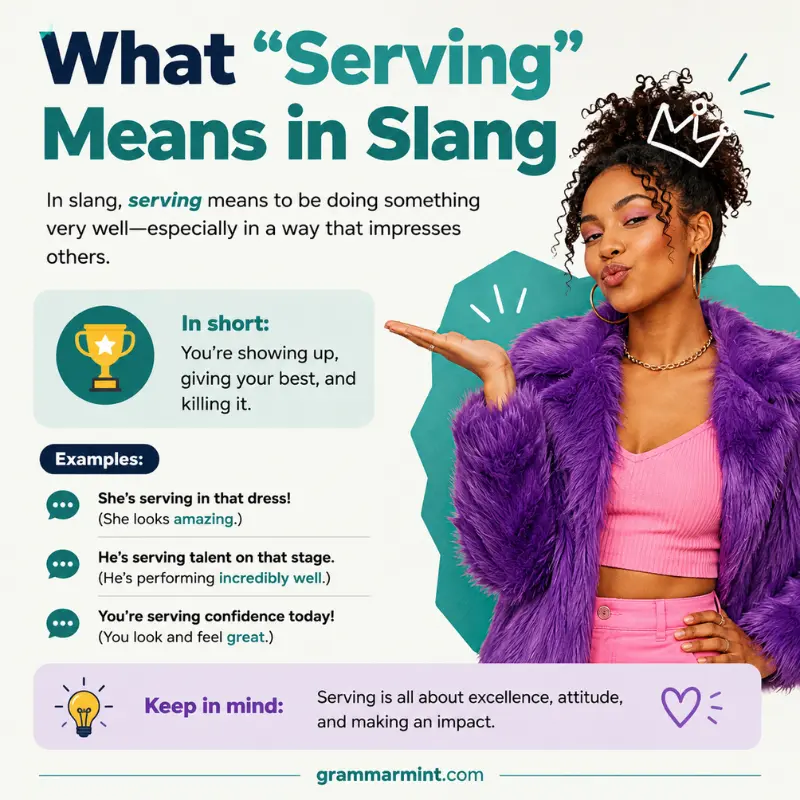
In slang, “serving” means presenting or embodying a quality in a bold, convincing way. The person appears fully committed to the look, mood, or performance.
The word often carries the idea of delivering something for an audience. That audience may be friends, viewers, judges, fans, or a camera.
“She is serving” can mean:
• She looks excellent.
• She appears confident.
• Her outfit is impressive.
• Her expression is powerful.
• Her performance is landing well.
• Her overall presence commands attention.
The meaning is broader than physical beauty. Someone can serve humor, energy, drama, elegance, or skill.
For example, “He is serving confidence” means his confidence is clear and convincing. “That routine served” means the performance was highly effective.
Literal Meaning vs Slang Meaning
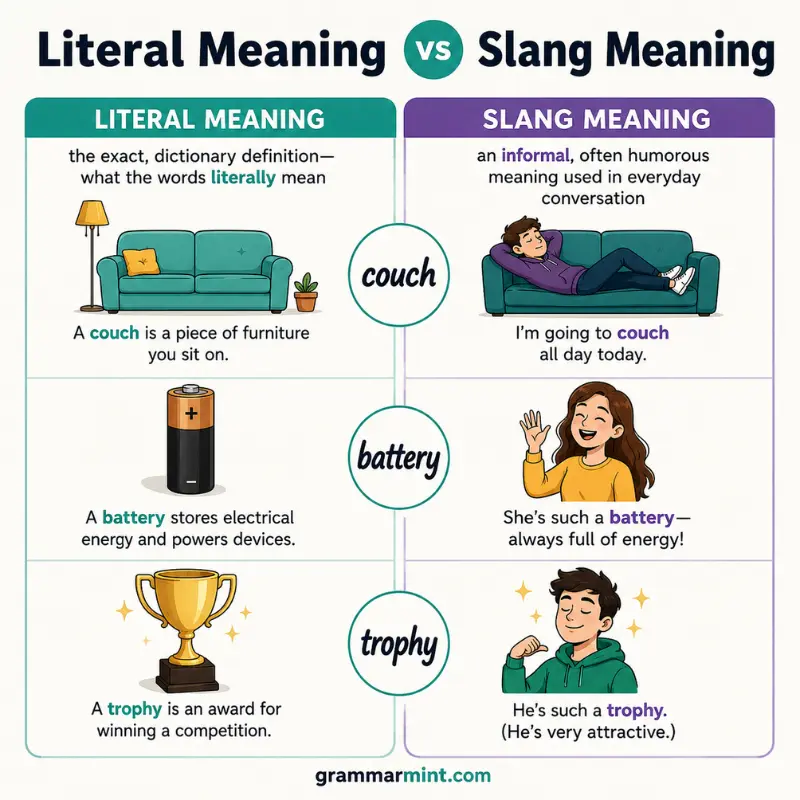
The surrounding words usually reveal which meaning applies. Literal uses often involve food, work, sports, law, or public duty.
| Context | Meaning | Example |
| Food | Giving or providing food | “They are serving lunch.” |
| Portion | An amount for one person | “One serving contains two cookies.” |
| Work or duty | Helping or performing a role | “She is serving on the committee.” |
| Sports | Putting a ball into play | “He is serving first.” |
| Slang | Presenting a quality impressively | “She is serving glamour.” |
A useful test is to ask whether the sentence praises presentation. When it does, the slang meaning is likely.
Compare these examples:
• “The café is serving coffee.” This is literal.
• “Her outfit is serving old Hollywood.” This is slang.
• “He is serving in the military.” This refers to duty.
• “He is serving confidence in that photo.” This is slang.
Pronunciation, Grammar, and Part of Speech
“Serving” is pronounced SUR-ving. The first syllable sounds like “sir,” followed by “ving.”
In standard grammar, “serving” is the present participle of the verb “serve.” It can appear after a form of “be.”
• “She is serving.”
• “They were serving.”
• “You are serving today.”
The slang also allows an object or description after the verb.
• “She is serving looks.”
• “He is serving calm confidence.”
• “The scene is serving mystery.”
• “That jacket is serving rock-star energy.”
“Serving” can also be a noun in literal English. A serving is one portion of food. That noun meaning is different from the slang verb.
The past form is “served.”
• Present: “She is serving.”
• Past: “She served.”
• Stronger praise: “She absolutely served.”
How to Use “Serving”
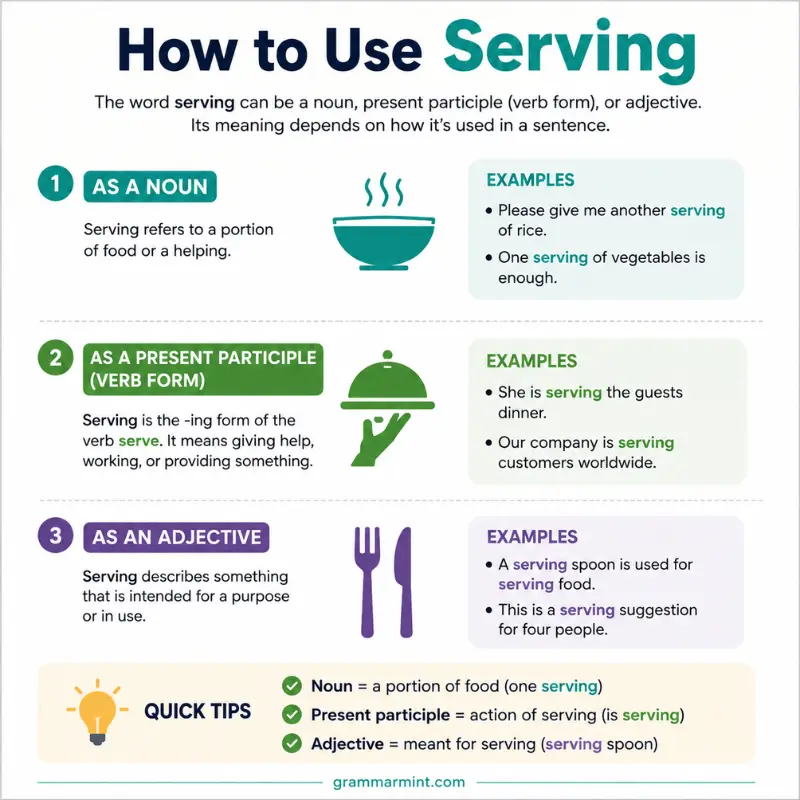
Use “serving” when someone delivers a clear style, mood, or performance. The phrase works best in casual conversations, captions, comments, and entertainment discussions.
Use It as a Complete Compliment
“She is serving.”
This short form means the person looks or performs impressively. The exact reason comes from the surrounding photo or situation.
Add the Quality Being Presented
“You are serving confidence.”
Here, the noun after “serving” names the quality. Common choices include glamour, elegance, attitude, drama, energy, and style.
Add a Look, Era, or Character Type
“That coat is serving detective movie.”
This pattern compares the person or object with a recognizable image. It often sounds playful and creative.
Use the Past Form After a Performance
“She served during that final song.”
This means she delivered an excellent performance. It is close to saying she nailed it.
Use It for Objects or Scenes
“The room is serving cozy cabin.”
People sometimes use the slang for places, designs, meals, or scenes. The object strongly creates a certain mood.
Common Phrases and Real-Life Examples
Certain phrases appear often in fashion, beauty, entertainment, and social posts.
Serving Looks
“Serving looks” means presenting stylish, attractive, or memorable appearances.
• “Everyone at the event was serving looks.”
• “That silver suit is serving looks.”
• “She served three different looks in one video.”
Serving Face
“Serving face” praises facial expression, makeup, posing, or camera presence. It suggests the face is doing much of the expressive work.
• “She is serving face in every photo.”
• “The close-up is pure serving face.”
• “His expression served serious drama.”
Serving Body
“Serving body” praises a person’s figure, pose, or silhouette. This phrase can feel personal, so use it carefully.
• “That fitted suit is serving body.”
• “The pose and styling are serving body.”
Avoid this phrase when comments about someone’s body may feel unwelcome.
Serving Energy
This phrase means strongly giving off a mood or personality.
• “You are serving main-character energy.”
• “The photo is serving peaceful weekend energy.”
• “His speech served quiet confidence.”
Serving Attitude
This can praise bold confidence or describe a dramatic manner. Tone decides whether it sounds admiring or critical.
• “She walked in serving attitude.”
• “That pose is serving playful attitude.”
Serving a Specific Era or Style
The noun phrase names the reference being presented.
• “The hair is serving 1990s pop star.”
• “This room is serving coastal vacation.”
• “His coat is serving classic detective.”
• “The lighting is serving old-Hollywood glamour.”
Tone, Context, and When Not to Use It
“Serving” is usually positive, enthusiastic, and playful. It can sound dramatic on purpose.
The term fits best in informal settings. It is common in social comments, texts, fashion talk, fan discussions, and performance reviews.
| Context | Best Choice | Why |
| Friend’s outfit post | “You are serving!” | Warm and enthusiastic |
| Dance video | “That routine served.” | Praises the performance |
| Formal work review | “The presentation was effective.” | Clearer and more professional |
| Sensitive body discussion | Use a specific, respectful compliment | Avoid unwanted body comments |
Sarcasm can reverse the meaning. “He is serving confusion” may mean he looks confused, not impressive. A teasing tone may also make “serving” sound critical.
Avoid the slang when clarity matters. Formal reports, job applications, legal writing, and serious school assignments need direct wording.
Also consider your audience. Some people may not know the expression. Others may view forced slang as unnatural.
Cultural Background and Modern Use
The modern slang is closely linked to Black and Latino LGBTQ+ ballroom and drag culture. In ballroom settings, performers present looks, movement, attitude, and category-based performances before judges and audiences.
Phrases such as “serve a look” and “serve face” describe bringing full energy to the presentation. The meaning later spread through drag entertainment, fashion language, fan communities, and social media.
Today, many people label “serving” as Gen Z slang. However, the expression did not begin with Gen Z. Younger speakers helped make it more visible across online spaces.
Using the term with some cultural awareness is respectful. It recognizes that popular internet language often existed within specific communities before entering wider use.
Related Terms, Synonyms, and Antonyms
Several slang terms overlap with “serving,” but their grammar and tone differ.
Close Slang Alternatives
• Slaying: Doing or looking exceptionally good.
• Ate: Performed extremely well, usually after the result.
• Delivered: Met or exceeded expectations.
• Nailed it: Completed something very successfully.
• Killing it: Performing or progressing impressively.
• Looking fierce: Appearing bold, stylish, and confident.
“Serving” often focuses on presentation. “Ate” often judges the finished result. “Slaying” can describe appearance, action, or performance.
“Serving” and “It’s Giving”
“It’s giving” identifies the impression something creates. That impression may be positive, negative, or neutral.
“Serving” is more strongly complimentary. It suggests the person or thing presents that quality successfully.
• “It’s giving office carpet.” The impression is not necessarily praise.
• “She is serving executive style.” The sentence clearly praises the look.
Opposite Ideas
There is no perfect single antonym for the slang sense. Informal opposites include “flopping,” “missing the mark,” and “not landing.”
Use these carefully because they sound critical. A softer option is “The look did not come together.”
Common Mistakes and Mini Quiz
The biggest mistakes involve literal meanings, awkward grammar, and unsuitable settings.
Mistake: Assuming It Always Refers to Food
Incorrect idea: “Serving” must mean giving someone a meal.
Correction: It can praise an impressive look, mood, or performance.
Mistake: Using “Served” for an Action Happening Now
Awkward: “She served in this photo right now.”
Better: “She is serving in this photo.”
Use “served” for a completed moment.
Mistake: Treating It as Formal Praise
Too casual for a report: “The speaker served confidence.”
Better: “The speaker appeared confident and well prepared.”
Mistake: Thinking It Only Describes Women
The slang can describe people of any gender. It can also describe outfits, rooms, performances, and scenes.
Mini Quiz
- What does “She is serving looks” most likely mean?
- Which sentence uses the literal meaning?
- Is “serving” usually formal or informal?
- What is the past form of “serve”?
- Can a room “serve” a mood in slang?
Answer Key
- She looks especially stylish or striking.
- “The restaurant is serving dinner.”
- Informal.
- Served.
- Yes, in playful informal use.
FAQs
What Does Serving Mean in Slang?
It means presenting a look, quality, mood, or performance with strong confidence. The phrase is usually a compliment.
Is Serving a Compliment?
Yes, it usually expresses admiration. It can praise someone’s style, expression, talent, confidence, or overall presence.
Sarcasm can change the tone. “Serving confusion” may be playful criticism.
What Does “She Is Serving” Mean?
It usually means she looks impressive or presents herself confidently. The exact meaning depends on the photo, outfit, or performance being discussed.
What Does “Serving Looks” Mean?
It means showing impressive, stylish, or memorable appearances. The phrase often appears in fashion, beauty, and celebrity discussions.
What Does “Serving Face” Mean?
It means presenting a powerful facial expression, makeup look, or pose. The phrase often praises strong camera presence.
What Does Serving Mean on TikTok?
On TikTok, it usually means delivering an impressive look, vibe, attitude, or performance. Users may write it in comments or captions as enthusiastic praise.
Where Did Serving Slang Come From?
The modern slang is strongly linked with Black and Latino LGBTQ+ ballroom and drag culture. It later became common in fashion, entertainment, fandom, and social media.
Conclusion
Understanding serving meaning slang makes online compliments easier to follow. It usually praises confident presentation, strong style, or an impressive performance.
Notice the context, then choose a natural example for your next casual conversation.