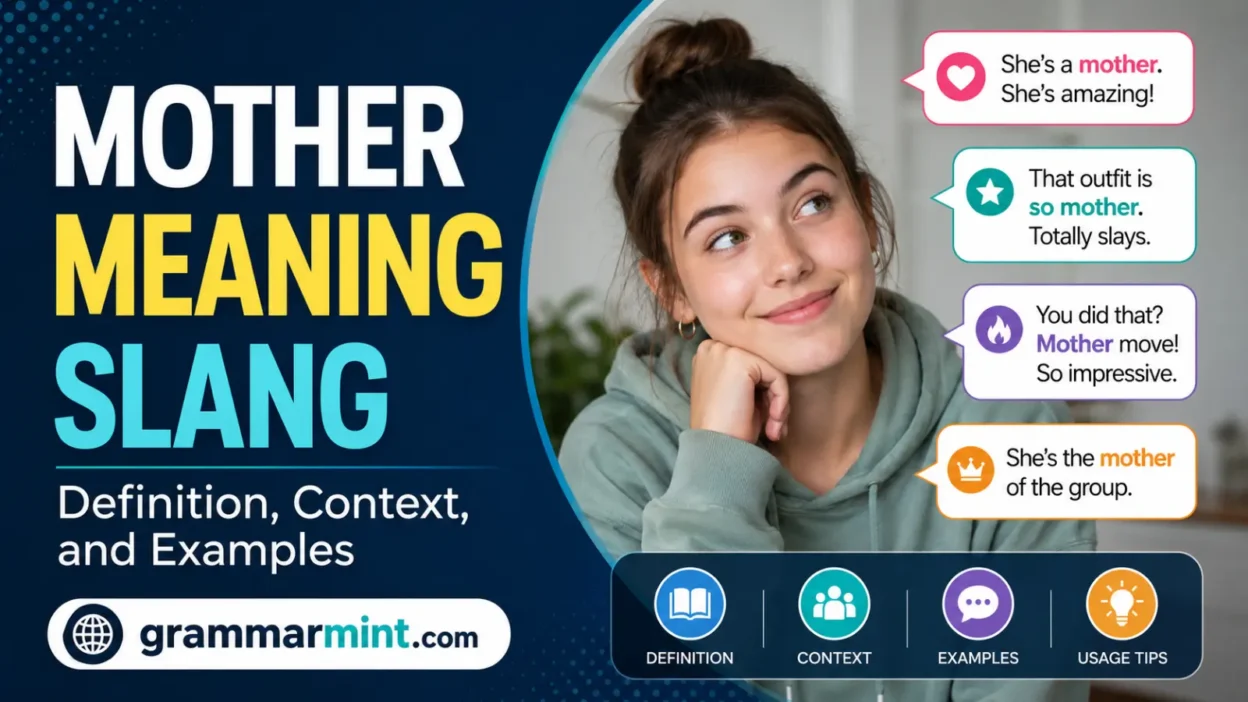
You may see “mother” beneath a singer’s photo, performance clip, or fashion post. The commenter usually is not discussing someone’s parent. Instead, the word works as strong praise for an admired, influential, or commanding person.
This slang appears often in fan communities, queer spaces, drag culture, and social media comments. People also use phrases like “mother is mothering” when someone performs exceptionally well.
Understanding the term matters because it carries more than playful praise. Its modern use connects to ballroom houses, chosen family, mentorship, and community care. Those roots give the word a deeper meaning than “cool” or “famous.”
This guide explains the slang meaning, pronunciation, grammar, cultural background, tone, and natural usage. It also shows when the word fits and when plain language works better.
Quick Answer
The mother meaning slang refers to an iconic, influential, or deeply admired person. It usually praises someone’s talent, confidence, style, presence, or cultural impact.
TL;DR
• “Mother” is a strong slang compliment.
• It often praises confident or influential women.
• The term has roots in queer ballroom culture.
• Ballroom mothers guide and support house members.
• “Mother is mothering” means someone is excelling.
• Use it mainly in informal, familiar settings.
What “Mother” Means in Slang
In casual online speech, “mother” describes someone who inspires strong admiration. The person may seem powerful, talented, stylish, protective, or culturally important.
Fans often use the term for singers, actors, performers, fashion figures, and fictional characters. The word can express respect, affection, excitement, and playful devotion.
Examples include:
• “Mother delivered an incredible performance.”
• “That red-carpet look proves she is mother.”
• “Everyone stood up when mother entered the room.”
• “She keeps changing pop music. Mother behavior.”
The meaning depends on the setting. In fandom, it often means “icon,” “legend,” or “someone I deeply admire.”
Within ballroom culture, the word can describe a real community role. A house mother may guide, protect, teach, and support younger members.
Literal Meaning and Slang Meaning
The literal meaning refers to a female parent or maternal figure. The slang meaning usually expresses admiration or recognizes a respected community figure.
| Context | Best Meaning | Why |
|---|---|---|
| Family conversation | Female parent | The word has its standard meaning |
| Ballroom house | Mentor or parental leader | The role may include care and guidance |
| Fan comment | Iconic admired figure | The word works as enthusiastic praise |
| Formal workplace | Avoid the slang | Many readers may misunderstand it |
These meanings can overlap. A ballroom mother may be admired because she also provides real care, leadership, and protection.
A celebrity called “mother” may not know the speaker personally. The fan is praising her influence, confidence, or emotional importance.
Cultural Roots in Ballroom and Chosen Family
The slang has important roots in Black and Latino queer ballroom communities. Ballroom houses created family structures beyond biological relationships.
A house may include mothers, fathers, children, and siblings. These titles can describe mentorship, leadership, support, and belonging.
House mothers have often helped younger members develop confidence and performance skills. Some also offered practical guidance, safety, housing, or emotional care.
This background explains why “mother” carries unusual weight. It can describe someone who helps others grow and survive.
The term later moved into drag, entertainment, and wider queer culture. Its meaning expanded, but the idea of influence remained.
When using the slang, remember that it did not begin as random celebrity praise. It came from communities where chosen family could provide essential support.
How “Mother” Became an Internet Compliment
Popular culture brought ballroom language to wider audiences. Television, film, music, drag performance, and online fandom increased public exposure.
Social media then made the slang easier to repeat. Fans began posting “mother” under photos, performances, interviews, and fashion moments.
The newer use often praises someone who commands attention. She may look confident, perform brilliantly, or shape a generation’s style.
Common situations include:
• A singer gives a powerful live performance.
• An actor dominates a dramatic scene.
• A celebrity reveals a striking fashion look.
• A public figure responds with confidence and wit.
• A fictional character becomes a fan favorite.
This use is usually playful and exaggerated. Calling someone “mother” places them above ordinary praise.
However, not every admired person automatically fits the term. The word sounds most natural when the speaker feels strong affection or cultural admiration.
“Mother,” “Mothering,” and “Mother Is Mothering”
These forms share a basic idea, but they work differently.
“Mother” usually functions as a noun or title. It names the admired person.
• “Mother has arrived.”
• “She is truly mother.”
• “We must thank mother for this album.”
“Mothering” describes the person performing at an exceptional level. Online speakers treat it like an action.
• “She is mothering on that stage.”
• “That interview proved she was mothering.”
• “The styling team helped her mother all night.”
“Mother is mothering” adds playful emphasis. It means the person is doing exactly what fans admire about them.
The phrase may celebrate talent, beauty, confidence, humor, or authority. It often appears as a caption or short reaction.
A related phrase is “she mothered.” It means she performed, dressed, spoke, or acted exceptionally well.
Pronunciation and Part of Speech
“Mother” is pronounced MUH-thur. The first syllable sounds like “muh,” and the second sounds like “thur.”
In standard English, “mother” can be a noun, adjective, or verb. The slang use most often works as a noun.
• Noun: “Mother released another great song.”
• Title-like noun: “Yes, Mother!”
• Slang verb: “She mothered during that scene.”
• Slang participle: “She is mothering tonight.”
The online verb use is playful. Standard dictionaries also list “mother” as a verb meaning to care for someone maternally.
That standard verb differs from the slang verb. In slang, “mothered” usually means “excelled” or “showed iconic confidence.”
How to Use It Naturally
Use “mother” when your audience already understands informal internet language. It works best in comments, chats, captions, and friendly conversation.
Natural examples include:
• “Her vocals were perfect. Mother!”
• “She walked into the scene and mothered.”
• “That outfit is incredible. Mother is mothering.”
• “We knew she would deliver. She always does.”
• “The final episode belonged to mother.”
You can also use it jokingly for a friend. The friend should understand the tone and feel comfortable with the term.
For example, you might praise a friend’s confident outfit. You could say, “Okay, mother, I see the vision.”
Avoid forcing the word into every compliment. It sounds strongest when the praise is dramatic, affectionate, or playful.
Plain alternatives include “iconic,” “amazing,” “legendary,” “powerful,” and “impressive.” These choices work better with unfamiliar audiences.
Tone, Context, and When Not to Use It
The slang usually sounds admiring, excited, and humorous. It may also sound theatrical or exaggerated.
Context matters because some people know only the literal meaning. They may think you are discussing parenthood.
Avoid the slang in:
• Formal essays
• Business emails
• Job interviews
• Customer complaints
• Serious news writing
• Conversations with unfamiliar audiences
The term can also sound sarcastic. A speaker may write “mother is mothering” after a dramatic or questionable decision.
Check the surrounding message before assuming sincere praise. Emojis, captions, and prior comments often reveal the intended tone.
Use cultural awareness as well. The word has deep queer and ballroom roots. Treating it as meaningless trend language can erase that history.
The slang is often aimed at women or feminine figures. Some communities may use it for people of any gender.
Do not assume everyone welcomes gendered praise. Follow the person’s language and the norms of your community.
Examples, Related Terms, Common Mistakes, and Mini Quiz
Everyday Examples
“Did you watch her performance?”
“Yes. Mother completely owned that stage.”
“Her new look is all over my feed.”
“I understand why. Mother is mothering.”
“That character saved the entire episode.”
“She mothered from the first scene.”
“Why is everyone calling the singer mother?”
“They see her as iconic and influential.”
Related Terms
Icon is the closest plain alternative. It praises lasting influence or importance.
Legend suggests major achievement and respect. In ballroom culture, however, titles may carry specific meanings.
Slay means to perform or look exceptionally good. It is less role-based than “mother.”
Ate means someone did very well. “She ate” often praises a look, performance, or response.
Queen is another admiring title. It may sound broader and less connected to mentorship.
There is no perfect antonym for slang “mother.” Depending on context, possible opposites include “forgettable,” “uninspiring,” or “ordinary.”
Common Mistakes
Mistake: Assuming the word always means a parent.
Correction: Check whether the sentence appears in fandom, drag, or queer cultural discussion.
Mistake: Using “mothering” only for childcare.
Correction: Online, it can mean performing with exceptional confidence or skill.
Mistake: Calling every famous woman “mother.”
Correction: Use it for someone who inspires strong admiration or influence.
Mistake: Ignoring its cultural background.
Correction: Recognize the word’s links to ballroom, chosen family, and queer community care.
Mistake: Using it in formal writing.
Correction: Choose “influential,” “admired,” “accomplished,” or “iconic” instead.
Mini Quiz
- What does “mother” usually express in a fan comment?
- What does “mother is mothering” mean?
- Where does the modern slang have important roots?
- Is the slang a strong choice for a business email?
- Which plain word is closest: “icon” or “neighbor”?
Answer key:
- Strong admiration
- Someone is excelling
- Queer ballroom culture
- No
- Icon
FAQs
What does “mother” mean in slang?
It describes an iconic, influential, or deeply admired person. The word often praises talent, confidence, style, or cultural impact.
Is calling someone “mother” a compliment?
Usually, yes. It is often a strong and playful form of praise.
Tone still matters. A sarcastic caption can change the meaning.
What does “mother is mothering” mean?
It means an admired person is performing exceptionally well. The phrase can praise a performance, outfit, response, or public moment.
Why do fans call celebrities “mother”?
Fans use the word to show admiration and emotional connection. They may view the celebrity as influential, powerful, protective, or culturally important.
Where did the slang term “mother” come from?
Its modern meaning has important roots in Black and Latino queer ballroom culture. House mothers served as leaders, mentors, and parental figures within chosen families.
Can “mother” describe someone who is not a woman?
Sometimes. The slang often praises women or feminine figures, but some communities use it across genders.
Context and personal preference should guide your choice. Avoid using gendered language that may make someone uncomfortable.
Is “mother” appropriate at school or work?
It may fit casual talk with peers who understand it. It usually does not fit assignments, professional emails, interviews, or formal presentations.
Conclusion
The mother meaning slang combines admiration, influence, confidence, and cultural history. It can praise an icon or recognize a meaningful community role.
Use it in familiar, informal settings. Remember its ballroom roots, and choose plain language when clarity matters most.