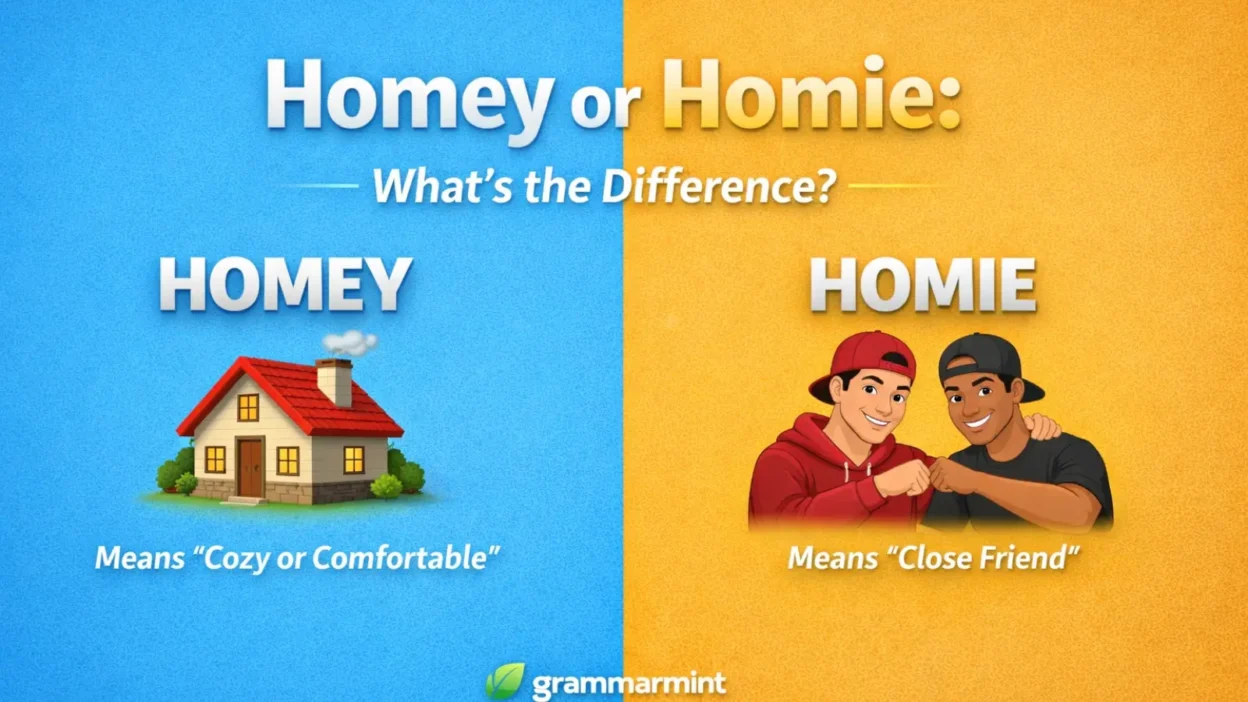
“Homey” and “homie” look and sound similar, so it’s easy to confuse them. However, these two words have different meanings and are used in different situations.
Homey usually describes something that feels comfortable, warm, cozy, or like home. Homie, on the other hand, is informal slang for a close friend or someone you know well.
Understanding the difference can help you choose the right word for texts, social media posts, everyday conversations, and professional writing.
Quick Answer
Both homey and homie are correct words, but they do not mean the same thing.
- Homey = cozy, comfortable, warm, or homelike
- Homie = an informal word for a close friend
For example:
“The living room feels very homey.”
“He’s my homie from college.”
A simple way to remember the difference is: homey describes a place or atmosphere, while homie usually describes a person.
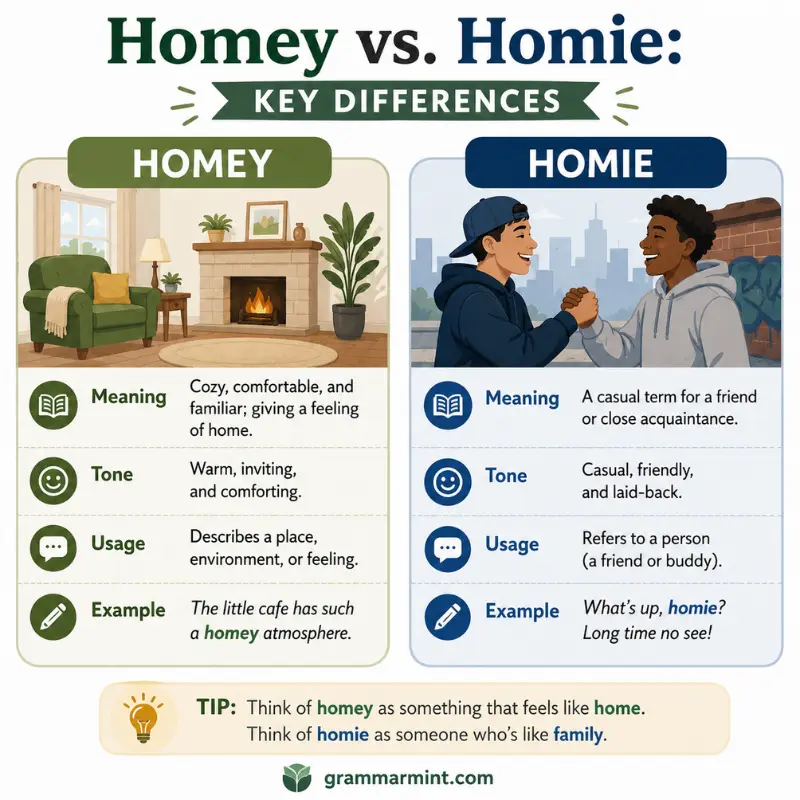
Homey vs. Homie: Key Differences
| Feature | Homey | Homie |
|---|---|---|
| Part of speech | Adjective | Noun |
| Main meaning | Cozy, comfortable, warm | Close friend |
| Tone | Neutral to casual | Informal slang |
| Common use | Homes, rooms, places, atmosphere | Friends and casual conversation |
| Professional writing | Sometimes appropriate | Usually avoid |
| Example | “The house feels homey.” | “He’s my homie.” |
What Does “Homey” Mean?
Homey is an adjective that means comfortable, cozy, warm, or pleasantly like home.
It is commonly used to describe a room, house, restaurant, hotel, or other place that has a welcoming atmosphere.
Examples of “Homey”
- “The small cabin feels very homey.”
- “I love the homey atmosphere of this café.”
- “The warm lighting makes the bedroom feel homey.”
- “Their new apartment is simple but homey.”
You can think of homey as meaning “like home.”
Homey vs. Homie in Social Media
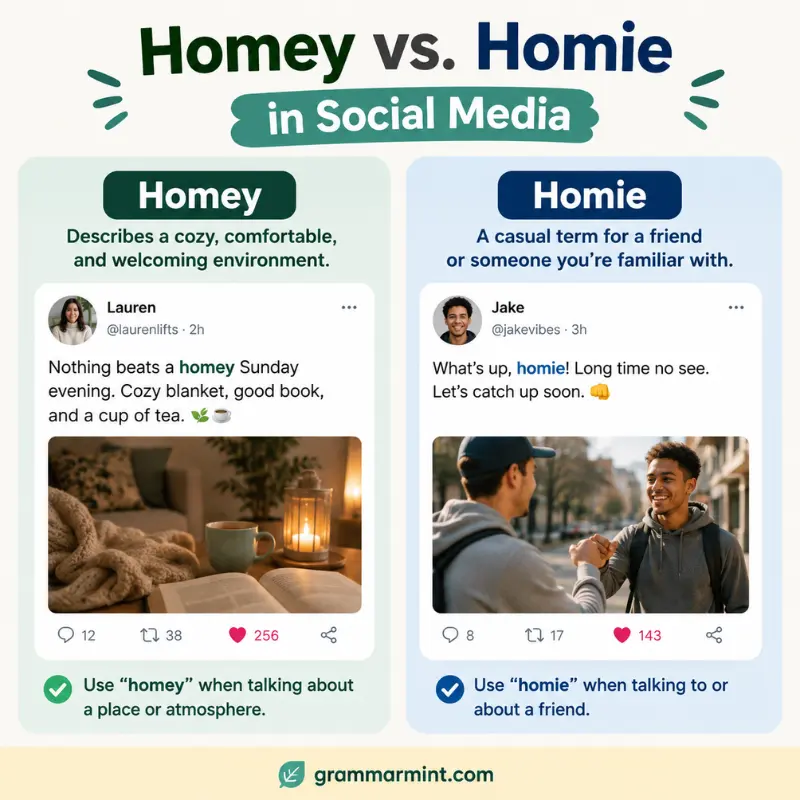
Social media often contains both words because platforms allow people to use casual and conversational language.
“Homey” commonly appears in posts about houses, apartments, decorating, food, travel, and lifestyle.
For example:
“Finally made my apartment feel homey.”
“Homie” is more likely to appear when someone is talking about friends or a group of people.
For example:
“Weekend adventures with my homies.”
Hashtags, captions, comments, and memes may use “homie” even more casually. This does not mean the word is appropriate in every type of writing. Social media language is generally less formal than business or academic language.
What Does “Homie” Mean?
Homie is an informal slang term for a close friend, companion, or someone from your social circle.
It is mainly used in casual speech, text messages, social media, and other informal settings.
Examples of “Homie”
- “He’s my homie from high school.”
- “I’m going out with my homies tonight.”
- “Thanks for helping me, homie.”
- “That’s one of my closest homies.”
Because homie is slang, it generally sounds relaxed and conversational rather than formal.
Can “Homey” and “Homie” Be Used in the Same Sentence?
Yes, both words can appear in the same sentence because they have different meanings.
For example:
“My homie said the new apartment feels homey.”
In this sentence, homie refers to a friend, while homey describes the apartment.
Another example is:
“I invited my homies over because my new place is so homey.”
Here, “homies” means friends, and “homey” means cozy or comfortable.
These examples show why changing one letter can completely change the meaning of a sentence.
Where Do “Homey” and “Homie” Come From?
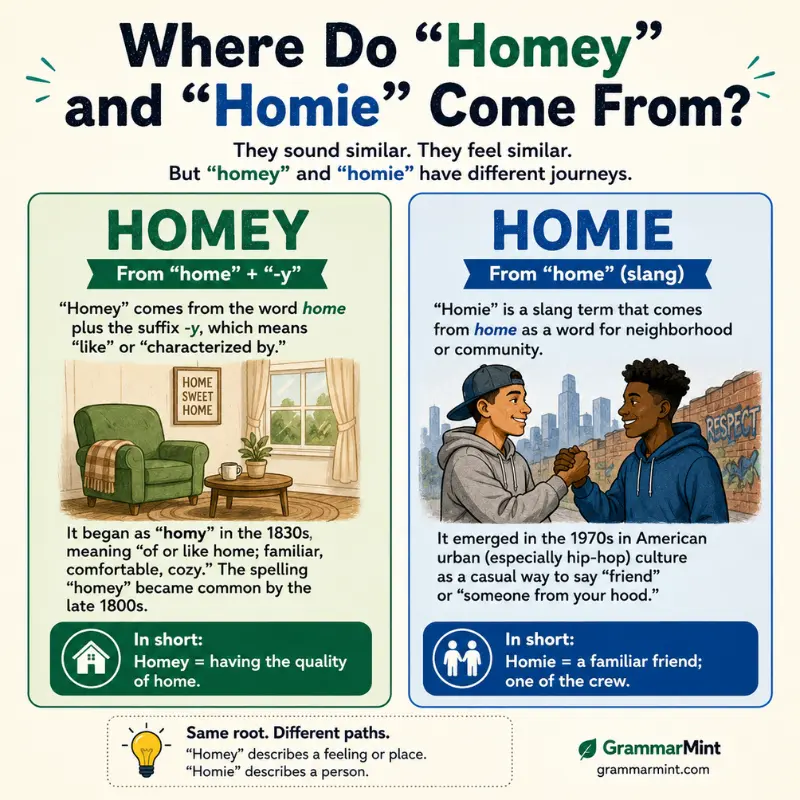
Homey comes directly from the word home. It developed as a way to describe something that feels pleasant, comfortable, or like home.
Homie developed as an informal slang term for a friend or companion. The word is strongly associated with American informal speech and has also become widely recognized through music, movies, television, and popular culture.
Although the two words look similar, their different meanings developed separately.
Is “Homey” American or British English?
The distinction between homey and homie is not simply a British-versus-American spelling difference.
Both forms are used in American English, but they have different meanings.
- Homey describes a cozy or comfortable quality.
- Homie refers to a friend in informal language.
So changing the spelling from homey to homie changes the meaning.
What Does “Homey” Mean?
“Homey” is an adjective used to describe a place, room, or environment that feels comfortable and welcoming. When something is homey, it gives you the pleasant feeling of being at home.
The word is commonly used when talking about interior spaces, especially homes, apartments, cabins, restaurants, and other places designed to feel warm and relaxed.
For example:
- “The little cottage has a very homey atmosphere.”
- “Soft blankets made the bedroom feel more homey.”
- “The restaurant has a cozy, homey design.”
“Homey” can describe more than physical appearance. It can also describe an atmosphere or feeling. A room may be simple but still feel homey because it is comfortable and inviting.
Synonyms for “Homey”
Depending on the sentence, you can replace “homey” with words such as:
- Cozy
- Comfortable
- Welcoming
- Warm
- Inviting
- Homelike
- Pleasant
However, these words are not always exact substitutes. “Homey” specifically suggests the comfortable and familiar feeling associated with home.
When Should You Use “Homie”?
Use homie when you are talking casually about a friend or close acquaintance.
For example:
“She’s my homie from college.”
“I’m meeting my homies after work.”
“What’s up, homie?”
The word is intentionally informal, so it works best when the conversation has a relaxed tone.
Should You Use “Homie” in Professional Writing?
Usually, no.
Homie is slang and can sound too casual in professional, academic, or formal communication.
For example, instead of writing:
“Thanks, homie!”
a professional message could say:
“Thanks for your help!”
Depending on the situation, you could also use friend, colleague, coworker, or associate.
However, homie can be appropriate when you are intentionally using a casual or humorous tone, such as in dialogue, social media content, or creative writing.
Common Mistakes
Because the words look so similar, several mistakes are common.
1. Using “homey” to mean friend
Incorrect for the intended slang meaning:
“He’s my homey from work.”
Better:
“He’s my homie from work.”
2. Using “homie” to describe a cozy place
Incorrect:
“The café is very homie.”
Better:
“The café is very homey.”
3. Using “homie” in a formal email
Too casual:
“Thanks, homie!”
Professional:
“Thanks for your help.”
4. Thinking “homey” and “homie” are alternate spellings
They are not simply two spellings of the same word. They have different meanings.
Homey = cozy or comfortable
Homie = close friend
5. Writing “homy”
Homy is not the standard spelling you want when you mean either of these words.
Use homey for something cozy and homie for an informal reference to a friend.
Homey vs. Homie in Everyday Examples
Text Message
“Your new apartment looks so homey!”
Here, homey describes the apartment.
Social Media Caption
“Game night with the homies.”
Here, homies refers to friends.
Home Decor
“We added warm lights to make the room feel more homey.”
Here, homey describes the atmosphere.
Casual Conversation
“That’s my homie from college.”
Here, homie means close friend.
Professional Email
Instead of:
“Thanks, homie!”
Use:
“Thanks for your help.”
Homey vs. Homie: Which Word Is Better?
The right choice depends on what you mean.
| Context | Best Choice | Example |
| Describing a cozy room | Homey | “The room feels homey.” |
| Describing home decor | Homey | “The decor is warm and homey.” |
| Talking about a close friend | Homie | “He’s my homie.” |
| Casual text | Homie | “What’s up, homie?” |
| Real estate description | Homey | “A bright, homey cottage.” |
| Business email | Formal alternative | “Thanks for your help.” |
| Academic writing | Formal alternative | “Close friend” or “friend” |
Can “Homey” Mean “Friend”?
In some informal or slang contexts, homey may occasionally be used with a meaning similar to homie. However, this usage is less clear and can cause confusion.
If you specifically mean a close friend, homie is the clearer informal choice.
If you mean cozy, comfortable, or like home, use homey.
Is “Homie” Slang?
Yes. Homie is an informal slang term for a friend or close acquaintance.
It is common in casual conversation, texting, social media, and popular culture. Because of its informal nature, it is generally not the best choice for formal or professional writing.
Is “Homey” a Positive Word?
Yes. Homey is usually positive.
When you describe a place as homey, you generally mean that it feels warm, comfortable, welcoming, and pleasant.
For example:
“The guest room has a cozy, homey feel.”
This suggests that the room feels inviting and comfortable.
Easy Trick to Remember the Difference
Here’s a simple memory trick:
Homey → Home
If something feels like home, it is homey.
Homie → Friend
If you are talking about a friend, especially in casual slang, use homie.
Think:
Homey = cozy
Homie = buddy
Mini Quiz
Choose the correct word in each sentence.
- “That cabin feels so ___.”
- “She’s my best ___ from high school.”
- “The warm lighting makes the apartment feel ___.”
- “I’m going out with my ___ tonight.”
- “Which word would be more appropriate in a business email: homey or homie?”
Answer Key
- Homey
- Homie
- Homey
- Homies
- Neither — use a more professional word such as friend, colleague, or simply omit the slang.
Conclusion
Homey and homie may look almost identical, but they have different meanings.
Use homey when you mean cozy, comfortable, warm, or welcoming. Use homie when you mean a close friend in informal language.
The easiest way to remember them is:
Homey = like home.
Homie = a friend.
When choosing between the two, think about what you are describing and who your audience is. That small spelling difference can completely change the meaning of your sentence.