If you’re trying to understand Ceo or Coo ceo-or-coo, you usually want one clear answer: which title is higher, what each person actually does, and when a company uses one or both. These executive titles sit in the C-suite, but they don’t do the same job. In most companies, the chief executive officer leads company direction, major decisions, and board communication, while the chief operating officer focuses on operations, execution, teams, and performance. Readers also mix these titles up with founder, president, and CFO. So this guide breaks it down in plain English and shows where each role fits in a real company.
Quick Answer
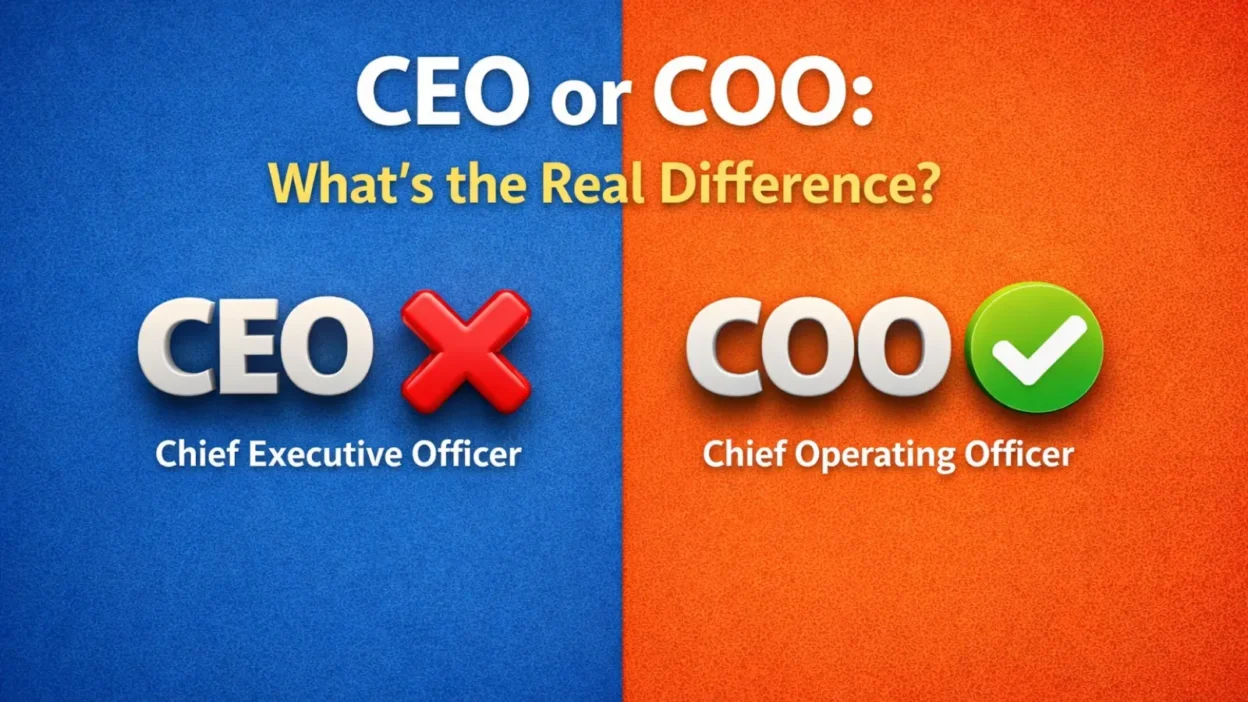
CEO or COO is not an either-or spelling choice. A CEO is the top executive who sets direction and makes the biggest company decisions, while a COO is usually the second-in-command who runs day-to-day operations and executes that direction. In most companies, the COO reports to the CEO.
TL;DR
• CEO is usually the highest executive.
• COO usually runs operations and execution.
• The COO commonly reports to the CEO.
• Smaller companies may skip the COO title.
• One person can hold both titles.
• President and CFO are separate comparisons.
CEO Vs COO: The Fast Difference
Think corporate hierarchy, executive titles, and C-suite roles. At the simplest level, the CEO decides where the company is going, and the COO helps the company get there. That basic split shows up across the strongest live sources.
• CEO leads the whole enterprise.
• COO runs the operating engine.
• CEO owns the broad direction.
• COO carries out the plan.
• CEO sits at the top.
• COO usually sits just below.
• CEO answers upward to boards.
• COO answers upward to CEOs.
• CEO guards the long view.
• COO manages the near term.
• CEO often shapes public trust.
• COO often shapes internal discipline.
What CEO Means
The chief executive officer, the board of directors, and the company vision belong together. In most companies, the CEO is the most senior executive and the main link between the board and the business itself. The role centers on direction, priorities, and major decisions.
• CEO means Chief Executive Officer.
• It is the top executive title.
• The role centers on direction.
• The job sets company priorities.
• It guides long-range strategy.
• It allocates people and capital.
• It oversees senior leadership.
• It speaks with the board.
• It often represents the company publicly.
• It shapes culture from above.
• It approves major moves.
• It carries ultimate executive accountability.
What COO Means
The chief operating officer usually owns daily operations and business execution. In plain terms, the COO turns strategy into working systems, teams, and routines. The title is senior, but it is usually not the highest one.
• COO means Chief Operating Officer.
• It is usually second-in-command.
• The role focuses on execution.
• The job manages internal operations.
• It turns plans into process.
• It keeps departments aligned.
• It tracks operational performance.
• It improves workflows and systems.
• It helps remove friction fast.
• It coordinates cross-team delivery.
• It supports efficient resource use.
• It keeps strategy moving daily.
Who Is Higher, CEO Or COO
For chain of command, second-in-command, and top executive questions, the answer is straightforward. In the usual corporate structure, the CEO ranks above the COO, and the COO reports to the CEO. Some titles vary by company, but that core hierarchy is the norm.
• CEO is usually the higher role.
• COO normally reports upward.
• CEO holds the final executive rank.
• COO supports enterprise leadership.
• CEO can overrule COO decisions.
• COO leads within assigned scope.
• CEO owns enterprise-wide accountability.
• COO owns operational accountability.
• CEO may report to directors.
• COO rarely outranks the CEO.
• Titles can vary by company.
• Still, hierarchy is usually clear.
CEO Vs COO Responsibilities
This section centers on long-term strategy, operational management, and accountability. Both roles matter, but they serve different needs inside the same business. One role sets direction; the other makes the direction workable.
• CEO chooses major priorities.
• COO builds operational follow-through.
• CEO defines growth direction.
• COO organizes delivery around goals.
• CEO evaluates big market moves.
• COO manages internal performance.
• CEO supervises the senior team.
• COO supports functional coordination.
• CEO handles major stakeholder pressure.
• COO handles process breakdowns.
• CEO owns enterprise outcomes.
• COO owns operating consistency.
Strategy Vs Execution
Here the key ideas are planning, implementation, and performance metrics. In practice, the CEO usually frames the strategy, while the COO makes sure teams, timelines, and systems actually deliver it. That’s why readers often hear the shorthand that the CEO is vision and the COO is execution.
• Strategy starts with direction.
• Execution starts with operating detail.
• CEO defines the destination.
• COO maps the working route.
• CEO sets enterprise priorities.
• COO converts priorities into actions.
• CEO approves bold moves.
• COO sequences daily effort.
• CEO reviews high-level outcomes.
• COO monitors operating signals.
• CEO looks years ahead.
• COO makes this quarter function.
External Face Vs Internal Operator
Think stakeholders, media, and internal affairs. The CEO is often the outward-facing leader speaking with boards, investors, partners, and the public, while the COO is more often focused on internal coordination and operational health. That split is common, even though real companies can vary.
• CEO often fronts major announcements.
• COO often works behind scenes.
• CEO handles public expectations.
• COO handles internal alignment.
• CEO speaks with investors often.
• COO speaks with department leaders.
• CEO protects brand confidence.
• COO protects process reliability.
• CEO watches market relationships.
• COO watches execution quality.
• CEO frames the company story.
• COO keeps the story operational.
Who Reports To Whom
For direct reports, org chart, and decision flow, readers usually want a simple picture. The CEO commonly sits over the executive team, while the COO usually reports to the CEO and may oversee operational leaders, department heads, or business-unit managers. Structure still depends on company size and design.
• COO usually reports to CEO.
• CEO may report to directors.
• CFO often reports to CEO.
• Ops leaders may report to COO.
• HR may sit under COO.
• Production may sit under COO.
• Logistics may sit under COO.
• Sales may report elsewhere sometimes.
• Reporting lines vary by company.
• Complexity changes the org chart.
• Startups often keep flatter structures.
• Large firms separate authority clearly.
Decision-Making Power
Here the useful terms are veto power, scope, and final decisions. A COO can make major operational choices, but the CEO usually holds broader authority and can override choices when needed. That difference matters when people confuse responsibility with ultimate power.
• COO can decide within scope.
• CEO usually decides at enterprise level.
• COO owns many operating calls.
• CEO owns final strategic calls.
• COO recommends execution paths.
• CEO approves broad direction shifts.
• COO can move resources tactically.
• CEO can reshape company priorities.
• COO influences through operating insight.
• CEO influences through overall authority.
• Scope matters more than title alone.
• Final say usually stays above.
Do All Companies Need A COO
This is where small business, startup, and complexity matter. Not every company has a COO, and many smaller businesses run without one. The role becomes more useful when operations grow complicated, cross-functional, or too large for one top executive to manage alone.
• Small firms often skip the role.
• Founders may handle operations directly.
• Lean teams combine responsibilities.
• Growing companies add operational oversight.
• Complexity can justify a COO.
• Multiple divisions raise coordination needs.
• Fast scaling creates execution pressure.
• Transformation work may require one.
• Some sectors use COOs more often.
• Others operate well without one.
• Structure should match real needs.
• A title alone solves nothing.
Can One Person Be Both CEO And COO
The live sources show real dual role, founder-led, and lean team examples. In smaller or early-stage businesses, one person may hold both titles or do both jobs without using both titles. Still, combining them can blur accountability if the company grows.
• Yes, one person can hold both.
• This happens in small companies.
• Startups often combine senior roles.
• Founder-CEOs may run operations too.
• Dual titles can save headcount.
• Dual roles can speed decisions.
• Yet role clarity may suffer.
• Overload becomes a real risk.
• Growth usually forces separation.
• Investors may want cleaner structure.
• Teams benefit from defined ownership.
• Mature firms split the jobs.
Can A COO Become CEO
The big ideas here are succession planning, leadership pipeline, and promotion path. Yes, a COO can become CEO, and many companies use the role to prepare future top leaders. That said, operational excellence alone does not guarantee the promotion.
• Yes, the move happens often.
• COO is a common launchpad.
• The role builds enterprise exposure.
• It sharpens cross-functional judgment.
• It tests leadership under pressure.
• It builds trust with the CEO.
• It can improve board visibility.
• It strengthens succession readiness.
• Yet promotion is never automatic.
• Public-facing skills still matter.
• Strategy depth still matters.
• Timing and fit still matter.
CEO Vs President Vs COO
This section clears up president title, overlap, and corporate structure confusion. President is a separate title that may overlap with COO in some companies, while in others it does not. That’s why title charts can look messy across different organizations.
• CEO is usually the top role.
• President may be second-in-command.
• COO may also be president.
• Sometimes president outranks operations leaders.
• Sometimes titles are combined.
• Sometimes titles stay separate.
• Company bylaws shape title meaning.
• Large firms split titles more.
• Small firms blend titles more.
• President often manages internal performance.
• CEO usually keeps wider authority.
• Always check the specific org chart.
CEO Vs COO Vs CFO
For finance, operations, and strategic direction, these three roles solve different problems. The CEO leads the whole business, the COO drives execution, and the CFO owns the money side, financial planning, and discipline. They work together, but their lanes are not the same.
• CEO leads the full company.
• COO leads operational execution.
• CFO leads financial stewardship.
• CEO sets overall direction.
• COO aligns process to strategy.
• CFO protects financial health.
• CEO manages enterprise trade-offs.
• COO manages delivery trade-offs.
• CFO manages capital trade-offs.
• CEO speaks across the company.
• COO speaks across operations.
• CFO speaks across the numbers.
Skills That Fit Each Role
Readers often compare leadership, operational expertise, and communication when judging fit. CEOs usually need stronger external leadership and broad strategic judgment, while COOs usually need sharper systems thinking and execution strength. The best pairings complement each other.
• CEOs need broad judgment.
• COOs need process discipline.
• CEOs need stakeholder presence.
• COOs need operating rigor.
• CEOs need narrative clarity.
• COOs need systems thinking.
• CEOs need capital allocation sense.
• COOs need workflow awareness.
• CEOs need market perspective.
• COOs need execution stamina.
• CEOs need visible leadership.
• COOs need coordination mastery.
When To Use CEO Or COO
This final section helps with job title, business writing, and org chart choices. Use CEO when you mean the highest executive with overall authority. Use COO when you mean the executive responsible for operations and execution, usually reporting to the CEO.
• Use CEO for the top leader.
• Use COO for operations leadership.
• Use CEO in founder bios carefully.
• Use COO in org charts precisely.
• Use CEO for board-facing authority.
• Use COO for execution authority.
• Use CEO for company direction.
• Use COO for delivery ownership.
• Don’t swap the titles loosely.
• Don’t assume every firm matches.
• Verify the company’s own structure.
• Choose the title by function.
FAQs
What is the primary difference between a CEO and a COO?
The CEO usually leads the company’s overall direction, while the COO usually leads execution and daily operations. In simple terms, the CEO sets the course and the COO makes the course workable.
Is the CEO or COO higher in an organization?
The CEO is usually higher. Most live sources agree that the COO is normally second-in-command and reports to the CEO.
Do all companies have a COO?
No. Many smaller companies operate without a COO, especially when the CEO or founder is still close to day-to-day work. The role becomes more common as operations grow more complex.
Can a CEO also be a COO?
Yes, especially in smaller or early-stage businesses. One person may do both jobs, but as the company grows, separating the roles often improves clarity and workload balance.
What does a COO do on a daily basis?
A COO typically reviews performance, coordinates teams, removes bottlenecks, and keeps operations aligned with business goals. The exact mix depends on the company, but the job is heavily execution-focused.
Can a COO become CEO?
Yes. The COO role often gives someone broad operational knowledge and cross-functional leadership experience, which can make them a strong CEO candidate. Still, the move depends on succession plans, timing, and fit.
Conclusion
When people ask about Ceo or Coo ceo-or-coo, the simplest answer is this: CEO is usually the top executive, and COO usually runs operations under that top role.
So check the company’s structure, match the title to the function, and use the term that fits the real authority behind the job.