You may see cringe in conversations, comments, memes, videos, and text messages. Someone might say, “That was cringe,” after an awkward speech or strange social post. You may also hear it in regular English, as in “I cringe when I remember that moment.”
The word matters because it can describe a feeling, a reaction, or a judgment. It can be neutral, funny, or rude, depending on tone. This guide explains the cringe meaning, its standard use, its slang use, pronunciation, related words, examples, and common mistakes.
Quick Answer
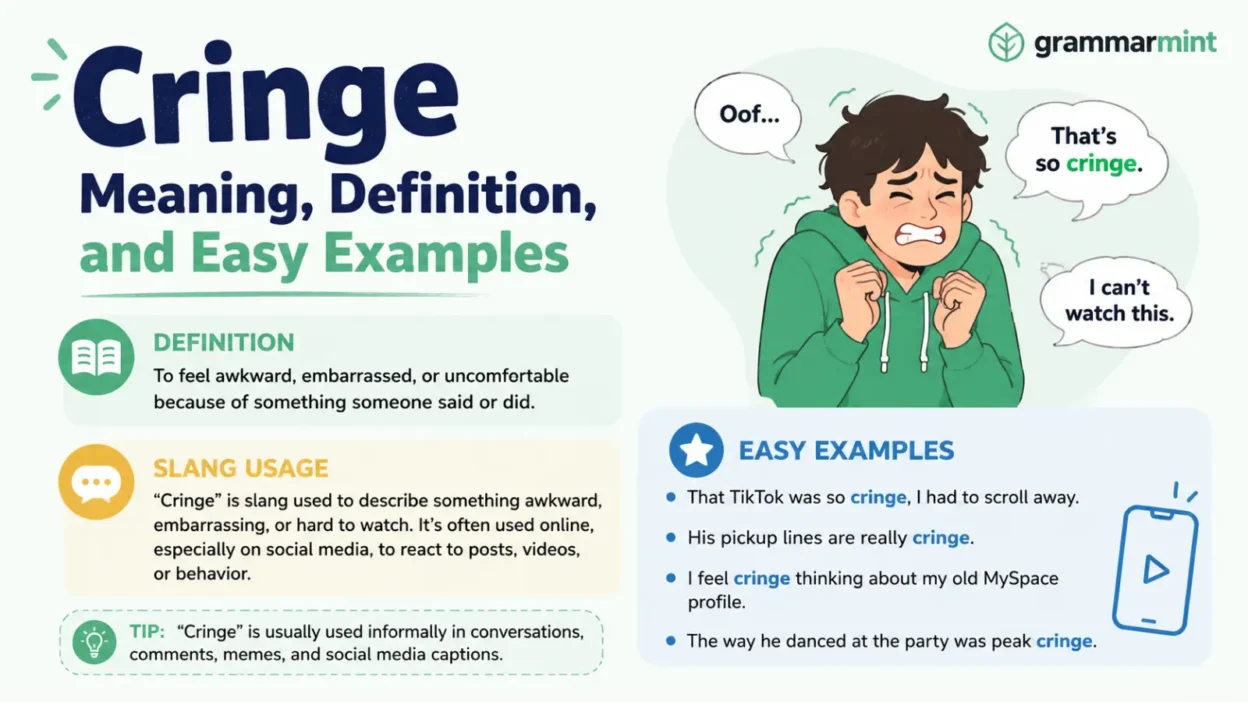
Cringe meaning: to cringe means to feel embarrassed, awkward, ashamed, or uncomfortable. As slang, cringe describes something so awkward or embarrassing that it makes people uncomfortable.
TL;DR
• Cringe can be a verb.
• Slang cringe works like an adjective.
• It often means awkward or embarrassing.
• It can sound judgmental.
• Cringey means causing cringe.
• Use it carefully in formal writing.
What Does Cringe Mean in English?
In plain English, cringe means to react with discomfort. That reaction may come from fear, shame, embarrassment, or disgust.
The older meaning is physical. A person may pull back or shrink away. The modern meaning often focuses on social embarrassment.
Examples:
• I cringe when I hear my old voicemail greeting.
• She cringed at the loud joke during dinner.
• He cringes whenever someone reads his old poems.
• The dog cringed when the thunder started.
In these sentences, cringe is a verb. It shows a reaction inside the body or mind.
Cringe Meaning in Slang
In slang, cringe describes something awkward, embarrassing, uncool, or hard to watch. It often means the person watching feels secondhand embarrassment.
People use it when someone seems unaware of how awkward they look. That is why it can sound harsh.
Examples:
• That pickup line was cringe.
• His fake apology video felt cringe.
• The school dance scene was funny but cringe.
• Posting that long rant was kind of cringe.
This use is informal. It fits texting, comments, casual speech, and social media. It does not fit most school essays, reports, or professional emails.
Pronunciation and Part of Speech
Cringe is pronounced krinj. It rhymes with binge, hinge, and fringe.
The word can work in more than one way:
• Verb: I cringe at old photos.
• Noun: That scene gave me a cringe.
• Adjective, slang: That scene was cringe.
The verb is the most standard use. The adjective is common in casual speech. The noun exists, but it can sound less natural in everyday use.
How to Use Cringe in Sentences
Use cringe when something causes embarrassment, discomfort, or a strong awkward reaction. The most common pattern is cringe at something.
Examples:
• I cringe at my old username.
• We cringed when the host forgot her name.
• That awkward joke made everyone cringe.
• I still cringe when I remember that interview.
For slang, place cringe after a linking verb like is, was, or felt.
Examples:
• That video is cringe.
• The message felt cringe.
• His forced accent was cringe.
• The whole scene was too cringe to finish.
A safer choice is cringey or cringeworthy. These words are clearer as adjectives.
Common Contexts and Tone
Cringe appears most often in casual places. You may see it in comments, captions, group chats, videos, and memes.
It can be funny among friends. Still, it can also insult someone. Calling a person cringe can feel mean.
| Context | Best Choice | Why |
|---|---|---|
| Casual chat | That was cringe. | Natural and short |
| Clear adjective | That was cringey. | Easy to understand |
| Careful writing | That was awkward. | More neutral |
| Formal writing | That caused embarrassment. | More professional |
| Physical reaction | I cringed at the noise. | Standard verb use |
Use awkward when you want a softer word. Use cringe when the reaction is stronger or more casual.
Cringe vs Cringey, Cringeworthy, and Awkward
Cringe is the base word. As a verb, it means to react with discomfort. As slang, it can describe the thing causing that reaction.
Cringey means something causes embarrassment or discomfort. You may also see cringy or cringe-y, but cringey is common.
Cringeworthy sounds a little more formal. It means something is embarrassing enough to make people cringe.
Awkward is broader and softer. A quiet pause can be awkward. A painful public mistake may be cringe.
Examples:
• I cringed at the speech.
• The speech was cringey.
• The speech had a cringeworthy joke.
• The room felt awkward after the joke.
Synonyms and Antonyms
Synonyms depend on the meaning. No single word replaces cringe in every context.
Close verb synonyms:
• Wince: react to pain or embarrassment
• Flinch: pull back suddenly
• Recoil: move back in dislike or fear
• Cower: shrink in fear
• Shrink back: move away from discomfort
Close slang alternatives:
• Awkward: uncomfortable in a social way
• Embarrassing: causing shame or discomfort
• Uncomfortable: hard to watch or hear
• Corny: cheesy or uncool
• Painful: very hard to sit through
Possible antonyms also depend on context. For the verb, face, approach, or confront may fit. For slang, cool, smooth, or confident may fit.
Common Mistakes With Cringe
One common mistake is using a cringe for every awkward thing. In American English, “That is a cringe” often sounds unnatural.
Better:
• That is cringe.
• That is cringey.
• That is awkward.
• That made me cringe.
Another mistake is using cringe in serious writing. In a report, awkward, embarrassing, or uncomfortable may sound better.
Also, avoid calling someone cringe in a cruel way. It can sound like mockery, especially online.
Mini Quiz
Choose the best answer.
- What does cringe usually mean as a verb?
A) To laugh loudly
B) To feel awkward or uncomfortable
C) To speak clearly - Which sentence uses slang cringe correctly?
A) That speech was cringe.
B) That speech was a cringe person.
C) That speech cringed the table. - Which word is softer than cringe?
A) Awkward
B) Thunder
C) Purple - Which phrase is common?
A) Cringe at a memory
B) Cringe a homework
C) Cringe by a chair
Answer key:
- B
- A
- A
- A
FAQs
What does cringe mean?
Cringe means to feel embarrassed, awkward, ashamed, or uncomfortable. It can also mean to pull back from fear or disgust. In modern use, it often describes secondhand embarrassment.
What does cringe mean in slang?
In slang, cringe means awkward, embarrassing, uncool, or uncomfortable to watch. People often use it for videos, jokes, posts, or behavior. It can sound playful or insulting.
Is cringe a bad word?
No, cringe is not a swear word. Still, it can feel rude when aimed at a person. “That joke was cringe” is milder than “You are cringe.”
Is cringe slang?
It depends on the use. As a verb, cringe is standard English. As an adjective in “that was cringe,” it is informal slang.
Is cringe a verb or adjective?
Cringe is mainly a verb. It can also be a noun. In slang, it can work like an adjective, as in “That video was cringe.”
What is the difference between cringe and cringey?
Cringe is the base word. Cringey is an adjective meaning something causes cringe. “That was cringe” is casual, while “That was cringey” is clearer.
How do you use cringe in a sentence?
Use it like this: “I cringe at my old posts.” You can also say, “That scene was cringe.” For clearer wording, say, “That scene was cringey.”
Conclusion
Cringe meaning is simple: it describes an awkward, embarrassed, or uncomfortable reaction. In slang, it describes something that causes that reaction.
Use it in casual settings, but choose softer words when tone matters. Try writing three examples to make the word feel natural.