If you want a clear answer without confusion, “Yea or Nay” is a useful phrase to know. It means yes or no, but it carries a more formal, classic, or playful feel than plain everyday wording. You’ll often see it in voting, meetings, polls, captions, stories, debates, committee notes, and quick decisions. Still, many writers mix up yea, yay, yeah, nay, aye, and no. That mix-up can make a sentence look awkward, especially in professional writing. So, this guide explains the meaning, spelling, pronunciation, examples, and best uses in plain English.
Quick Answer
Yea or nay means “yes or no.” Use yea for approval and nay for rejection, especially in voting, formal decisions, or playful direct questions.
TL;DR
• Yea means yes in formal voting.
• Nay means no or rejection.
• Yay shows excitement, not formal approval.
• Yeah is casual and conversational.
• Use yes or no for neutral clarity.
• Use yea or nay for style.
Yea Or Nay Meaning
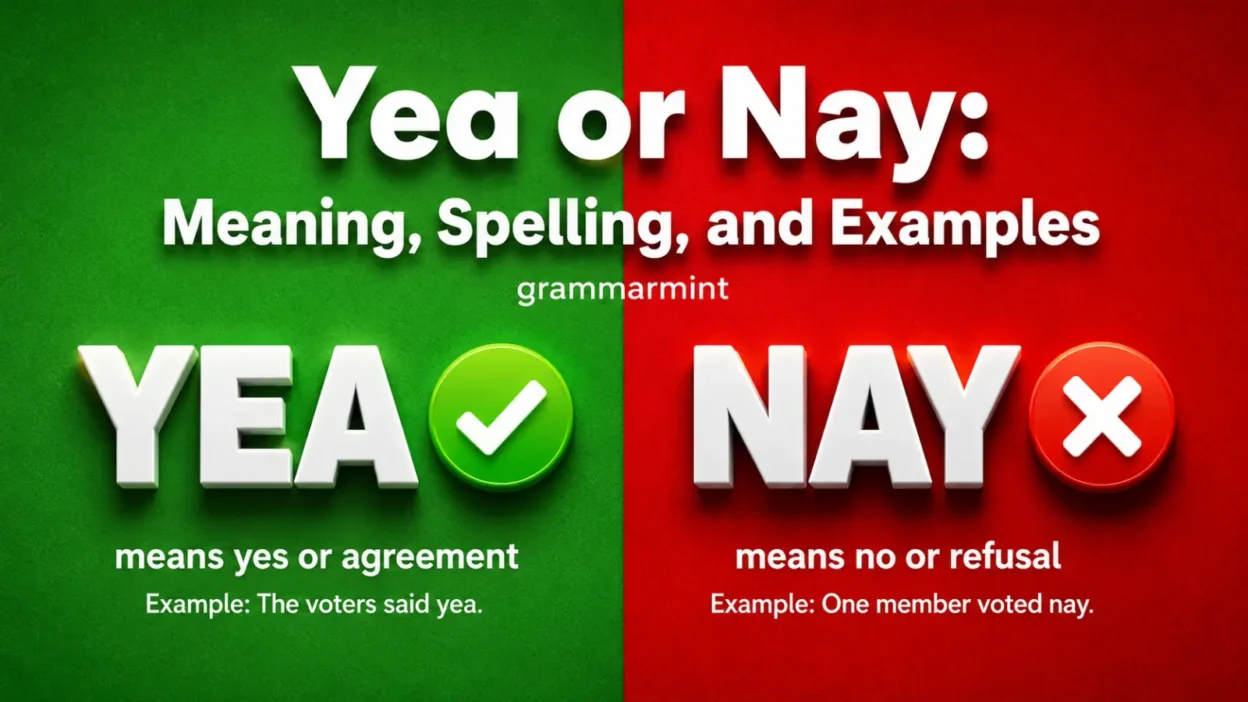
Yea or nay means a choice between yes and no. It asks for a yes or no, usually as a formal choice or clear decision.
In modern writing, it can sound serious, old-fashioned, or playful. However, the meaning stays simple.
• Yea means approval or agreement.
• Nay means refusal or disagreement.
• Together, they request a decision.
• The phrase avoids long explanations.
• It works well for votes.
• It can fit quick polls.
• It feels more formal than yes.
• It sounds sharper than maybe.
• It can add old-school charm.
• It suits debates and motions.
• It asks for one side.
• It leaves little room for doubt.
Is It Yea Or Nay Or Yay Or Nay?
The traditional phrase is yea or nay. That is the correct spelling for a vote or formal yes-or-no choice.
Meanwhile, yay or nay appears often online. Still, formal writing usually needs yea, not yay.
• Use yea for a yes vote.
• Use nay for a no vote.
• Use yay for excitement.
• Avoid yay in official votes.
• Write yea or nay in reports.
• Use yes or no for clarity.
• Pick yay for cheerful reactions.
• Pick yea for formal decisions.
• Do not write yeah or nay.
• Keep matching tone across both words.
• Use one style per sentence.
• When unsure, choose yes or no.
Yea Meaning
Yea means yes, especially in a vote. It can name an affirmative vote, a yes vote, or simple approval.
You may also see yea in older writing. However, everyday speakers usually say yes or yeah.
• Yea supports the proposal.
• Yea agrees with the motion.
• Yea can be a noun.
• Yea can be an adverb.
• A yea voter says yes.
• Several yes votes become yeas.
• It sounds formal today.
• It appears in vote records.
• It can add historical flavor.
• It is pronounced like yay.
• It should not mean cheering.
• It works best with nay.
Nay Meaning
Nay means no, especially in formal voting. It signals a negative vote, rejection, or opposition.
It can also sound dramatic in casual writing. Even so, no is usually clearer in daily speech.
• Nay rejects the proposal.
• Nay disagrees with the motion.
• Nay can mean no.
• Nay also names a vote.
• Several no votes become nays.
• It sounds formal or old-fashioned.
• It pairs naturally with yea.
• It appears in voting records.
• It can sound humorous online.
• It may feel stiff in texts.
• Use no for plain language.
• Use nay for stronger style.
Yea Vs Yay
Yea and yay sound the same, so confusion is common. These words are homophones, but their meanings differ.
Yea belongs to voting language. Yay expresses excitement, celebration, or happy approval.
• Yea means yes in votes.
• Yay means hooray or great.
• Yea fits formal records.
• Yay fits happy reactions.
• Yea pairs with nay.
• Yay pairs with exclamation marks.
• Yea sounds serious in writing.
• Yay sounds bright and casual.
• Use yea for committees.
• Use yay for good news.
• Do not vote yay officially.
• Remember: yea decides, yay celebrates.
Yeah Vs Yea
Yeah is a casual yes. Yea is a formal yes. The difference is mainly tone.
Use casual yes in texts and speech. Use formal tone when a spoken English vote needs tradition.
• Yeah fits friendly replies.
• Yea fits official choices.
• Yeah sounds relaxed and modern.
• Yea sounds formal and older.
• Yeah should not pair with nay.
• Yea naturally pairs with nay.
• Use yeah with friends.
• Use yea in meeting minutes.
• Yeah can sound too casual.
• Yea can sound too stiff.
• Choose tone before spelling.
• Use yes for neutral writing.
How To Pronounce Yea Or Nay
Yea is pronounced like yay. Nay is pronounced like the start of neighbor.
Think rhymes with day for yea. Think rhymes with say for nay in a spoken vote.
• Yea sounds like yay.
• Nay sounds like neigh.
• Both words use long a.
• Do not say yee-ah.
• Do not say nay-ee.
• Say them as one beat.
• Yea rhymes with play.
• Nay rhymes with way.
• The pair sounds balanced.
• It is easy aloud.
• Practice: yea, then nay.
• Pronunciation explains the confusion.
Yea Or Nay In Voting
Yea or nay has strong voting roots. In a roll call, members may answer yes or no aloud.
A voice vote can use spoken support and opposition. An official record may show each choice.
• Yea supports the measure.
• Nay opposes the measure.
• Votes may be spoken aloud.
• Clerks may record each answer.
• A motion can pass.
• A motion can fail.
• The wording stays concise.
• It works for formal groups.
• Boards may use the phrase.
• Clubs may use it too.
• Schools may teach it in civics.
• Voting context makes it natural.
Yeas And Nays In Congress
In government, yeas and nays identify recorded positions. A recorded vote shows how lawmakers responded.
The phrase can involve members present and a public record. So, it has a clear civic role.
• Yeas are votes in favor.
• Nays are votes against.
• Vote totals may be published.
• Records can show each member.
• The phrase is plural.
• One vote is a yea.
• One opposing vote is a nay.
• Many support votes are yeas.
• Many opposing votes are nays.
• Capitalization depends on style.
• Government pages often use caps.
• General writing usually uses lowercase.
Aye Or Nay Vs Yea Or Nay
Aye also means yes in voting. It appears in parliamentary language and traditional meeting procedure.
The word aye can overlap with yea. Still, regional usage and house style may decide the better choice.
• Aye means yes.
• Nay still means no.
• Aye sounds traditional.
• Yea sounds formal too.
• Aye often appears in voice votes.
• Yea often appears in records.
• Both can show agreement.
• Neither means casual cheering.
• Use the form your group uses.
• Avoid mixing aye and yea randomly.
• Aye or nay sounds ceremonial.
• Yea or nay sounds widely familiar.
Yea Or Nay Examples
Examples make the phrase easier to use. These example sentences show decision wording with natural phrasing.
Notice how each one asks for a firm answer. Also, the tone changes by setting.
• Yea or nay on the proposal?
• Give me a yea or nay.
• The board voted yea.
• The committee answered nay.
• Is this plan a yea?
• That idea gets my nay.
• We need your vote today.
• Please choose yea or nay.
• The motion received six yeas.
• Only two members voted nay.
• New logo, yea or nay?
• Movie night tonight, yea or nay?
Yea Or Nay In A Sentence
Yea or nay usually sits after a direct question. Still, sentence placement depends on rhythm and context clues.
Use clean punctuation so the question stays readable. A comma or dash can help.
• Need a decision, yea or nay?
• Yea or nay: should we proceed?
• Tell us yea or nay.
• The chair requested yeas and nays.
• She voted yea on Monday.
• He voted nay after discussion.
• My answer is yea.
• Their answer was nay.
• The group split evenly.
• We counted eight yeas.
• The report listed three nays.
• That phrasing sounds formal.
When To Use Yea Or Nay
Use yea or nay when you want a firm choice. It fits formal settings, but it can also create a playful tone.
For a neutral quick answer, yes or no may work better. So, match the phrase to the moment.
• Use it for votes.
• Use it for debates.
• Use it in minutes.
• Use it for dramatic style.
• Use it in playful polls.
• Avoid it in sensitive news.
• Avoid it in legal instructions.
• Use yes or no for clarity.
• Use approve or reject formally.
• Use accept or decline professionally.
• Use thumbs up sparingly.
• Let audience expectations guide you.
Common Mistakes With Yea Or Nay
Most errors come from sound, not meaning. A common misspelling can create the wrong word fast.
Another issue is mixed tone. Formal and casual words can clash in one phrase.
• Writing yay in formal votes.
• Writing yeah before nay.
• Spelling nay as neigh.
• Using yea for excitement.
• Using yay in minutes.
• Mixing yes with nay awkwardly.
• Capitalizing every casual mention.
• Treating yea as slang.
• Treating nay as modern casual speech.
• Forgetting plural forms.
• Overusing the phrase in emails.
• Ignoring audience and tone.
Yea Or Nay In Emails And Meetings
At work, yea or nay can save time. In workplace communication, it asks for a firm answer without a long thread.
Use it carefully in a meeting vote. Add a reply deadline when action matters.
• Please reply yea or nay today.
• The team needs one answer.
• Vote yea to approve.
• Vote nay to reject.
• Please respond by noon Friday.
• This wording can sound brisk.
• Add context before asking.
• Avoid it with upset clients.
• Use approve or decline formally.
• Use yes or no with customers.
• Record decisions after discussion.
• Confirm results in writing.
Yea Or Nay For Polls, Captions, And Stories
Online, yea or nay can feel fun and punchy. It works well for social polls, caption ideas, and quick reactions.
Use it when the choice is light. For serious topics, plain wording is kinder.
• New outfit, yea or nay?
• Coffee before sunrise, yea or nay?
• Winter walks, yea or nay?
• Summer road trips, yea or nay?
• Skyline photos, yea or nay?
• Central Park picnic, yea or nay?
• Times Square at night, yea or nay?
• Solo photo dump, yea or nay?
• Group Reels, yea or nay?
• Cute captions, yea or nay?
• Savage comeback, yea or nay?
• Classy black outfit, yea or nay?
Yea Or Nay Synonyms And Alternatives
Sometimes yea or nay sounds perfect. Other times, a simpler alternative fits better.
Choose a phrase that matches the audience, setting, and stakes. Then your meaning stays clean.
• Yes or no.
• Approve or reject.
• Accept or decline.
• Agree or disagree.
• Support or oppose.
• In favor or against.
• Go or no-go.
• Pass or fail.
• Keep or cut.
• Choose or refuse.
• Thumbs up or down.
• Green light or stop.
FAQs
What Does Yea Or Nay Mean?
Yea or nay means yes or no. Yea shows approval, while nay shows rejection or disagreement.
Is It Yay Or Nay Or Yea Or Nay?
Use yea or nay for formal voting or careful writing. Use yay only when you mean excitement or cheerful approval.
Is Yea The Same As Yes?
Yes, but only in certain contexts. Yea usually sounds formal, old-fashioned, or tied to voting.
Is Nay The Same As No?
Nay means no, especially in formal or traditional use. In everyday speech, no sounds more natural.
How Do You Pronounce Yea?
Yea is pronounced like yay. Nay rhymes with say, way, and play.
Why Do Politicians Say Yea And Nay?
They use yea and nay to record support or opposition. The wording helps show each vote clearly.
What Is The Difference Between Aye And Yea?
Aye and yea can both mean yes in voting. Aye often sounds more parliamentary, while yea is common in recorded vote language.
Conclusion
Yea or Nay is simple once you know the difference: yea means approval, and nay means rejection. Use it for votes, sharp choices, playful polls, or classic style. For everyday clarity, yes or no is still your safest choice.