If you’re choosing between thru or through, you’re probably writing a message, sign, essay, caption, or email and want it to look right. The short answer is simple, but the context matters. This guide explains the correct spelling, informal spelling, standard use, drive-thru wording, road signs, email tone, and common examples in plain American English.
You’ll learn when “through” is the safer choice, when “thru” works, and why “threw” is a totally different word. Also, you’ll get quick rules you can use without slowing down your writing.
Quick Answer
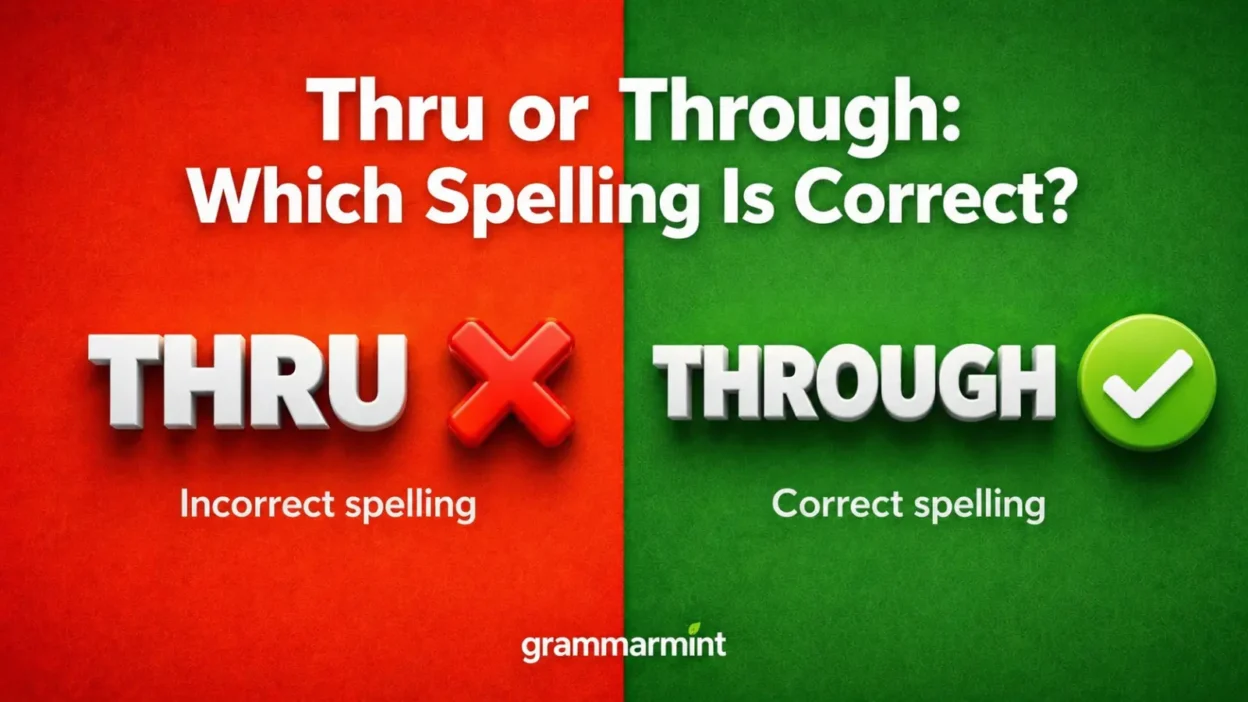
Thru or through depends on context: use “through” in standard writing, and use “thru” mainly in casual notes, signs, or drive-thru wording. When you’re unsure, choose “through.”
TL;DR
• “Through” is the standard spelling.
• “Thru” is casual and space-saving.
• Use “through” in emails and essays.
• “Drive-thru” is common in signs.
• “Threw” means tossed something.
• When unsure, write “through.”
Which Spelling Is Correct?
“Through” is the safest answer in almost every normal sentence. It is the correct spelling for school, work, publishing, and polished writing.
However, “thru” still appears in casual places. It is an informal spelling, not the best standard spelling for careful writing.
• Use through in essays.
• Use through in reports.
• Use through in resumes.
• Use through in applications.
• Use through in polished emails.
• Use through in articles.
• Use through in legal notes.
• Use through in instructions.
• Use thru on casual signs.
• Use thru in fast texting.
• Use thru in some brand names.
• Use through when uncertain.
Through Or Thru: Quick Difference
“Through” and “thru” usually share the same meaning. Still, they create different impressions for readers.
“Through” fits formal English and everyday careful writing. Meanwhile, “thru” fits casual writing, signs, and quick labels.
• Through looks polished.
• Thru looks casual.
• Through fits schoolwork.
• Thru fits short signs.
• Through suits business writing.
• Thru suits quick notes.
• Through works everywhere.
• Thru works sometimes.
• Through feels complete.
• Thru feels shortened.
• Through avoids doubt.
• Thru may distract readers.
What Through Means
“Through” can mean movement from one side to another. It can also mean from the beginning to end of something.
Also, it can mean during a period of time. Therefore, it works in travel, time, tasks, and finished actions.
• Walk through the hallway.
• Read through the chapter.
• Work through the problem.
• Sleep through the storm.
• Drive through the tunnel.
• Stay through the weekend.
• Push through the crowd.
• Follow through on promises.
• Think through your answer.
• Look through the window.
• Continue through December.
• See the project through.
Is Thru A Word?
Yes, “thru” is a word in modern dictionaries. It is usually treated as a recognized variant of “through.”
However, it is a less common spelling. Because it is nonstandard, you should use it with care.
• Thru appears in dictionaries.
• Thru means through.
• Thru is not preferred.
• Thru can look rushed.
• Thru fits short labels.
• Thru appears on signs.
• Thru appears in texting.
• Thru appears in branding.
• Thru can save space.
• Thru feels American.
• Thru is context-dependent.
• Thru is rarely formal.
Is Thru Slang?
“Thru” is best described as informal, not always slang. It is a shortened spelling used in casual settings.
Still, many readers see it as too relaxed. So, it can hurt your tone in serious writing.
• Thru sounds relaxed.
• Thru feels conversational.
• Thru suits text messages.
• Thru fits quick reminders.
• Thru can feel playful.
• Thru may seem careless.
• Thru is not academic.
• Thru is not official.
• Thru is not universal.
• Thru is not elegant.
• Thru can match branding.
• Thru should stay limited.
Thru In Formal Writing
Avoid “thru” in formal writing unless it is part of a name or sign. In academic essays, “through” is the clear choice.
Likewise, use “through” in professional documents. It keeps your tone clean and avoids unnecessary questions.
• Write through in essays.
• Write through in research papers.
• Write through in cover letters.
• Write through in contracts.
• Write through in proposals.
• Write through in presentations.
• Write through in manuals.
• Write through in policies.
• Write through in reports.
• Write through in newsletters.
• Write through in client notes.
• Write through in official forms.
Through Or Thru In Emails
In a professional email, “through” is almost always better. It gives your message a business tone without sounding stiff.
Also, clear writing matters when people skim. “Through” removes doubt before it starts.
• Use through with managers.
• Use through with clients.
• Use through with teachers.
• Use through with recruiters.
• Use through with coworkers.
• Use through for deadlines.
• Use through for instructions.
• Use through for follow-ups.
• Avoid thru in requests.
• Avoid thru in apologies.
• Avoid thru in introductions.
• Use thru only casually.
Drive-Thru Or Drive-Through
Both “drive-thru” and “drive-through” are understandable. However, drive-thru is extremely common on restaurant and bank signs.
“Drive-through” is the fuller drive-through spelling. Since both are hyphenated compound forms, keep the hyphen when using either as a noun or label.
• Drive-thru fits signs.
• Drive-through feels more formal.
• Drive-thru suits menus.
• Drive-through suits articles.
• Drive-thru works for lanes.
• Drive-through works for descriptions.
• Drive-thru sounds commercial.
• Drive-through sounds complete.
• Use one style consistently.
• Add the hyphen.
• Follow brand spelling.
• Match nearby signage.
Thru Traffic And Road Signs
“Thru traffic” appears often on road signs. It means traffic passing straight through, not stopping for local access.
Because signs need quick reading, thru traffic makes practical sense. Still, in normal writing, “through traffic” looks better.
• Thru traffic means passing traffic.
• No thru traffic limits drivers.
• Signs favor short words.
• Drivers read quickly.
• Space is limited.
• Local access may remain.
• Through traffic is formal.
• Thru traffic is sign-style.
• Use posted wording exactly.
• Explain signs with through.
• Avoid thru in reports.
• Keep road terms clear.
Monday Through Friday Or Monday Thru Friday
“Monday through Friday” is best in polished writing. It clearly marks a date range or workweek.
“Monday thru Friday” appears in a schedule, flyer, or casual business hours sign. However, “through” still looks cleaner.
• Monday through Friday is standard.
• Monday thru Friday is casual.
• Through fits employee handbooks.
• Thru fits small signs.
• Through fits school notices.
• Thru fits quick flyers.
• Through works in emails.
• Thru works on windows.
• Through avoids confusion.
• Thru saves sign space.
• Use through for policies.
• Use thru for informal displays.
Thru The Door Or Through The Door
For physical movement, write “through the door.” It is the natural standard sentence in careful English.
“Thru the door” may appear in casual texting. However, through the door will sound better almost every time.
• Walk through the door.
• Come through the door.
• Look through the door.
• Push through the door.
• Slip through the door.
• Step through the doorway.
• Move through the entrance.
• Go through the gate.
• Avoid thru in narration.
• Avoid thru in directions.
• Save thru for signs.
• Choose through for clarity.
Read Through Or Read Thru
“Read through” is the better phrase for careful writing. It means to review carefully or finish a complete reading.
“Read thru” can work in a casual message. Still, read through sounds more natural in school and work.
• Read through the draft.
• Read through the contract.
• Read through the instructions.
• Read through your notes.
• Read through the comments.
• Read through each answer.
• Read through before signing.
• Read through for errors.
• Read through once aloud.
• Read through the update.
• Avoid read thru professionally.
• Use read thru casually.
Through As A Preposition, Adverb, And Adjective
“Through” can work as a preposition, an adverb, or an adjective. That flexibility is one reason it appears so often.
As a result, the word can show movement, completion, time, or condition. Context tells the reader which job it does.
• Preposition: through the park.
• Preposition: through the tunnel.
• Adverb: push through.
• Adverb: read it through.
• Adjective: a through road.
• Adjective: a through train.
• Time: through the night.
• Completion: finished through chapter five.
• Movement: passed through town.
• Condition: soaked through.
• Process: work through details.
• Connection: get through security.
Through Vs Threw Vs Thru
These words are homophones, so they sound alike. However, they do different jobs.
“Threw” is the past tense of throw. Meanwhile, “through” and “thru” deal with movement, time, or completion.
• Through means across.
• Thru means through casually.
• Threw means tossed.
• She threw the ball.
• He walked through town.
• Text me thru lunch.
• The rock flew through glass.
• They threw a party.
• We drove through rain.
• Never write threw for through.
• Never write thru for threw.
• Check meaning before spelling.
Through Or Thru Examples
Good sentence examples make the choice easier. In most real-life context, “through” gives the safest correct usage.
Still, “thru” can be acceptable when the writing is casual, short, or sign-based. The key is matching the situation.
• Correct: We walked through campus.
• Correct: Read through this file.
• Correct: Open Monday through Friday.
• Correct: Drive-thru open late.
• Correct: No thru traffic.
• Casual: I’m thru waiting.
• Casual: Send it thru chat.
• Formal: Send it through email.
• Formal: Continue through June.
• Formal: We’re through phase two.
• Sign: Enter thru lobby.
• Better: Enter through lobby.
Why Thru Exists
“Thru” grew from a long interest in simplified spelling. In American English, short forms also fit signs, ads, and fast messages.
Even so, “through” stayed dominant in careful writing. So, spelling reform history doesn’t make “thru” the best everyday choice.
• English spelling changed over centuries.
• Short spellings gained supporters.
• Signs needed quick words.
• Ads liked compact wording.
• Restaurants popularized drive-thru.
• Texting kept thru alive.
• Brands used playful spellings.
• Dictionaries recorded the variant.
• Schools still prefer through.
• Editors still prefer through.
• Readers expect through.
• Context decides acceptance.
FAQs
What Is The Difference Between “Thru” And “Through”?
“Through” is the standard spelling. “Thru” means the same thing but is informal, shortened, and more common on signs or in casual notes.
How Do You Decide Whether To Use “Thru” Or “Through”?
Choose “through” when the writing matters, feels formal, or may be judged. Choose “thru” only when the setting is casual, sign-based, or tied to a known phrase.
Can “Thru” Be Used In Formal Writing?
Usually, no. Use “through” in essays, reports, professional messages, and official documents unless “thru” is part of a quoted sign or brand name.
When Should I Use “Thru” Instead Of “Through”?
Use “thru” for drive-thru wording, short signs, casual texts, or informal labels. If the sentence needs a polished tone, use “through.”
Is “Thru” Acceptable In Academic Essays?
No, “through” is the better choice for academic essays. “Thru” can look too casual and may be marked as inappropriate for formal schoolwork.
Are There Any Specific Phrases Where “Thru” Is Commonly Used?
Yes, “drive-thru” and “no thru traffic” are common. You may also see “thru” in signs, brand names, quick schedules, and casual messages.
Is It “Drive Thru” Or “Drive Through”?
Both are understood, but “drive-thru” is common for restaurants, banks, and signs. “Drive-through” is fuller and may suit more formal descriptions.
Conclusion
When choosing thru or through, use “through” as your default. It works in school, business, everyday sentences, and polished writing.