If you’re trying to write clearly, Verses or Versus verses-or-versus can trip you up fast. These two words sound alike, so many writers, students, and English learners mix them up in schoolwork, sports talk, Bible references, song discussions, and everyday writing. Still, the difference is simple once you know what each word does. One word is about comparison, one is about poetry, and one-letter mistakes can change your meaning right away. This guide explains the definitions, grammar roles, abbreviations, legal use, scripture use, and the most common mix-ups, so you can choose the right form with confidence.
Quick Answer
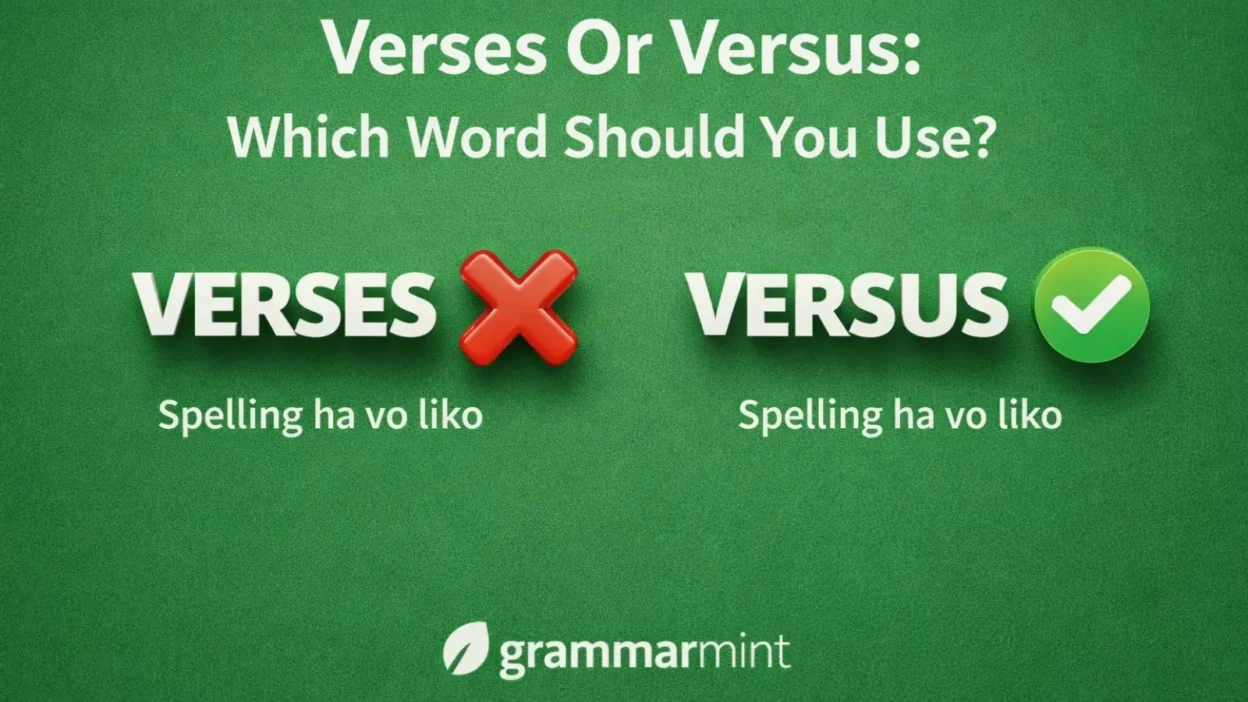
In Verses or Versus verses-or-versus, the correct choice depends on meaning. Versus means “against” or “compared with,” while verses is the plural of verse, used for poems, songs, and Bible passages.
TL;DR
• Versus means against or compared with
• Verses means more than one verse
• Use vs. for most short comparisons
• Use v. in legal case names
• Use vv. for multiple Bible verses
• Don’t swap them because they sound alike
Verses Vs. Versus
These words are easy to confuse because they sound very similar. Even so, they do very different jobs in a sentence.
• Confused words often share a similar sound
• Homophones can mislead fast readers
• Usage depends on meaning, not sound
• Both words are correct English words
• They are not interchangeable in writing
• Versus shows opposition or contrast
• Verses names multiple lines or passages
• One is a preposition
• The other is a plural noun
• Sports writing usually needs versus
• Poetry talk usually needs verses
• A one-letter change shifts the meaning
What “Versus” Means
Use versus when two sides face each other or when you compare two things. It usually means “against,” but it can also mean “in contrast with.”
• Against is the clearest basic meaning
• Comparison is another common use
• Preposition is its normal grammar role
• It links one side to another
• It often appears in matchups
• It can compare ideas, too
• It works in titles and labels
• It appears in court-case names
• It fits debates and competitions
• It can mean “as opposed to”
• It often shortens to vs.
• It should not mean poem lines
What “Verses” Means
Use verses when you mean more than one verse. That usually refers to poem lines, song sections, or scripture passages.
• Plural noun is its grammar role
• Poetry is a common context
• Scripture is another common context
• It means more than one verse
• Songs can have several verses
• Poems can contain many verses
• Bible study often mentions verses
• It names text sections, not opponents
• It does not mean “against”
• It cannot replace versus in matchups
• It often appears near chapter numbers
• It belongs to literature and faith contexts
When To Use “Versus”
Pick versus when the sentence shows conflict, contrast, or one item measured against another. It works in both formal and everyday writing.
• Matchup wording often needs versus
• Contrast between options can use it
• Opposition is the main signal
• Team names often take versus
• Product tests can use versus
• Debate topics often use versus
• Legal case names use a short form
• Headline style may shorten it
• Charts often use vs. instead
• It works in spoken explanations
• It fits “A versus B” structures
• It should sound like comparison
When To Use “Verses”
Pick verses when the sentence is about text sections. If you could say “lines” or “passages,” this is probably the right word.
• Song lines point to verses
• Bible passages point to verses
• Stanzas may connect by meaning
• It refers to multiple text units
• It often follows chapter references
• It can describe hymn sections
• It can describe poem parts
• It belongs in literary discussion
• It belongs in scripture discussion
• It does not set up a matchup
• It does not compare two sides
• It answers “how many verses?”
Why People Say “Verse”
Many people say “verse” or “verses” when they really mean versus, especially in speech. That spoken habit can slip into writing.
• Pronunciation makes the mix-up common
• Informal speech often drops endings
• Nonstandard speech can shape spelling
• People may hear “vs.” as “verse”
• Fast speech blurs the final sound
• Sports talk often triggers the mistake
• Children may copy what they hear
• Social media spelling can reinforce it
• Speech habits don’t set writing rules
• Spoken shortcuts look wrong in print
• Writers should pause and check meaning
• Sound alone is not enough
Is “Versing” Standard?
You may hear someone say one team is “versing” another. In standard edited American English, that form is usually avoided.
• Verb form use is still disputed
• Spoken English may include it
• Edited writing usually avoids it
• It sounds casual to many readers
• It can feel regional or informal
• Most school writing should skip it
• News copy rarely prefers it
• “Playing against” is often safer
• “Facing” is another safer choice
• “Versus” remains the standard form
• Use caution with “versing” in print
• Formal readers may mark it wrong
Vs., V., And Vv.
The short forms matter because they belong to different settings. A small punctuation choice can signal the right style.
• Abbreviation choice depends on context
• Punctuation matters in formal writing
• Style guides may vary slightly
• vs. fits most general comparisons
• v. fits legal case names
• v. can mean one verse
• vv. can mean multiple verses
• Don’t use vv. for versus
• Don’t use v. carelessly outside context
• Check whether the topic is law
• Check whether the topic is scripture
• Abbreviations should match your audience
Legal Writing And Case Names
Law uses a special short form. In US legal names, you usually see v. instead of writing the full word.
• Case title style often uses v.
• Legal citation prefers the short form
• v. is common in US cases
• Case names rarely write full versus
• Readers expect the legal shorthand
• Court examples use party names
• It means one side against another
• It is not the same as verse
• It should not be written vv.
• Legal style is highly conventional
• General prose may still write versus
• Match the form to the document
Bible References And Scripture Citations
Bible references follow a different pattern. Here, v. and vv. point to verse numbers, not competition.
• Chapter and verse references use numbers
• v. can mean one verse
• vv. can mean several verses
• John 3:16 names one verse
• A range may point to verses
• This system is common in study notes
• It appears in sermons and commentaries
• It does not mean versus here
• Context makes the meaning clear
• Numbers usually appear right after
• Scripture style differs from sports style
• Readers should watch nearby clues
Sports, Debates, And Comparisons
This is where versus appears most often in daily life. It works whenever two sides face off or get compared directly.
• Teams often appear with versus
• Debate topics may use versus
• Product comparison labels use versus
• Lakers versus Celtics is correct
• Cats versus dogs is correct
• Online polls use it often
• Headlines may shorten it to vs.
• Brackets and scoreboards prefer short forms
• It marks rivalry or contrast
• It works beyond sports, too
• It can compare ideas, not just teams
• It never means song sections
Everyday Sentence Examples
Examples make the difference easier to see. Read them by meaning, not by sound.
• Sample sentences build faster understanding
• Correct usage becomes easier with contrast
• Common mistake patterns stand out clearly
• The poem has three verses
• We read two verses aloud
• The final song verse repeats later
• Today is Eagles versus Giants
• The article compares price versus quality
• The debate is freedom versus security
• Brown v. Board uses legal style
• Study John 1:1–5 for verses
• My playlist has catchy opening verses
Wrong Sentences And Quick Fixes
A fast fix is to ask what the sentence means. Is it about text sections, or is it about opposition and comparison?
• Grammar fix starts with meaning
• Word choice beats sound-based guessing
• Proofreading catches this late error
• Wrong: Team A verses Team B
• Fix: Team A versus Team B
• Wrong: Read the first versus
• Fix: Read the first verse
• Wrong: The poem has two versus
• Fix: The poem has two verses
• Wrong: Roe versus Wade in citation
• Fix: Roe v. Wade in citation
• Wrong: vv. Smith in law
• Fix: Use v. for case names
Formal Writing Vs. Casual Writing
Your setting matters. Some spoken habits pass in casual talk, but edited writing usually expects the standard form.
• Formal tone needs standard wording
• Everyday writing still benefits from clarity
• Edited prose avoids loose spellings
• School papers should use standard forms
• Work writing should use standard forms
• Text messages may be looser
• Captions still look better when correct
• Legal writing needs precise shorthand
• Bible notes need precise shorthand
• Casual speech may bend rules
• Published writing should not
• Clear choices build reader trust
Memory Tricks That Actually Help
You do not need a complicated rule. One simple mental check usually solves it.
• Easy rule: opponents need versus
• Remembering gets easier with categories
• Quick test: text sections need verses
• Think “verses belong to verse”
• Think “versus belongs to rivalry”
• Poems have verses, not opponents
• Games have versus, not stanzas
• Bible studies mention verses
• Matchups mention versus
• Numbers often signal verses nearby
• Team names often signal versus nearby
• Ask what the sentence is doing
Final Choice Guide
When you pause over the spelling, focus on context first. That keeps the choice quick and accurate.
• Which word depends on your meaning
• Right context solves most confusion
• Best choice comes from grammar role
• Use versus for against
• Use versus for contrast
• Use verses for poem parts
• Use verses for song sections
• Use verses for scripture passages
• Use vs. in many short labels
• Use v. in legal case names
• Use vv. for several verses
• Never choose by sound alone
FAQs
What is the difference between verses and versus?
Versus means “against” or “compared with.” Verses is the plural of verse, so it refers to poem lines, song sections, or scripture passages.
Is verses ever correct instead of versus?
Yes, but only when you really mean multiple verses. It is not a substitute for versus in sports, debates, or comparisons.
When should I use versus in a sentence?
Use versus when two sides face each other or when one thing is compared with another. It works in sports, debates, legal names, and side-by-side comparisons.
Is versus a preposition or a noun?
In standard use, versus is mainly a preposition. It links one side to another in a matchup or comparison.
What does verses mean in the Bible?
In Bible use, verses means multiple numbered passages within a chapter. You may also see v. for one verse and vv. for several verses.
Is it vs., vs, or v.?
In American usage, vs. is common for general comparisons, while v. is standard in legal case names. Some styles drop the period in certain settings, so house style can matter.
Why do people say verse instead of versus?
People often hear the shortened form vs. as “verse” in fast speech. That spoken habit is common, but standard writing still prefers versus for comparison.
Conclusion
If you’re stuck on Verses or Versus verses-or-versus, remember the simple split: versus is for comparison, and verses is for text sections.