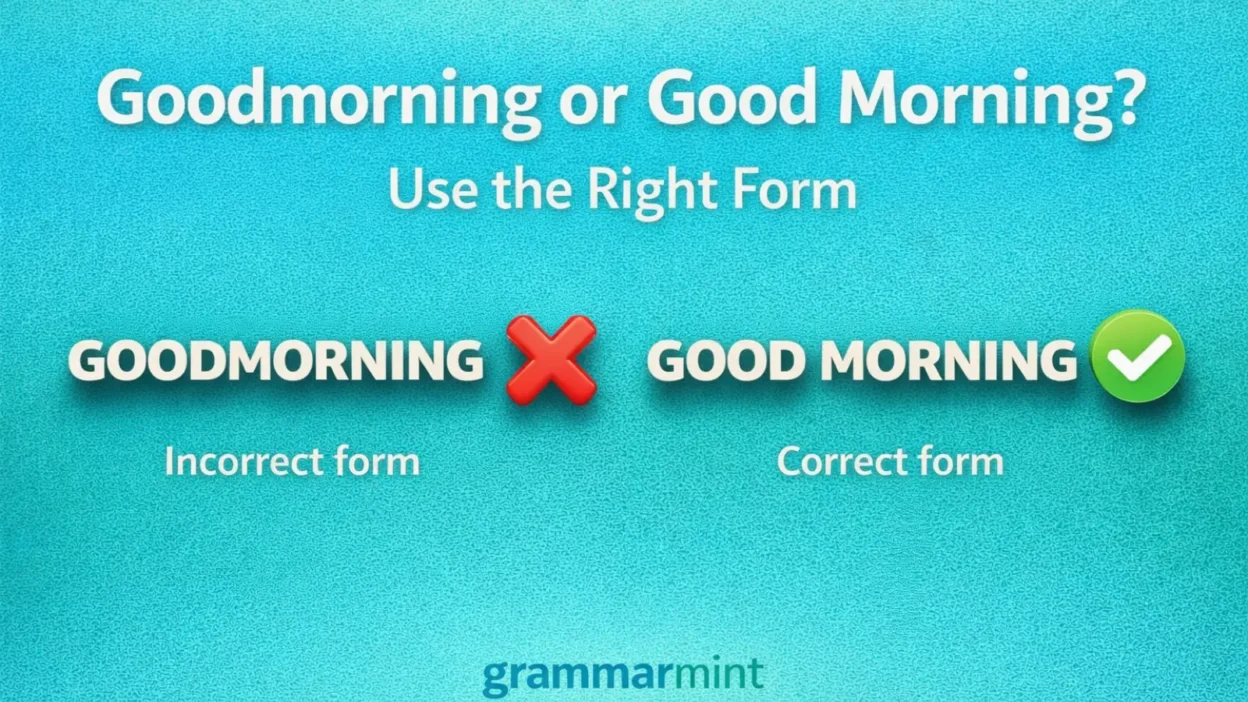
If you write emails, texts, captions, or work messages, the goodmorning or good morning question comes up more than you’d expect. One missing space can make a greeting look rushed, especially in email greetings, business writing, classroom messages, customer notes, and social posts. People also get stuck on capitalization, comma placement, and whether morning works just as well. This guide clears up the standard spelling, shows where tone changes, and gives you real examples you can copy. So whether you’re greeting a boss, texting a friend, or polishing a card, you’ll know exactly what to type.
Quick Answer
Goodmorning or good morning? The correct standard form is good morning, written as two words. Use it in emails, texts, greetings, and formal writing; goodmorning is usually just a typo or a casual styling choice to avoid.
TL;DR
• Write good morning as two words.
• Avoid goodmorning in standard writing.
• Add a comma before names.
• Use simple capitalization unless style demands more.
• Morning is casual; good morning is safer.
The Standard Spelling
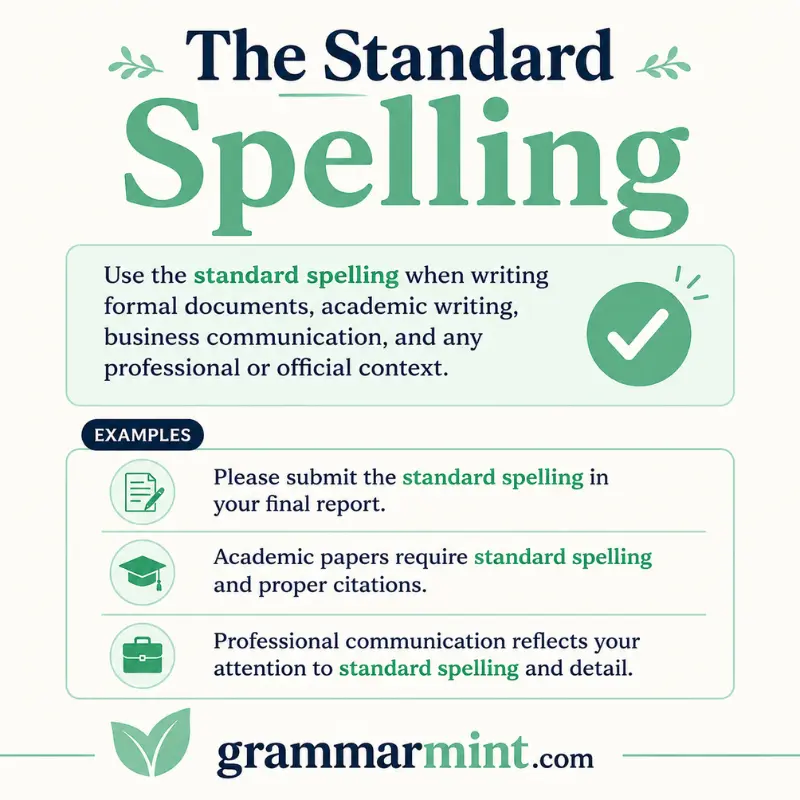
This is the part most people want first. In standard English, the greeting is written as two separate words.
• Two-word greeting is the standard form
• Write good morning in emails
• Keep a space between the words
• Avoid one-word goodmorning in formal writing
• Treat it as a greeting phrase
• Use the same spelling in schoolwork
• Keep the form consistent in notes
• It works with or without a name
• The rule stays steady in texts
• A missing space looks rushed
• Most readers notice the error quickly
• The standard version looks more polished
Why People Type It As One Word
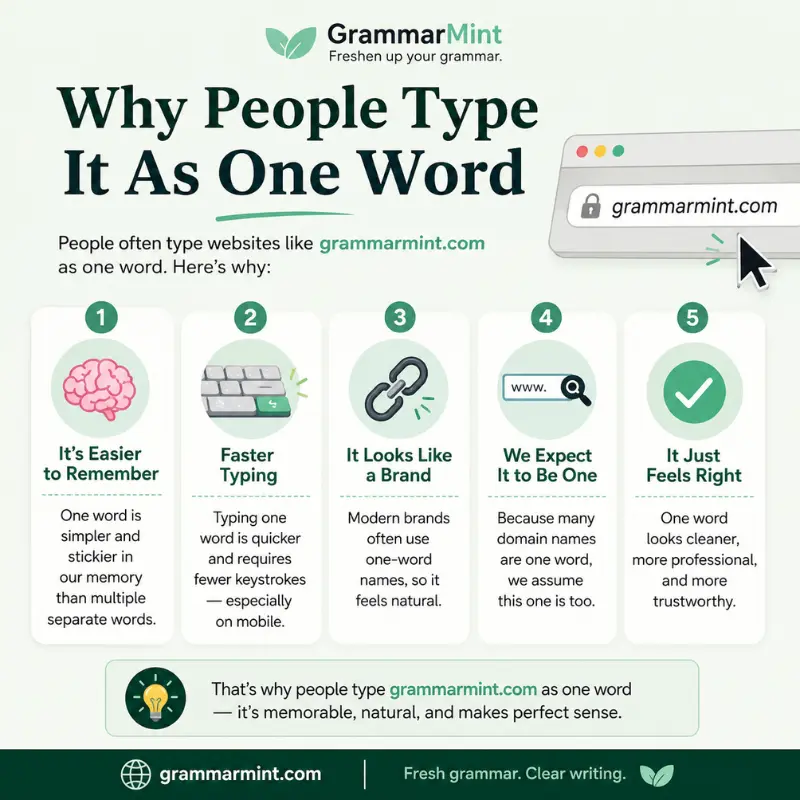
The confusion is easy to understand. People type fast, copy what they see online, and assume greetings work like compounds.
• Fast typing drops the space
• Phone keyboards blur word boundaries
• Repetition turns shortcuts into habits
• Social posts reward speed first
• People imitate what they see
• Some assume greetings become compounds
• Others copy goodnight by mistake
• Autocorrect does not catch everything
• Branding styles can mislead readers
• Low attention creates spacing slips
• One-word forms often start as typos
• Familiar errors can feel normal
What Good Morning Means
The phrase is simple, but its job matters. It is a polite opener that starts contact in the morning.
• It politely begins a morning interaction
• It can greet one person
• It also fits larger groups
• It sounds warm without oversharing
• It works in speech and writing
• It can stand alone cleanly
• It can open a longer message
• It suits strangers and coworkers
• It often starts meetings politely
• It appears naturally in dialogue
• It usually marks first contact
• Punctuation can change its tone
When To Say Good Morning
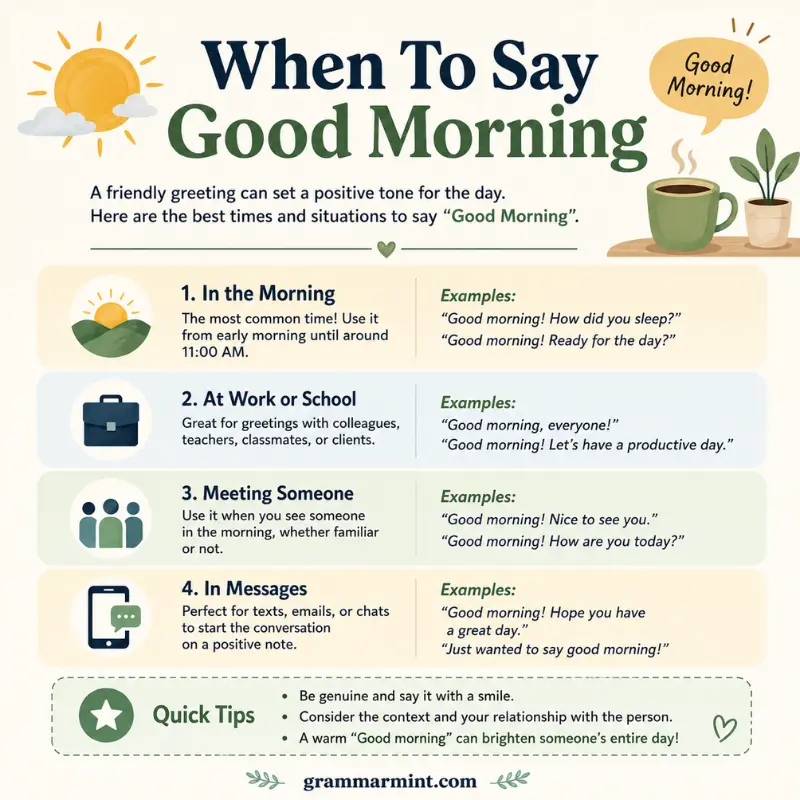
Timing matters, but context matters too. Most people use it at the first interaction of the morning, even if the exact hour varies.
• Use it at first contact
• Say it early in the day
• It fits morning emails well
• Keep it in scheduled messages
• Context matters more than minutes
• Team schedules can shift the window
• Early-shift jobs may use it sooner
• After noon, switch greetings
• Evening needs a different opener
• Global teams should consider time zones
• It works for morning events
• Skip it when the moment feels late
Good Morning In Emails
This greeting works because it is polite without being stiff. It often feels safer than a very casual opener.
• It’s a reliable email opener
• Use it for polite warmth
• It suits first contacts well
• It also fits follow-up notes
• Add a name for warmth
• Keep punctuation simple and clean
• It works for clients and teachers
• It softens direct requests nicely
• It sounds more formal than hi
• It feels friendlier than dear sometimes
• Short emails still benefit from greetings
• Match the opener to relationship
Capitalization Rules
This is where advice gets a little more nuanced. In normal sentences, keep it lowercase, but salutations can follow sentence style or a chosen house style.
• Start with Good morning in sentences
• Keep good morning lowercase mid-sentence
• Some use Good Morning alone
• Use Good morning, Ana in sentence-style emails
• House style may guide the second word
• Some business teams capitalize both
• Other editors prefer only the first
• Dialogue usually follows sentence capitalization
• Cards allow more visual styling
• Avoid random mixed-case versions
• Stay consistent in one message
• When unsure, choose sentence case
Comma Rules
Punctuation makes the greeting easier to read. The biggest rule is simple: use a comma before the name you are addressing.
• Add a comma before a name
• Write Good morning, Maya, correctly
• End the greeting line clearly
• Formal notes may use a colon
• Direct address needs separation
• Informal chats often drop commas
• Professional emails look cleaner with one
• Group greetings can take punctuation too
• Standalone greetings still need an ending
• Pick one style and stick with it
• Exclamation points raise the energy
• A plain comma keeps tone steady
Good Morning Vs Morning
Both can work, but they do not feel identical. One is fuller and safer; the other is shorter and more casual.
• Morning is shorter and looser
• Good morning sounds fuller and politer
• Morning fits familiar people best
• Good morning suits public-facing roles
• Both can open quick messages
• The short form feels chatty
• The long form feels careful
• Either can still sound kind
• Context decides what feels natural
• Morning can seem abrupt formally
• Good morning travels better professionally
• Casual teams may accept either
Good Night Vs Good Morning
A lot of confusion starts here. People see goodnight and assume goodmorning should work the same way, but that leap is not standard.
• Good night is usually a farewell
• Good morning is a greeting
• They do different jobs
• Good night often marks parting
• Good morning marks first contact
• The goodnight spelling misleads writers
• That pattern does not transfer
• Similar sounds do not decide spelling
• English keeps many greetings separate
• Usage matters more than tidy logic
• Learn each phrase independently
• One rule won’t fit all greetings
Texting, Chats, And Social Posts
Casual writing is more forgiving, but clarity still helps. Even in fast messages, the standard form usually reads better.
• Friends may ignore the mistake
• Still, the correct form reads cleaner
• Texts allow shorter warm greetings
• Morning! feels natural in chats
• Good morning 😊 can feel friendly
• Captions may play with styling
• Avoid goodmorning in professional DMs
• Group chats allow looser punctuation
• Social bios are poor grammar models
• Fast replies create more typos
• Clean greetings improve first impressions
• Casual writing needn’t look sloppy
Workplace, School, And Customer Service
Audience changes the best choice. In public or professional settings, small details carry more weight.
• Reception desks benefit from clear greetings
• Teachers often expect standard spelling
• Customer emails should favor professionalism
• Interns gain credibility with polished openings
• Sales messages need respectful tone
• Support teams sound calmer with standard greetings
• Class discussions still reward correct writing
• Student emails should avoid shortcuts
• Notices and memos need consistency
• Front-desk scripts often begin this way
• Job applications deserve the standard form
• Public-facing writing should reduce distractions
Examples You Can Copy
Sometimes the fastest way to learn is by seeing the phrase in use. These examples cover work, school, and everyday messages.
• Good morning, Jordan. I sent the file.
• Good morning, team. The meeting starts at nine.
• Good morning! Hope your trip went smoothly.
• Good morning, Professor Lee. I have a question.
• Good morning, neighbors. Thanks for coming early.
• Good morning, everyone, and welcome aboard.
• Good morning, Sam! Coffee is ready.
• Good morning, class. Open page twelve.
• Good morning, Ava. I loved your post.
• Good morning. Please review the attached draft.
• Morning, Ben. See you downstairs soon.
• Good morning, customers. We open at eight.
Common Mistakes To Avoid
Most mistakes are small, but they change how polished the line looks. The good news is that they are easy to fix once you notice them.
• Writing goodmorning as one word
• Capitalizing randomly inside a sentence
• Dropping commas before names
• Using it after obvious afternoon hours
• Copying greeting-card styling everywhere
• Treating slang posts as models
• Mixing Good Morning and good morning
• Using morning with formal audiences
• Adding too many exclamation points
• Forgetting time-zone differences in email
• Assuming autocorrect fixes spacing
• Overthinking a simple greeting
Better Alternatives By Tone
You do not always need the same opener. Sometimes another greeting fits the relationship, mood, or setting better.
• Hello works at any hour
• Hi feels light and flexible
• Morning sounds casual and quick
• Good day feels stiff in U.S. English
• Hey fits friendly chats
• Welcome back suits return messages
• Hope your day is going well shifts focus
• Greetings sounds broad and formal
• Team, works for group updates
• Everyone, can open internal notes
• Good to see you suits in-person contact
• Thanks for reaching out fits replies
When It Feels Too Formal
A correct greeting can still feel wrong for the moment. Tone always depends on the relationship, platform, and pace of the exchange.
• It can sound distant with close friends
• Daily repetition may feel scripted
• Casual brands may prefer hi
• Chat apps reward shorter openings
• Younger groups may choose hey
• Creative teams sometimes skip greetings
• Long openers can slow quick exchanges
• Warm threads may need less formality
• Tone matters more than habit
• Formality can still show respect
• Read the room first
• Let the relationship guide choice
Easy Memory Tricks
A quick memory rule can stop the mistake before it happens. The easiest one is also the most useful: if it greets, keep the space.
• If it greets, keep the space
• Think good plus morning separately
• Say both words while typing
• Compare it with good afternoon
• Notice dictionary entries for the phrase
• Save a correct email template
• Pause before sending morning notes
• Proofread the first line carefully
• Read the opener aloud
• Watch mobile typing closely
• Learn the pattern with good evening
• When unsure, use two words
FAQs
Is goodmorning one word or two?
Use good morning as two words. The one-word version usually reads like a typo in standard English.
Is good morning capitalized in an email?
Usually, write Good morning at the start of an email in normal sentence style. Some workplaces capitalize both words in a standalone salutation, so consistency with your house style matters.
Do you put a comma after good morning?
Yes, especially before a name: Good morning, Chris. In very casual messages, people sometimes skip the comma, but a comma looks cleaner and more professional.
Can I say morning instead of good morning?
Yes, but morning sounds more casual. It works well with friends, teammates, and relaxed chats, while good morning is the safer all-purpose choice.
Why does goodnight exist if goodmorning is wrong?
English does not make every greeting follow the same pattern. Even though goodnight exists in some uses, that does not make goodmorning standard.
Is good morning too formal for text messages?
Not at all. It can sound warm, kind, and normal in a text, especially if you add context or a friendly follow-up line.
Conclusion
For goodmorning or good morning, the safe choice is simple: write good morning as two words.
Once you know the spacing, capitalization, and comma rules, every greeting looks cleaner and more confident.
Use that version by default, then adjust the tone only when the situation calls for it.