Americans love straightforward answers, especially when it comes to everyday words like color. Yet this simple term sparks plenty of questions because of its British cousin, colour.
Writers, students, and content creators often wonder which version fits best in today’s global world. The good news? Both spellings work fine depending on your audience and location. Understanding the background helps you choose confidently without second-guessing.
Quick Answer
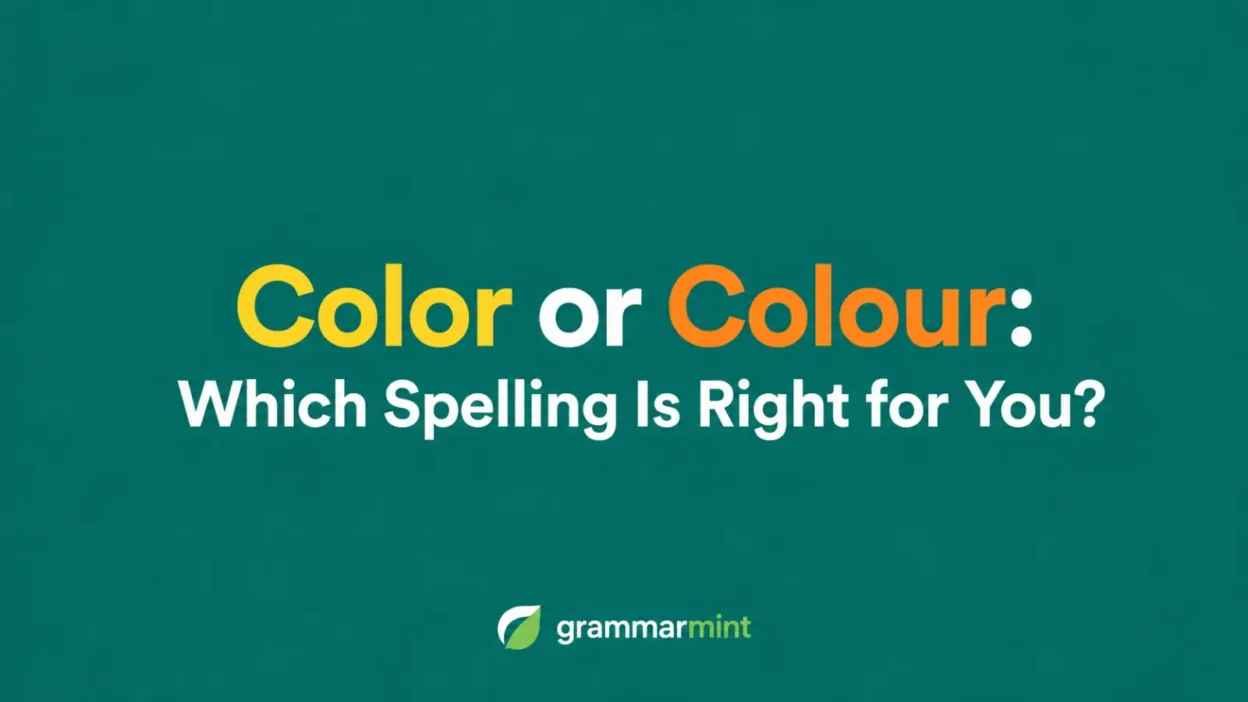
Color is the correct spelling in American English, while colour is standard in British English. Pick based on your readers—use “color” for USA audiences to keep things natural and consistent. Both mean the exact same thing: a hue or shade.
TL;DR
- Color fits American writing perfectly.
- Colour suits UK and Commonwealth readers.
- History traces back to Noah Webster’s reforms.
- Stay consistent within one document.
- Derivatives follow the same pattern.
- Audience always guides the best choice.
The Fascinating History Behind Color and Colour
The split between these spellings did not happen by accident. It reflects bigger cultural shifts after America gained independence.
• Noah Webster led spelling reforms in the early 1800s. • He wanted simpler American English. • Webster dropped the “u” in many words. • His 1828 dictionary popularized “color.” • British English kept the French-influenced “colour.” • Printing costs played a small role too. • Both versions existed for centuries before. • The change helped create a distinct American identity. • Similar shifts happened with honor and flavor. • Today the divide remains strong in publishing. • Webster and British English mark the key turning points. • Modern dictionaries accept both regionally. • The story shows language evolves with nations.
American English Rules for Using Color
Writers in the USA follow clear guidelines that favor the shorter form.
• Use “color” in all formal documents. • Style guides like AP and Chicago prefer it. • Schools teach the American version early. • Software defaults often match US settings. • It feels natural for most American readers. • American English and consistency matter most. • Avoid mixing spellings in one piece. • Government and business docs stick with color. • News outlets use it daily. • Creative writing benefits from smooth flow. • Digital tools flag the British version sometimes. • This choice keeps your work looking professional.
British English and the Traditional Colour Spelling
Across the pond, the extra “u” remains standard.
• UK publishers insist on “colour.” • Commonwealth countries follow this tradition. • It connects to older French roots. • Literature and academia prefer the full form. • British English feels elegant to many. • Newspapers and books use it consistently. • Schools teach colour from a young age. • International organizations often choose it. • The “u” appears in flavour and honour too. • Readers expect it in certain markets. • It preserves historical spelling patterns. • Many find it visually balanced.
How Canada, Australia, and India Handle the Debate
English varies even more across the globe.
• Canada mixes both but leans toward colour. • Australian English follows British rules. • India mostly uses colour in formal writing. • Local style guides influence choices. • Canada and Australia show flexibility. • Business often adapts to American clients. • Education systems teach British forms. • Global brands pick one for consistency. • Tourists notice differences in signs. • Digital content targets specific regions. • Writers check audience location first. • Hybrid approaches work in multicultural teams.
Other Common Spelling Pairs Like Color and Colour
This pattern repeats across many words.
• Flavour becomes flavor in America. • Honour turns into honor. • Neighbour simplifies to neighbor. • Favourite loses the “u” as favorite. • -our and -or endings define the groups. • Labour and labor follow suit. • Many more pairs exist in daily use. • Dictionaries list both variants. • Writers learn patterns instead of single words. • The rule helps predict other spellings. • Creative fields mix for artistic effect. • Professional editing catches inconsistencies.
Derivatives: Colorful, Colored, Coloring and More
The base choice affects related words too.
• Americans write colorful and colored. • British versions use colourful and coloured. • Coloring book or colouring book. • The pattern stays consistent. • Colorful and colourful both describe vibrancy. • Verbs like coloring follow the same logic. • Adjectives match the noun spelling. • Digital design tools respect regional settings. • Photo editing apps use your locale. • Consistency improves readability. • Kids learn derivatives alongside basics. • Publishers enforce rules across manuscripts.
Practical Tips for Writers and Students in 2026
Smart habits make spelling choices easy.
• Set your word processor to US English. • Know your target audience first. • Use find-and-replace for quick fixes. • Read aloud to check natural flow. • Consistency prevents awkward mistakes. • Ask editors familiar with your region. • Online tools offer regional checks. • Practice with example sentences daily. • Global teams agree on one style upfront. • Academic papers follow journal guidelines. • Freelancers adapt per client request. • Stay updated with evolving digital norms.
Impact on Global Publishing and Digital Content
The internet makes these choices more important.
• Websites target specific countries. • SEO tools suggest regional spellings. • Books get localized for different markets. • Apps detect user location automatically. • Global publishing requires careful planning. • E-books often offer both versions. • Social media posts reach mixed audiences. • Brands test spellings for engagement. • Translation services handle variants. • Consistency builds reader trust. • International news picks one standard. • Future AI tools may auto-adapt better.
Fun Mnemonics to Remember Color vs Colour
Easy tricks help you decide quickly.
• Remember UK has a “U” like colour. • America drops the unnecessary letter. • Webster wanted shorter, faster words. • Think efficiency for US spelling. • Mnemonic and UK link the rules. • Picture the flag with extra letters. • Friends from Britain add the “u.” • Americans keep it simple and direct. • Quiz yourself with daily examples. • Teach kids using fun stories. • Share memes about the debate. • Turn confusion into conversation starters.
When to Choose One Spelling Over the Other
Context always guides the final decision.
• Use color for American clients. • Pick colour for UK or European readers. • Mixed audiences need clear choices. • Academic work follows institutional style. • Audience drives every smart decision. • Creative projects allow artistic freedom. • Legal documents demand precision. • Marketing tests both for results. • Personal writing reflects your background. • Travel guides adapt to visitors. • Online forums show lively discussions. • Professional growth includes flexibility.
Common Mistakes and How to Avoid Them
Everyone slips up sometimes.
• Mixing spellings in one document. • Ignoring audience location completely. • Forgetting derivatives like colorful. • Relying only on spellcheck. • Mistakes happen without double-checks. • Not updating style guides regularly. • Assuming one is universally wrong. • Overthinking casual social posts. • Copy-pasting without review. • Ignoring company branding rules. • Forgetting historical context in debates. • Skipping peer reviews for important work.
The Future of Spelling in a Connected World
Language continues changing with technology.
• AI writing tools handle variants well. • Global collaboration increases mixing. • Younger generations adapt faster. • Digital platforms influence preferences. • Connected world blurs some lines. • Dictionaries track usage trends. • Education emphasizes audience awareness. • Content creators localize smartly. • Fun debates keep interest alive. • Both spellings will likely coexist. • Focus stays on clear communication. • Readers appreciate thoughtful choices.
FAQs
Is it color or colour the correct spelling?
Both are correct. Americans use color while British and many Commonwealth speakers use colour. Choose based on your primary audience for best results.
Why do Americans spell it color without the U?
Noah Webster simplified spellings in his dictionaries to create a distinct American English. He removed what he saw as unnecessary letters like the “u” in colour.
Does Canada use color or colour?
Canada mostly follows British spelling with colour, though both appear in daily use due to American media influence.
What about colorful or colourful?
Use colorful in American English and colourful in British English. The same regional rule applies to all related forms.
How do I stay consistent in my writing?
Set your document language, know your readers, and review carefully. Tools and style guides make it much easier.
Why does this spelling difference still matter today?
It affects professionalism, audience connection, and clarity in global communication. Small choices build credibility.
Conclusion
Color or colour ultimately comes down to thoughtful choices that respect your readers. Pick the version that fits your American audience best, stay consistent, and enjoy the rich history behind these everyday words. Your next piece will shine brighter with the right decision—start applying these tips today.