If you write for American readers, it helps to know whether lefty or leftie sounds more natural. These two spellings usually mean the same thing, but they don’t land the same way in every audience. In casual English, both forms can describe a left-handed person, a sports player, or sometimes someone on the political left. Still, American English strongly leans toward lefty, while British English is more open to leftie. This guide breaks it down in plain language, so you can choose the form that fits your reader, your tone, and your sentence.
Quick Answer
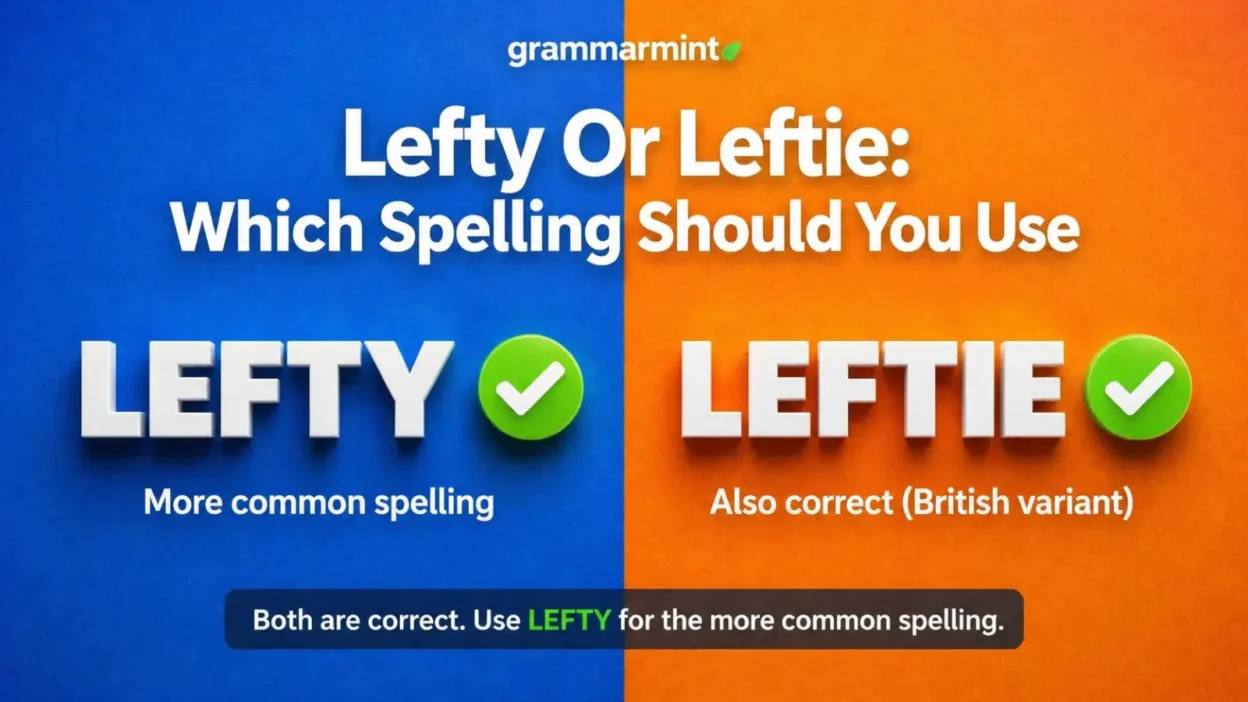
For a USA audience, Lefty or Leftie lefty-or-leftie is easiest to answer this way: use lefty in most cases. Leftie is also a real word, but it usually feels more British or less natural in American writing.
TL;DR
• Both spellings are real
• US writing usually prefers lefty
• UK writing often accepts leftie
• Both usually sound informal
• Formal writing prefers left-handed
• The plural is always lefties
Lefty Vs Leftie
Both spellings work, but one usually fits the audience better. That’s why this choice is more about style than meaning.
• Correct spelling depends on audience
• Both forms are accepted
• Lefty feels more American
• Leftie feels more British
• Meaning usually stays the same
• Tone is casual in both
• Lefty appears more in sports
• Leftie feels less common in US
• Formal prose avoids both sometimes
• Reader expectation matters a lot
• Context helps settle the choice
• Pick one and stay consistent
What Lefty Means
Lefty is the version most American readers expect first. It sounds casual, quick, and familiar.
• A left-handed person is a lefty
• A casual term fits everyday speech
• Common in American English writing
• Often used for athletes
• Often used for pitchers
• Can describe a left-handed batter
• May describe a left-leaning person
• Usually sounds friendly, not formal
• Works well in conversation
• Common in headlines and commentary
• Easy for US readers to process
• Best known everyday spelling in US
What Leftie Means
Leftie is a real word, not a mistake. Still, it tends to feel less American in tone.
• A British English variant exists
• It’s an accepted variant today
• Still an informal word overall
• Can mean left-handed person
• Can mean left-leaning person
• Often feels more UK-style
• Less common in US writing
• May sound playful or regional
• Not wrong in casual use
• Better for British voice
• Fine in quoted speech
• Less natural for US-first copy
American English Preference
For a USA audience, lefty is usually the safer pick. It matches what many readers already hear in sports and casual speech.
• Use USA audience expectations first
• Choose sports writing style easily
• Lefty is the common form
• Fits American casual tone
• Sounds natural in US headlines
• Works in school-level writing
• Feels smoother in conversation
• Better for baseball references
• Better for everyday US phrasing
• Avoids a slightly foreign feel
• Usually wins in quick comparisons
• Strong default for American sites
British English Preference
British-style writing often sounds more natural with leftie. Even so, lefty is still understood.
• UK usage often welcomes leftie
• Common in Commonwealth English too
• It can sound more natural tone
• Leftie fits British casual writing
• Leftie can feel more local
• It suits informal UK speech
• It may appear in commentary
• It can sound more conversational
• Lefty still remains understandable
• Choice depends on publication voice
• Reader location shapes preference
• Consistency still matters most
Sports Usage
Sports is where lefty feels especially strong in American English. Baseball is the clearest example.
• Baseball strongly favors lefty
• A pitcher may be called lefty
• A southpaw is a related nickname
• Commentators often say lefty starter
• Fans often say lefty bat
• Boxers may be called southpaw
• Golf and tennis also use it
• Leftie appears less in US sports
• Headlines prefer the shorter form
• Sports talk likes quick labels
• Lefty sounds natural on air
• US readers expect this wording
Political Meaning
This word can also point to politics. In that sense, the sentence around it matters a lot.
• A leftist meaning also exists
• It can mean political left supporter
• Always check the context clue
• Politics changes the tone fast
• It may sound informal
• It may sound dismissive sometimes
• Leftie can carry this sense too
• Lefty can do the same
• Don’t assume handedness first
• Read nearby words carefully
• Audience sensitivity matters here
• Use neutral wording when needed
Informal Vs Formal Choices
Both lefty and leftie are informal. So, formal writing often sounds cleaner with a longer phrase.
• Use left-handed in formal prose
• Prefer it in formal writing
• It gives neutral wording clearly
• Good for school assignments
• Good for reports and profiles
• Good for medical or academic text
• Avoid slang in serious contexts
• Lefty sounds casual and spoken
• Leftie sounds casual too
• Formal tone favors precision
• Neutral wording avoids region issues
• It’s the safest universal option
Pronunciation And Sound
The spelling changes, but the sound usually does not. That makes this choice mostly visual, not spoken.
• Say lefty as LEF-tee
• Say leftie the same way
• It’s the same pronunciation usually
• The difference is on the page
• Speech rarely reveals the spelling
• Writing makes the choice visible
• Readers notice region through spelling
• Tone shifts more than sound
• Spoken English blurs the contrast
• Use audience to decide
• Don’t overthink pronunciation here
• Focus on written style instead
Singular And Plural Forms
The plural is one of the easiest parts of this topic. No matter which singular you choose, the plural looks the same.
• The plural is lefties
• Keep one singular form consistent
• The plural spelling never changes
• Lefty becomes lefties
• Leftie becomes lefties too
• Don’t write leftys
• Don’t write leftie’s for plural
• Apostrophes don’t make plurals
• Match subject and verb correctly
• Plural form looks simple
• This rule is easy to remember
• It helps prevent common slips
Adjective And Adverb Uses
English also uses lefty beyond the noun form. You’ll see it acting like an adjective or adverb in casual lines.
• A lefty thrower sounds natural
• He bats lefty works casually
• This is casual grammar usage
• She writes lefty sounds informal
• Lefty swing appears in sports
• Lefty pitcher is common
• Leftie writer may appear in UK
• Formal prose prefers full phrasing
• Casual speech allows shortcuts
• Keep tone matched to setting
• Avoid overusing clipped forms
• Clarity should come first
Common Mistakes To Avoid
Most errors happen when writers ignore audience, tone, or context. A small adjustment usually fixes the sentence.
• Check audience fit first
• Avoid a tone mismatch
• Fix any spelling slip early
• Don’t mix forms randomly
• Don’t force leftie in US copy
• Don’t use slang in reports
• Don’t ignore political context
• Don’t assume one meaning only
• Don’t use apostrophes for plurals
• Don’t overuse sports slang
• Don’t forget reader expectations
• Don’t switch style mid-article
Best Choice For USA Readers
If your readers are in the United States, you usually don’t need a long debate. Lefty is the cleaner default.
• Choose American readers first
• Use the plain choice lefty
• Apply the fast rule consistently
• Lefty matches US habits
• Lefty fits sports and everyday use
• Leftie may feel imported
• Lefty reads more naturally
• Lefty suits casual guides
• Lefty suits blog headlines
• Lefty works in examples
• Left-handed stays formal and safe
• Consistency improves readability
Best Choice For UK Readers
For UK readers, leftie can feel more local and relaxed. Still, lefty is not unreadable or wrong.
• Use British readers as guide
• Pick local feel when useful
• Choose natural wording for tone
• Leftie can sound more homegrown
• Lefty may feel American
• Publication style should lead
• Newspaper voice may vary
• Casual tone may welcome leftie
• Formal prose still prefers left-handed
• Avoid mixing without reason
• Reader comfort matters most
• Stay consistent across the piece
Example Sentences In Context
Examples make the difference easier to see. Once you place the word in a sentence, the best form usually becomes obvious.
• My brother is a lefty
• The rookie lefty pitched well
• That batter struggles against lefties
• She’s a leftie by nature
• The article used British wording
• He writes with his left hand
• The coach wants another lefty
• Some readers prefer leftie in UK
• Formal copy says left-handed student
• The columnist mocked trendy lefties
• That sports line sounds American
• That phrasing feels more British
Quick Rule To Remember
You don’t need a complicated test. A short rule will usually get you to the right choice.
• Use easy rule for speed
• Make your final choice by audience
• Write with confidence and consistency
• US audience means lefty
• UK audience may allow leftie
• Formal setting means left-handed
• Sports writing strongly favors lefty
• Politics needs extra context
• Plural is always lefties
• Spoken sound stays the same
• Reader expectation beats guesswork
• Simpler wording often wins
FAQs
Is leftie a real word?
Yes. Leftie appears in major dictionaries and is accepted as an informal word. In practice, it often feels more British than American.
Which spelling is better for American English?
For most US readers, lefty is the better default. It sounds more natural in casual writing, sports coverage, and everyday American usage.
Do lefty and leftie mean different things?
Usually, no. Both can refer to a left-handed person, and both can also carry a political meaning in the right context.
What is the plural of lefty or leftie?
The plural is lefties in both cases. That shared plural is one of the easiest rules in this spelling choice.
Is lefty formal or informal?
Lefty is informal. When you need a more neutral or professional tone, left-handed is usually the better wording.
Why is lefty so common in sports?
Sports language likes short, fast labels, and American baseball usage strongly favors lefty for pitchers and hitters. That habit carries over into wider sports writing.
Conclusion
If your readers are in the US, Lefty or Leftie lefty-or-leftie usually comes down to one easy call: choose lefty. If you need a more formal tone, switch to left-handed, and your sentence will stay clear anywhere.