If you write for school, work, blogs, captions, or everyday messages, you may wonder whether Is It Gray or Grey has one right answer. The confusion shows up in style guides, dictionaries, classroom writing, American English, British English, Canadian English, proper names, and common phrases like gray area or grey matter. Both spellings name the same neutral color between black and white, and both are pronounced the same. Still, the better choice depends on your audience. In the United States, gray is usually the standard form, while grey is more common in the UK, Canada, and other varieties of English. That regional pattern is reflected in major dictionaries and usage guides.
Quick Answer
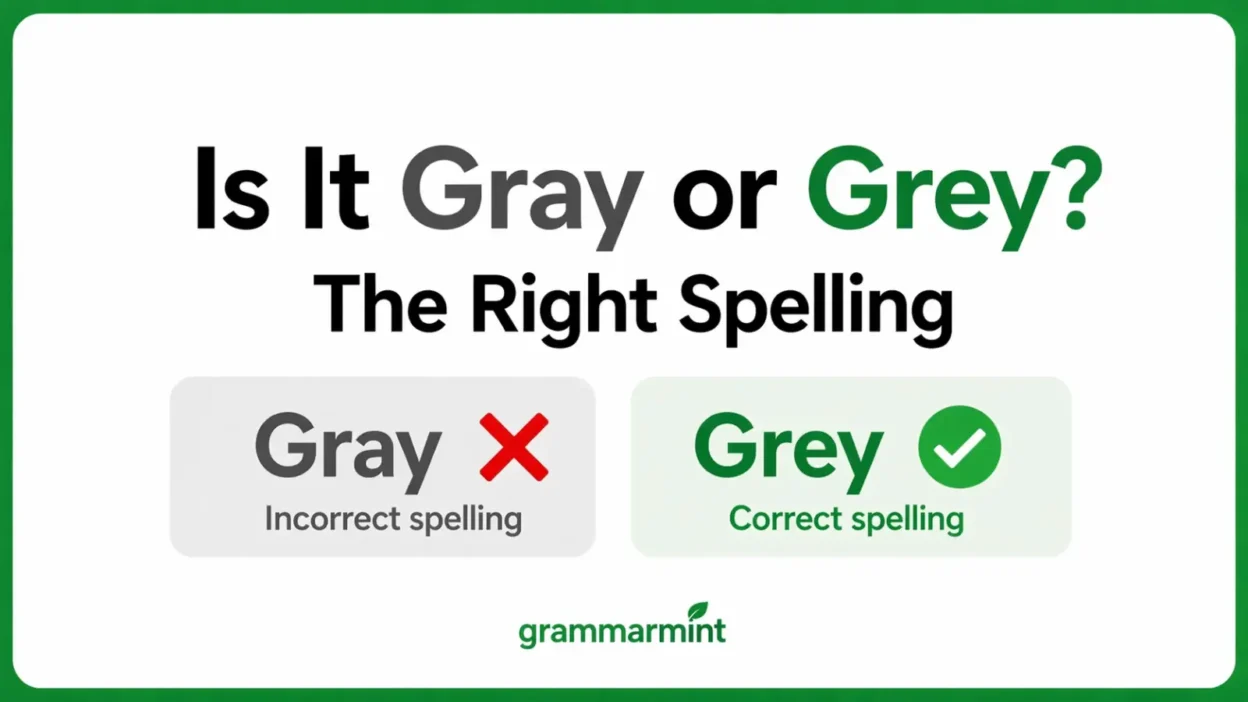
Is it gray or grey? Both are correct, but gray is the usual U.S. spelling and grey is more common in British and Canadian English. For a USA audience, gray is usually the safer default.
TL;DR
• Both spellings are correct
• Gray is standard in the U.S.
• Grey is common outside the U.S.
• Proper names keep their original spelling
• Stay consistent within one piece
• For Americans, pick gray first
Is Gray Or Grey Correct
Yes, both spellings are accepted in major dictionaries. However, the best choice depends on audience, region, and consistency.
• Gray and grey mean the same color
• Both forms are standard English
• Neither spelling is automatically wrong
• U.S. readers expect gray more often
• UK readers expect grey more often
• Dictionaries list both as accepted
• The pronunciation stays exactly the same
• The meaning does not change
• Context decides the better choice
• Audience matters more than preference
• One document should favor one style
• For America, gray feels more natural
Gray In American English
In American English, gray is the form most readers expect. So, if your audience is in the United States, gray usually looks more familiar and polished.
• Gray is the usual U.S. spelling
• It appears in American dictionaries
• It fits school papers in America
• It suits U.S. business writing
• It looks natural in U.S. blogs
• It matches most American style habits
• It works well in product copy
• It feels standard in U.S. captions
• It is common in American classrooms
• It is safer for U.S. grading
• It blends with color, favorite, and honor
• U.S. readers rarely question gray
Grey In British And Canadian English
In British English and Canadian English, grey is often the preferred form. So, if you write for those audiences, grey may look more native and natural.
• Grey is common in British writing
• It is familiar across the UK
• It also appears often in Canada
• It fits many Commonwealth audiences
• It matches colour and favourite style
• It looks natural in UK media
• It suits British school writing
• It appears in Canadian usage guides
• It feels expected outside America
• It works well in UK captions
• It pairs smoothly with British spelling
• Non-U.S. readers often prefer grey
Why Both Spellings Exist
The two forms come from the same older word, and English spelling developed differently across regions over time. As a result, both spellings survived and stayed standard.
• Both trace back to Old English
• The earlier root was grǣg
• English kept multiple spelling patterns
• Regional habits shaped modern choices
• American usage leaned toward gray
• British usage leaned toward grey
• The split grew over time
• Meaning stayed stable through changes
• Pronunciation did not split apart
• History explains the double standard
• Neither form is a typo by default
• Modern English accepts both outcomes
Which Spelling To Use In The US
For U.S. readers, classroom writing and professional writing usually call for gray. Even though grey is not inherently wrong, gray is the safer fit for an American audience.
• Use gray in American essays
• Choose gray on U.S. websites
• Pick gray in work emails
• Use gray in school assignments
• Keep gray in resume wording
• Favor gray in marketing copy
• Choose gray for American subtitles
• Use gray in social captions
• Pick gray in U.S. newsletters
• Keep gray in branded style guides
• Use one form from start to end
• Don’t mix spellings casually
Which Spelling To Use For Hair
When you talk about gray hair or grey hair, the same regional rule applies. In America, gray hair is the more natural choice. Outside the U.S., grey hair often fits better.
• Gray hair fits U.S. usage
• Grey hair fits UK usage
• Both describe aging hair color
• The phrase meaning stays identical
• Hair guides in America use gray
• Beauty copy may follow house style
• Salon menus should match audience region
• Social posts should mirror reader expectation
• Product labels may choose one standard
• Mixed usage can feel careless
• Gray-haired also follows the same pattern
• Greying and graying follow region too
Which Spelling To Use For The Color
As a simple color word, both spellings refer to the same shade. Still, your audience should decide which version you place on the page.
• Gray names the same color
• Grey names that same color
• Neither word changes the shade
• Design copy should match audience region
• Paint notes may use house style
• Fashion writing should stay consistent
• Interior captions can use either
• U.S. catalogs usually say gray
• UK catalogs often say grey
• The spelling never changes pronunciation
• Pick one form for clarity
• Readers notice consistency more than nuance
Gray Area Or Grey Area
This common idiom follows the same regional pattern as the color word. So, Americans usually write gray area, while British writers often use grey area.
• Gray area fits U.S. English
• Grey area fits British English
• The idiom means uncertain boundaries
• It is not about literal color
• Legal writing often uses the phrase
• Office writing uses it often too
• News coverage uses both variants
• Audience still drives the spelling
• The meaning stays fully unchanged
• Avoid mixing both in one article
• Choose the regional version once
• Repeat it the same way later
Grayed Out Or Greyed Out
In tech writing, grayed out and greyed out follow the same regional rule. For an American audience, grayed out is the usual form, though some style guides prefer clearer wording like not available.
• Grayed out fits American interfaces
• Greyed out fits British interfaces
• Both describe an inactive option
• Menu labels may appear dimmed
• Help docs should match audience region
• App copy should stay consistent
• Technical teams often choose one standard
• U.S. support pages favor grayed
• UK support text may prefer greyed
• Some style guides prefer clearer wording
• Not available can be plainer
• Dimmed may work better visually
Gray Whale Or Grey Whale
For animal and science terms, the pattern often extends into specialized names too. Still, published usage can vary by region and source.
• Gray whale appears often in America
• Grey whale also appears in science
• Species naming can reflect region
• Reference sources may vary slightly
• Conservation writing may pick one form
• Museums follow local editorial style
• Students should mirror course materials
• Journalists should check house preference
• Search habits show both spellings
• Meaning never changes between forms
• One article should keep one version
• Regional expectation still matters here
Gray Matter Or Grey Matter
Brain-related usage also shows the regional split. In American writing, gray matter is common, while grey matter is often seen in British usage.
• Gray matter suits U.S. writing
• Grey matter suits British writing
• Both mean brain and spinal tissue
• Medical content may mirror audience region
• Clinics can localize the spelling
• Textbooks may choose one standard
• Science blogs should stay consistent
• Students should follow course style
• The scientific idea stays identical
• Regional spelling does not alter anatomy
• Searchers use both versions online
• Consistency improves readability in explanations
Names, Brands, And Fixed Terms
This is where many people get tripped up. Proper names and branded terms usually keep their established spelling, even when it breaks your usual regional pattern.
• Earl Grey keeps its set spelling
• A surname keeps personal preference
• Brand names should never be “fixed”
• Titles keep their original form
• Book names may use either version
• Product labels keep official wording
• Place names follow official records
• Historical names stay as published
• Quoted names should remain untouched
• Editing should not standardize names
• Proper nouns outrank house preference
• Always verify fixed spellings first
How To Stay Consistent In Writing
Once you choose a style choice, keep it steady through the whole piece. That matters in essays, newsletters, articles, captions, and work documents.
• Pick one spelling before drafting
• Match the audience from the start
• Use search-and-replace before publishing
• Check headlines and image text too
• Review captions for hidden switches
• Watch inflected forms carefully
• Keep gray with grayed and graying
• Keep grey with greyed and greying
• Follow client or teacher instructions
• Save the choice in your style sheet
• Consistency feels more professional
• Uniform spelling reduces reader friction
Easy Memory Trick
A simple memory trick helps many learners remember the regional split. It is not a grammar law, but it works well as a quick guide.
• A for America points to gray
• E for England points to grey
• The trick is easy to recall
• It helps during timed writing
• It works for classroom proofreading
• It is great for new learners
• It simplifies regional choices fast
• It won’t cover every proper name
• Still, it works most times
• Memory aids reduce second-guessing
• Use it with audience awareness
• Then stay consistent afterward
Example Sentences With Gray
If you write for the United States, these U.S. examples sound natural and standard. They show how gray fits everyday American usage.
• The sky turned gray before sunset
• She wore a gray wool coat
• His beard is mostly gray now
• We painted the room light gray
• The app button looked grayed out
• That rule sits in a gray area
• A gray cat slept on the porch
• The report used a gray header bar
• Her sneakers came in dark gray
• The old photo had a gray tint
• Doctors study changes in gray matter
• We spotted a gray whale offshore
Example Sentences With Grey
For UK or Canadian readers, these UK examples and common non-U.S. patterns feel more natural. They show how grey works in ordinary sentences.
• The clouds looked grey all afternoon
• He bought a grey winter scarf
• Her hair is turning grey slowly
• The menu item stayed greyed out
• That policy lives in a grey area
• The lounge walls are painted soft grey
• A grey pigeon landed nearby
• The brochure used a cool grey palette
• Their dog has a grey muzzle
• The old paper looked faintly grey
• Researchers discussed grey matter changes
• Tourists watched a grey whale surface
FAQs
Is gray or grey more correct?
Neither is more correct in all cases. Major dictionaries accept both, but gray is more frequent in American English, while grey is more common in British and Canadian usage.
Should I use gray or grey in the United States?
Use gray for most U.S. writing. It is the form American readers usually expect in school, business, and everyday content.
Is it gray hair or grey hair?
Both are correct, but gray hair is the usual American form and grey hair is more common in British-style writing. The same pattern applies to graying and greying.
Is it grayed out or greyed out?
In American English, grayed out is the usual choice. In British English, greyed out is the common form, though some style guides prefer clearer alternatives like dimmed or not available.
Do names and brands follow the same rule?
Not always. Proper names and brands usually keep their official spelling, so you should not change a fixed name just to match your regional style. Earl Grey is a common example.
Conclusion
Is It Gray or Grey comes down to audience, not meaning.
For a USA audience, gray is usually the best choice.
Pick one form, stay consistent, and your writing will look clean and confident.