If you write emails, captions, homework, or blog posts, this guide is for you. Many writers pause over has been or have been because both sound familiar, both use been, and both appear in common English patterns like present perfect, present perfect continuous, passive voice, and travel questions. You also see them near words like since, for, lately, already, and recently. In addition, tricky subjects like a group of students, there, staff, and singular they can make the choice feel harder than it is. This guide breaks the rule down in plain American English and shows how to use each form naturally.
Quick Answer
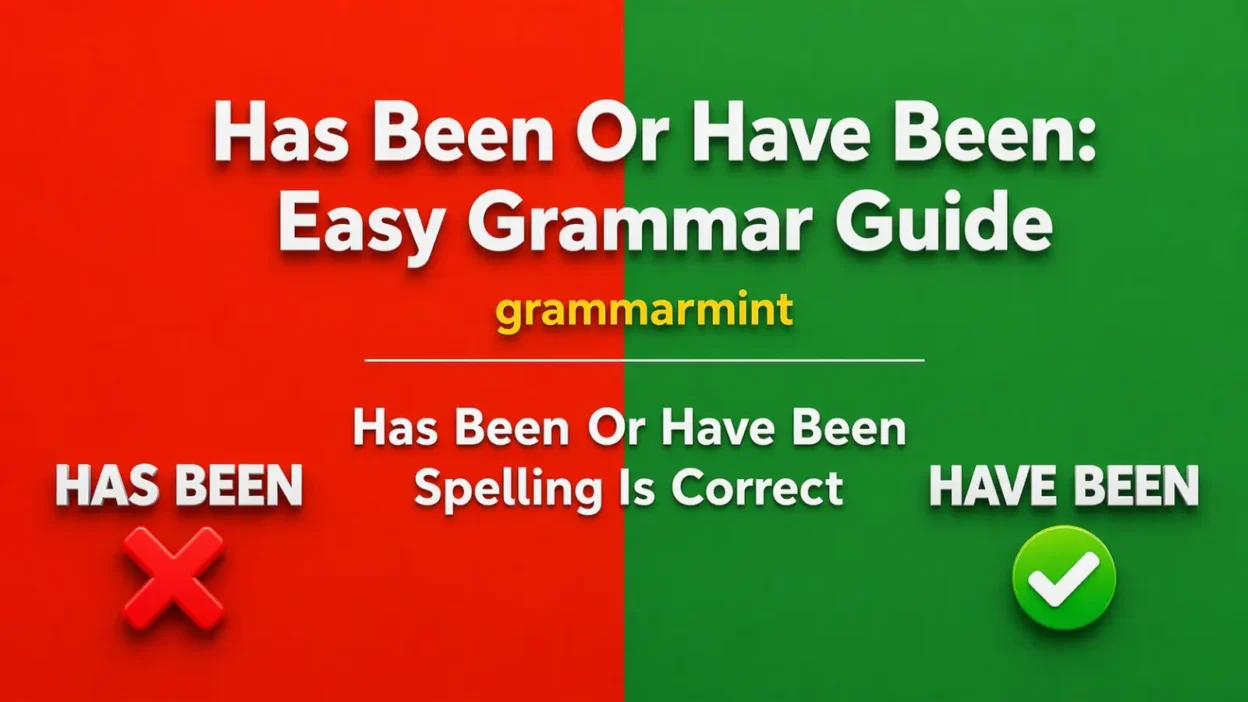
Has been or have been depends on the subject. Use has been with a third-person singular subject, like he, she, it, or one singular noun. Use have been with I, you, we, they, and plural nouns.
TL;DR
• One person or thing: use has been
• I, you, we, they: use have been
• Check the real subject, not nearby words
• Use both in present perfect patterns
• Use both in present perfect continuous
• Don’t confuse have been with have gone
Why This Pair Confuses So Many Writers
Both phrases look almost the same, so your eye often misses the subject. Also, English lets long noun phrases sit between the subject and the verb, which creates mistakes.
In addition, learners often mix this topic with tense, travel meaning, or passive voice. So the sentence feels harder than it really is.
• Subject-verb agreement drives the choice
• Both forms belong to present perfect patterns
• Nearby nouns often distract writers
• Long subjects hide the real head noun
• Passive forms add another layer
• Travel examples create extra confusion
• “Been” looks constant, but helpers change
• Spoken English can blur the ending
• Learners overfocus on the final noun
• Many sentences sound right both ways
• “There” sentences confuse the real subject
• Similar meaning does not mean same form
The Core Rule In One Look
Start with the subject. Then match the helper verb to that subject.
If the subject is singular, choose has. If the subject is plural, or the subject is I or you, choose have.
• Singular subject takes has been
• Plural subject takes have been
• He has been ready
• She has been busy
• It has been quiet
• The car has been repaired
• I have been waiting
• You have been helpful
• We have been patient
• They have been calm
• One noun usually takes has been
• More than one usually takes have been
Has Been With Singular Subjects
Use has been when the subject is one person, one thing, or one singular idea. That includes he, she, it, and most singular nouns.
This is the pattern many writers need most in daily writing. It’s the safest choice when one subject is doing or receiving the action.
• He/she/it usually takes has been
• Singular noun takes has been
• My phone has been slow lately
• The store has been closed today
• Her brother has been sick all week
• The movie has been popular recently
• This idea has been useful so far
• Your jacket has been on the chair
• The dog has been barking since dawn
• Each student has been informed
• The plan has been approved
• One clear subject means has been
Have Been With Plural Subjects
Use have been when the subject is plural. This includes plural nouns and the pronoun they.
The sentence may still feel singular if the group seems like one unit. Still, in standard American English, a regular plural subject takes have been.
• Plural noun usually takes have been
• They takes have been
• The kids have been noisy today
• My friends have been supportive lately
• The lights have been flickering all hour
• Those shoes have been under the bed
• The reports have been submitted
• Several stores have been renovated
• These cookies have been popular
• Our neighbors have been kind
• The players have been practicing daily
• Many changes have been made
I, You, We, And They
These pronouns follow the have been pattern. Even though I is singular in meaning, it still takes have, not has.
That’s why “I has been” is always wrong. Meanwhile, you always takes have, whether it means one person or many.
• I have been is always correct
• You have been works for one or many
• We have been marks a shared action
• They have been texting all morning
• I have been tired lately
• You have been very patient
• We have been friends for years
• They have been to Chicago before
• I have been working from home
• You have been helpful today
• We have been ready since noon
• Pronouns are the fastest clue
Has Been And Have Been In Present Perfect
In the present perfect, has been and have been connect a past action or state to the present. The exact time is often not stated.
This is why you see them with words like already, recently, just, and so far. The focus stays connected to now.
• Past participle is part of the structure
• Up to now is the key idea
• She has been my teacher before
• They have been great this season
• The office has been quiet today
• We have been lucky so far
• He has been late recently
• The roads have been safer lately
• It has been a hard month
• I have been there twice
• The project has been a success
• Their results have been strong
Has Been And Have Been In Continuous Forms
Use has been or have been plus a verb ending in -ing for an action that started in the past and continues now. This is the present perfect continuous.
You’ll often see this pattern with since and for. It emphasizes duration or repeated activity.
• Verb-ing follows has been or have been
• Since/for often appears in this form
• She has been studying for hours
• They have been traveling since Monday
• He has been calling all day
• We have been waiting since noon
• It has been raining since dawn
• I have been reading lately
• You have been working too hard
• The team has been practicing daily
• My parents have been visiting this week
• Duration is the main signal
There Has Been Or There Have Been
In there sentences, the word after the verb usually controls agreement. So don’t match the verb to there. Match it to the real subject.
Use there has been with one thing. Use there have been with more than one.
• Real subject decides the verb
• There is/are pattern helps you check
• There has been a mistake
• There has been one update
• There have been many delays
• There have been two changes
• There has been a problem today
• There have been several complaints
• There has been some confusion
• There have been multiple attempts
• Ignore “there” when choosing the verb
• Check the noun after been
Long Subjects And Nearby Nouns
Many errors happen because a nearby plural noun pulls your ear away from the real subject. So pause and find the head noun first.
For example, in The box of old photos has been missing, the subject is box, not photos. That’s why singular agreement wins.
• Head noun controls the agreement
• Prepositional phrase can distract you
• The box of files has been moved
• The list of names has been updated
• The color of the walls has been changed
• A bag of apples has been left
• The group of kids has been loud
• The cost of repairs has been high
• The stack of books has been here
• The name on the form has been corrected
• Nearby plural words can fool you
• Find the true subject first
Compound Subjects And Joined Nouns
A subject joined by and is usually plural, so it takes have been. But subjects joined by or or nor can change the agreement.
With or and nor, the nearer subject often guides the verb in everyday English. So these cases need a slower check.
• And usually makes the subject plural
• Or can change the agreement pattern
• Mia and Jake have been busy
• The manager and assistant have been informed
• Coffee and tea have been served
• Either the coach or players have been told
• Either the players or coach has been told
• Neither the teacher nor students have been warned
• Neither the students nor teacher has been warned
• Two joined nouns often take have been
• Read the whole subject once
• Don’t choose too early
Collective Nouns In American English
In American English, collective nouns like team, staff, and family usually take singular agreement when the group acts as one unit. So has been is often the natural choice.
British English allows plural agreement more often. But for a USA audience, singular is usually the safer default.
• Team often takes singular in US English
• Staff can act as one unit
• The team has been excellent
• The staff has been helpful
• My family has been supportive
• The class has been quiet today
• The committee has been active
• The audience has been respectful
• Use singular in most US cases
• Plural appears more in British usage
• Meaning can shift the choice
• Keep audience and region in mind
Has Been And Have Been In Passive Voice
In passive voice, has been or have been is followed by a past participle. The subject receives the action.
This is why you get sentences like The form has been submitted and The files have been deleted. The new subject still controls agreement.
• Passive voice uses been plus past participle
• Been + V3 is the key pattern
• The form has been sent
• The files have been uploaded
• My order has been delayed
• The rooms have been cleaned
• The letter has been signed
• The results have been published
• The account has been updated
• The shoes have been returned
• Singular receiver takes has been
• Plural receiver takes have been
Have Been Vs Have Gone
These two are close, but they don’t mean the same thing. Have been often means someone went somewhere and came back.
By contrast, have gone usually means the person is still there or not back yet. That difference matters in travel and daily conversation.
• Returned is the clue for have been
• Not returned is the clue for have gone
• I have been to Boston twice
• She has been to the store
• He has gone to the store
• They have gone to Miami
• We have been to that museum
• Maria has gone home already
• Dad has been to the bank
• My friends have gone out tonight
• Use place meaning carefully
• This is a different grammar choice
Questions, Negatives, And Short Answers
Questions invert the helper verb. Negatives add not after has or have.
Short answers keep the same helper. So once you know the subject, these patterns get easier fast.
• Hasn’t and haven’t are common contractions
• Inversion starts most questions
• Has she been waiting long
• Have they been here before
• Has it been fixed yet
• Have you been feeling okay
• He hasn’t been sleeping well
• We haven’t been there lately
• Yes, she has
• No, they haven’t
• Keep the helper matching the subject
• Spoken English uses contractions often
Has Been, Have Been, And Had Been
Has been and have been connect the past to the present. Had been moves the reference point back into an earlier past.
So if one past action happened before another past moment, had been may be the better choice. That’s the timeline difference learners often need.
• Earlier past points to had been
• Finished before another past event matters
• She has been nervous lately
• They have been busy this week
• He had been tired before lunch
• We had been waiting before it opened
• It has been cold today
• The roads have been crowded lately
• The store had been closed for months
• I had been there before 2019
• Present link means has or have
• Earlier past means had
Everyday Examples
The best way to master this choice is to see it in real sentence patterns. So here are quick examples you can borrow for daily use.
Also, notice how the subject controls the helper every time. That habit will fix most mistakes.
• Email example: The file has been attached
• Conversation example: We have been waiting here
• Caption idea: It has been a day
• Text message: You have been so kind
• Work note: The report has been revised
• Team update: The numbers have been checked
• School line: She has been absent today
• Travel line: We have been to Seattle
• Customer note: Your refund has been processed
• Family chat: They have been at Nana’s
• Pronoun swap is a fast fix
• Read aloud before sending
FAQs
What is the main difference between “has been” and “have been”?
The difference is subject agreement. Use has been with third-person singular subjects, and use have been with I, you, we, they, and plural nouns.
Do I say “there has been” or “there have been”?
Use the form that matches the real subject after been. Say there has been a problem but there have been many problems.
What is the difference between “have been” and “have gone”?
Have been usually means someone went somewhere and came back. Have gone usually means the person went and is still away.
Can “has been” and “have been” be used in passive voice?
Yes. In passive voice, they are followed by a past participle, as in The form has been signed or The files have been uploaded.
Is “has been” present perfect or present perfect continuous?
It can be part of either one. She has been tired is present perfect, while She has been studying is present perfect continuous.
Can singular “they” take “have been”?
Yes, modern singular they usually takes plural-style verb agreement, so they have been is standard. It does not switch to they has been.
Conclusion
Now you know the simple rule behind has been or have been: check the real subject first.
When the subject is singular, use has been. When it is plural, or I/you/we/they, use have been.
A quick subject check before you write will usually solve it.