Writers, students, and English learners often search Swam or Swum swam-or-swum when a sentence suddenly feels off. The confusion usually shows up in emails, homework, captions, stories, and everyday conversation. That makes sense, because swim is an irregular verb, and English treats the simple past, past participle, helper verbs, and perfect tenses differently. In addition, phrases like have swam can sound familiar in casual speech, even though they’re not the safest choice in standard writing. This guide makes the rule easy, shows natural examples, and helps you pick the right form with confidence.
Quick Answer
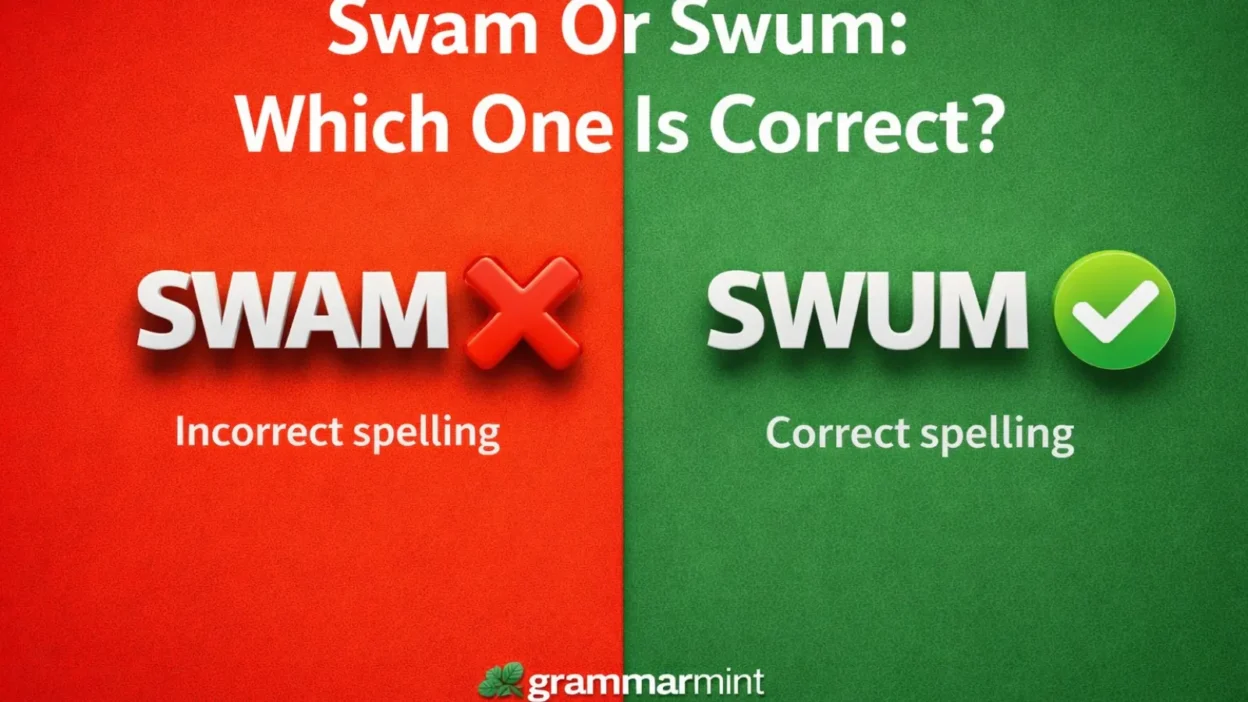
In swam or swum, the correct choice depends on the sentence. Use swam for the simple past, and use swum after helper verbs like have, has, and had.
TL;DR
• Swam = simple past
• Swum = past participle
• Say “I swam yesterday”
• Say “I have swum before”
• Avoid “I have swam”
• In doubt, check for helper verbs
How The Rule Works
English keeps two different past forms here, so the choice is about grammar, not style. First, look for a helper verb. Then decide whether the sentence needs the simple past, the past participle, or the broader irregular verb pattern.
• Swam shows one finished past action
• Swum needs a helper before it
• No helper usually means swam
• Have or had usually signals swum
• Swim is an irregular verb
• The form changes by tense
• Meaning stays the same
• Grammar position changes the choice
• Swam can stand alone
• Swum rarely stands alone
• Helper verbs control participles
• The rule is stable in standard English
When To Use Swam
Use swam when the action happened in the past and the verb stands on its own. In other words, if you could naturally add yesterday, last summer, or another finished action marker, simple past is usually the right fit.
• Yesterday usually pairs well with swam
• Use swam for one completed action
• Swam works without extra helpers
• I swam before breakfast
• She swam across the pool
• They swam after school
• We swam at the lake
• He swam faster yesterday
• The dog swam to shore
• My cousins swam all afternoon
• The fish swam upstream
• Everyone swam despite the cold
When To Use Swum
Use swum when the sentence needs the participle form. Most often, that means a helper verb comes first, such as have, has, or had, because have swum marks the past participle form.
• Helper verb comes before swum
• Have swum is standard English
• Swum is the past participle
• I have swum there before
• She has swum competitively for years
• We had swum too far
• They have swum in colder water
• He had swum before sunrise
• The team has swum well lately
• I will have swum a mile
• You’ve swum in that bay
• She’d swum longer than expected
With Have, Has, And Had
This is the biggest trouble spot, so it helps to memorize the pattern. In the present perfect, past perfect, and future perfect, the safe form is always swum.
• Present perfect takes swum
• Past perfect takes swum
• Future perfect takes swum
• I have swum in Florida
• She has swum every weekend
• We had swum before lunch
• They have swum together before
• He had swum that route once
• I will have swum ten laps
• You have never swum there
• We’ve swum in rough water
• They’d swum farther than planned
After Been And Other Helping Verbs
This area confuses learners because been often appears near swimming language. However, been swimming and been swum do different jobs, and auxiliary verbs change the structure.
• Been swimming shows ongoing action
• Been swum is passive and uncommon
• Auxiliary verbs shape the full tense
• I have been swimming lately
• She had been swimming for hours
• The event had been swum already
• The final has been swum
• He has been swimming daily
• We’d been swimming since noon
• The heat had been felt, not swum
• Most active sentences sound more natural
• Choose active wording when possible
In Questions And Negative Sentences
Questions and negatives can hide the real verb pattern, so slow down and find the helper first. If the sentence uses did, the main verb returns to the base form. If it uses have, participles still matter.
• Did takes the base verb swim
• Have keeps the participle swum
• Did you swim yesterday?
• Have you swum there before?
• I didn’t swim last week
• She hasn’t swum in years
• We never swam after dark
• They haven’t swum that distance
• Had he swum competitively before?
• Why did you swim alone?
• How long have they swum?
• I had not swum there yet
Formal Writing And Everyday Speech
Some people say have swam in casual speech, and you’ll hear it now and then. Still, standard English favors have swum, so that is the safer choice in written English and most edited work, even when informal speech sounds looser.
• Standard English prefers have swum
• Informal speech sometimes bends the rule
• Written English should stay precise
• School writing needs the standard form
• Job emails should avoid have swam
• Casual talk may sound less strict
• Tests usually expect swum
• Edited copy favors the textbook rule
• Formal reports need clean tense control
• Spoken habits can mislead writers
• Safer writing sounds more polished
• When unsure, choose the standard form
Common Mistakes To Avoid
Most errors happen because the sentence looks past-tense, so writers reach for the wrong form. Still, a few patterns repeat often, and once you spot them, they’re easy to fix.
• Have swam → have swum
• Swum yesterday → swam yesterday
• Swimmed is not standard
• Had swam → had swum
• Has swam → has swum
• I swum there → I swam there
• Did you swam → did you swim
• Never have swam → never have swum
• Was swimming ≠ swam
• Been swam is often clunky
• One helper can change everything
• Check the verb before editing
Sentence Patterns That Sound Natural
Good grammar also needs natural rhythm. So, instead of forcing the verb into stiff wording, use a familiar sentence frame, lean on natural phrasing, and notice the full verb pattern around it.
• Sentence frame helps you choose fast
• Natural phrasing beats awkward grammar tricks
• Learn the whole verb pattern
• I swam there last summer
• I have swum there before
• She swam with dolphins once
• She has swum competitively since childhood
• We swam after the storm
• We had swum past the dock
• They swam at dawn
• They have swum in deeper water
• He swam beside the boat
• He has swum that course twice
Work, School, And Academic Examples
This choice comes up more than people think. Essays, reflections, school assignments, and professional updates all sound better when the tense is clear from the start.
• Essays need clean past-tense choices
• Reports should match the timeline clearly
• Classroom English rewards correct verb forms
• I swam during field camp
• I have swum in state finals
• She swam during PE class
• He had swum before the lesson
• We swam for the study break
• They have swum in charity events
• The student swam three laps
• Our group had swum earlier
• I have swum in colder pools
• She swam before the exam meet
Travel, Sports, And Storytelling Examples
Real-life examples make the rule stick faster. Travel memories, race talk, and personal stories also show why context matters so much.
• Lake stories often use swam
• Race talk may use swum or swam
• Vacation memories need timeline clues
• I swam in the ocean at dawn
• We swam near the pier
• She has swum in three countries
• They had swum across the cove
• He swam during the hotel break
• The athlete has swum nationally
• I swam before the rain started
• We have swum in mountain lakes
• She’d swum harder in training
• They swam until sunset
Swum In Passive Voice
Passive voice is not the first place most learners look, but it matters here. In passive constructions, swum appears because the sentence focuses on the event, not the swimmer.
• Passive voice often uses swum
• Was swum appears in race wording
• Event language may prefer passive framing
• The final was swum indoors
• The relay was swum at night
• The race has been swum already
• The heat had been swum earlier
• The mile was swum in record time
• The event will be swum tomorrow
• Active voice often sounds clearer
• Passive voice is more formal
• Sports reports use this pattern more
Why English Uses Both Forms
This pair feels strange only until you see the bigger pattern. English keeps many old strong verb forms through vowel change, and that older conjugation pattern still survives in common verbs.
• Strong verb patterns change the vowel
• Vowel change marks tense differences
• Old conjugation patterns still survive
• Swim becomes swam in simple past
• Swim becomes swum in participle form
• The rule matches other verb families
• English keeps several older patterns
• Not every verb adds ed
• Irregular verbs must be memorized
• Patterns help more than guesswork
• Sound shifts shaped modern forms
• Usage stayed stable in standard grammar
Look-Alike Verb Patterns
One of the fastest ways to remember swam/swum is to compare it with other familiar verbs. Once you see the pattern, the form choice feels less random.
• Sang sung follows the same idea
• Drank drunk works similarly
• Rang rung helps memory too
• I sang yesterday / have sung
• We drank earlier / have drunk
• She rang once / has rung
• He swam before / has swum
• Past and participle often split
• Helpers point to participles
• Stand-alone past uses the plain past
• Pattern memory saves editing time
• Similar verbs make recall easier
Quick Practice And Self-Check
A short drill helps the rule stick. Read each frame, choose the form, and check whether a helper is present before you answer.
• Mini drill builds faster recall
• Choose the form after spotting helpers
• Quick grammar check prevents easy slips
• Yesterday, I ___ in the river
• I have ___ there twice
• She had ___ before noon
• We ___ after lunch
• They have never ___ that far
• Did he ___ alone?
• The event was ___ yesterday
• You’ll have ___ ten laps
• No helper? Try swam first
• Helper present? Consider swum first
Best Choice By Context
When you’re in a hurry, use a simple decision rule. Match the sentence to the context, then pick the form that fits the structure and tone.
• Formal context favors the textbook form
• Casual context still benefits from clarity
• Safest choice depends on helpers
• Use swam for simple past
• Use swum after have
• Use swum after had
• Use swim after did
• Use swimming for ongoing action
• Avoid guessing by sound alone
• Read the whole sentence once
• Check the timeline next
• Then choose the verb form confidently
FAQs
What is the difference between swam and swum?
Swam is the simple past form of swim. Swum is the past participle, so it usually follows helper verbs like have, has, and had.
Can I say “I have swam”?
In standard written English, no. The safer and expected form is “I have swum.”
Is swum a real word?
Yes, absolutely. Major dictionaries list swum as the past participle of swim.
What is the past tense of swim?
The simple past tense is swam. Example: “I swam in the pool yesterday.”
What is the past participle of swim?
The past participle is swum. Example: “She has swum in that lake before.”
Do people still use swum today?
Yes, especially in writing, edited content, and careful speech. Some casual speakers avoid it, but standard grammar still treats it as the correct participle.
Conclusion
If you’re stuck on Swam or Swum swam-or-swum, the fix is simple: use swam for simple past and swum after helper verbs.
Read the full sentence once, check for have, has, or had, and the right choice usually becomes obvious.