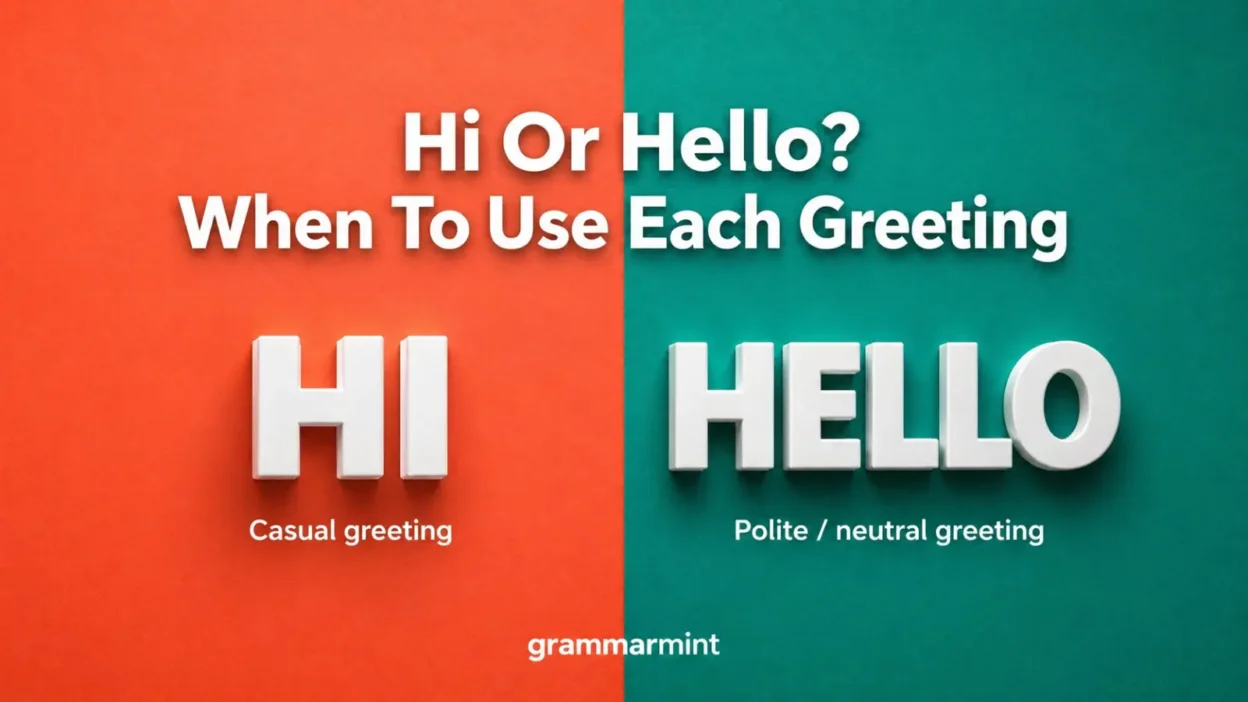
If you want to sound natural in American English, knowing when to use hi or hello can help right away. These two greetings mean almost the same thing, but they don’t always feel the same in an email, text, phone call, classroom, office, or first meeting. In most cases, hi sounds warmer and more relaxed, while hello sounds a bit more neutral, polished, or careful. Still, context matters. The best choice depends on your relationship, the setting, and the tone you want to create.
Quick Answer
Hi or hello both work as greetings, but hi usually sounds more casual and friendly, while hello often sounds a little more neutral or formal. When you’re unsure, use hello for first contact and hi for familiar, relaxed situations.
TL;DR
• Both words are correct greetings
• Hi usually feels more casual
• Hello often feels safer first
• Email tone depends on relationship
• Phone calls often favor hello
• Context matters more than rules
Hi Or Hello Meaning
Both words open a conversation. Both are normal, polite, and easy to understand. Still, greeting choices can slightly change the mood.
• Both words mean you’re starting contact
• Both can sound polite and friendly
• Hello feels a little more neutral
• Hi feels a little more relaxed
• Neither word is rude by itself
• Tone changes with voice and setting
• Relationship matters more than grammar
• Context often decides the better option
• Hello can also grab attention
• Hi usually stays purely social
• Both fit spoken and written English
• The safest choice depends on audience
Hi Vs Hello In Tone
The real difference is tone. In many situations, formal and informal are not strict boxes. Instead, they’re a sliding scale.
• Hello sounds slightly more careful
• Hi sounds slightly more easygoing
• Hello can feel more distant
• Hi can feel more personal
• Hello fits neutral first contact
• Hi fits warmer ongoing contact
• Hello may sound polished in business
• Hi may sound natural with peers
• Hello can soften uncertain situations
• Hi can lighten routine messages
• Polite delivery matters either way
• The setting decides the better tone
Hi Or Hello In Text Messages
Texting is usually fast and relaxed. Because of that, casual greetings often feel more natural there.
• Hi works well in most texts
• Hello feels more deliberate in texts
• Hi sounds lighter and quicker
• Hello can signal a serious topic
• Hi fits friends and classmates easily
• Hello fits a polite first message
• Hi pairs well with short check-ins
• Hello works for respectful outreach
• Hi there feels warm and easy
• Hello there feels slightly more styled
• Skip overthinking everyday texting tone
• Match the other person’s style
Hi Or Hello In Emails
Email depends on audience and purpose. A simple email greeting can shape the full message before the reader reaches line two.
• Hello works well for first emails
• Hi works well for familiar contacts
• Hello feels safer for cold outreach
• Hi feels smoother with colleagues
• Hello suits formal introductions better
• Hi suits ongoing threads nicely
• Hello can sound more polished
• Hi can sound more approachable
• Use names when possible
• Keep the opening simple and clear
• Match your company culture carefully
• Let the message tone guide you
Hi Or Hello At Work
Workplaces vary a lot. Some offices sound relaxed, while others stay more professional from start to finish.
• Hi is common with coworkers
• Hello works in mixed-formality offices
• Hi sounds natural in quick chats
• Hello sounds steady in meetings
• Hi fits internal team messages
• Hello fits broader workplace audiences
• Hi can feel warmer with peers
• Hello can feel safer upward
• Office culture matters every day
• Mirror respectful patterns around you
• Use consistency in recurring messages
• Choose clarity over trying too hard
Hi Or Hello For First Meetings
First meetings are about comfort and respect. A strong first impression usually comes from sounding calm, natural, and considerate.
• Hello is a safe first greeting
• Hi also works in relaxed settings
• Hello feels slightly more respectful
• Hi feels slightly more open
• Hello helps when roles are unclear
• Hi works when the mood is casual
• Use eye contact with either word
• Smile to warm the greeting
• Add the person’s name if known
• Avoid slang on first contact
• Let the other person’s tone guide you
• Start neutral if you’re unsure
Hi Or Hello With Friends
Friends usually expect a warmer, more friendly tone. In that case, hi often sounds more natural than hello.
• Hi fits everyday friend talk
• Hello can sound playful with friends
• Hi feels quick and natural
• Hello may sound dramatic or joking
• Hi works in texts and calls
• Hello works for playful emphasis
• Hi pairs with how are you
• Hello can sound theatrical sometimes
• Close friends notice tone shifts
• Keep it relaxed and easy
• Use what sounds like you
• Natural beats overly polished here
Hi Or Hello With Teachers And Professors
School settings usually call for a little extra care. With a teacher or professor, respect matters as much as correctness.
• Hello is safer for first contact
• Hi may work after rapport grows
• Hello Professor Lee sounds polished
• Hi Professor Lee sounds warmer
• Use titles when appropriate
• Avoid sounding too casual early
• Email tone should stay respectful
• Classroom culture can vary widely
• Hello helps when you’re uncertain
• Hi can fit friendly departments
• Follow the instructor’s style cues
• Keep the rest of the message strong
Hi Or Hello With Clients And Customers
External communication carries more risk. When speaking to a client or customer, neutral warmth usually works best.
• Hello is often the safer opener
• Hi works after rapport builds
• Hello sounds steady and respectful
• Hi sounds warmer and more modern
• Use names to personalize the greeting
• Avoid overly casual openers early
• Hello suits new business contact
• Hi suits long-term relationships
• Customer expectations may differ
• Brand voice should stay consistent
• Respect beats trendiness every time
• When unsure, start with hello
Hi Or Hello On The Phone
Phone calls are different because the listener hears your voice first. In many cases, phone call habits still make hello feel especially natural.
• Hello is classic on the phone
• Hi also works in casual calls
• Hello sounds clearer when answering
• Hi sounds friendlier with familiar callers
• Hello fits unknown numbers better
• Hi fits expected personal calls
• Hello buys a second of time
• Hi can sound brisker and lighter
• Your tone carries the meaning
• Speak clearly on first contact
• Add your name when needed
• Keep the opener simple
Hi Or Hello In Interviews
Interviews are high-stakes moments. In a professional setting, small choices can affect how polished you seem.
• Hello is the safer interview choice
• Hi can work in relaxed interviews
• Hello sounds more composed
• Hi sounds more conversational
• Start neutral with interviewers
• Follow their tone after that
• Pair greeting with a confident smile
• Use the interviewer’s name carefully
• Avoid slang in opening moments
• Let professionalism lead first
• Warmth still matters in interviews
• Calm delivery matters most
Hi Or Hello In Group Messages
Groups need a greeting that feels inclusive. A strong team opener makes your message easier to receive.
• Hi everyone feels friendly and common
• Hello everyone feels slightly more formal
• Hi team works in many offices
• Hello team feels polished and clear
• Hi all is short and practical
• Hello all sounds more deliberate
• Group tone should match purpose
• Routine updates can sound lighter
• Formal announcements can sound steadier
• Use names for small groups
• Keep group greetings inclusive
• Simplicity usually works best
Hi Or Hello In Customer Service
Public-facing messages should sound warm, clear, and courteous. That balance often matters more than the exact greeting.
• Hello feels reliable in service roles
• Hi feels friendly in modern brands
• Hello suits complaints and formal help
• Hi suits casual support chats
• Service tone should feel calm
• Use empathy after the greeting
• Consistency builds trust quickly
• Match the channel and audience
• Hello works well in email support
• Hi works well in live chat
• Be polite without sounding stiff
• Let brand voice guide the choice
Hi Or Hello In Formal Writing
Some messages need extra polish. In formal email or careful business writing, hello often gives you a little more room.
• Hello sounds stronger in formal notes
• Hi can still be professional
• Hello fits first outreach better
• Hi fits modern internal writing
• Formal writing benefits from restraint
• Hello feels less risky overall
• Use full names when suitable
• Avoid cute or trendy greetings
• Keep the opening line clean
• Let purpose shape the tone
• Formal does not mean cold
• Clear writing matters more than labels
Hi Or Hello In Casual Conversation
Everyday speech moves quickly. In small talk, the more natural word is usually the better word.
• Hi is common in daily speech
• Hello is common but more marked
• Hi fits neighbors and classmates
• Hello fits polite casual contact
• Hi sounds easy in passing
• Hello can sound more intentional
• Hi works well with quick follow-ups
• Hello works when gaining attention
• Natural rhythm matters in conversation
• Don’t force a formal tone
• Use what fits the moment
• Everyday speech rewards simplicity
Hi Or Hello Examples
Examples make the difference easier to feel. These examples show how the greeting changes with situation.
• Hi, Mia—are you free today?
• Hello, Mr. Carter—I had a question.
• Hi team, here’s the updated draft.
• Hello everyone, thanks for joining.
• Hi Alex, just checking in.
• Hello Dr. Chen, I appreciate your time.
• Hi Sam, how was your weekend?
• Hello, this is Jordan calling.
• Hi there, can you help me?
• Hello, I’m reaching out about the role.
• Hi, nice to see you again.
• Hello, it’s great to meet you.
FAQs
Is hi rude in an email?
No, hi is not rude by itself. It usually sounds friendly and normal, especially with coworkers, classmates, or people you already know.
Is hello more formal than hi?
Usually, yes. Hello often feels a little more neutral or formal, while hi often feels more relaxed and familiar.
Can I use hi with a professor?
Yes, sometimes, but hello is the safer first choice. Once you know the professor’s style, hi may feel perfectly fine.
Why does hello sound more serious?
It often feels more deliberate and slightly less casual. That’s why people use it when they want a careful, respectful tone.
Is hello better on the phone?
Often, yes. Hello still sounds especially natural when answering a call, though hi also works in casual conversations.
Should I say hi or hello to a client?
For a new client, hello is usually safer. For an ongoing relationship, hi can sound warm and professional.
Conclusion
Choosing hi or hello is mostly about tone, relationship, and setting. When you’re unsure, start a little more neutral, then adjust naturally. The best greeting is the one that sounds respectful, clear, and like a real person.