
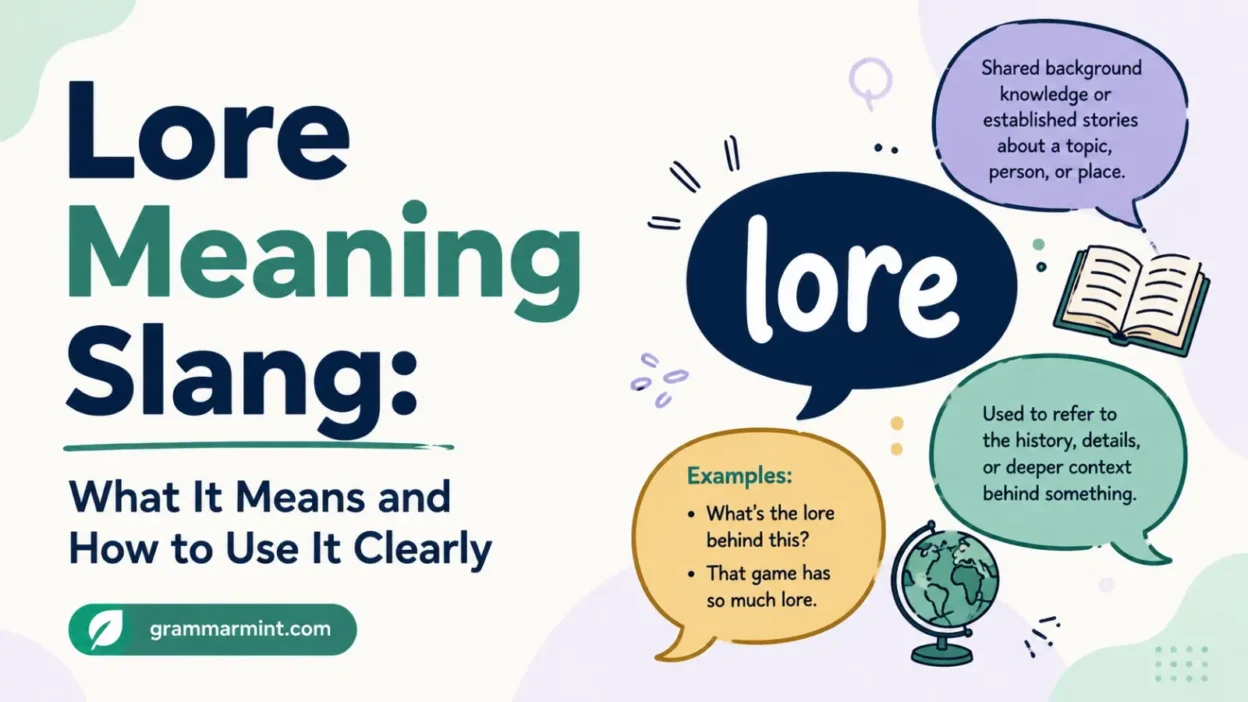
You may see lore in texts, memes, social posts, fandom threads, or gaming comments. Someone might say, “That’s part of my lore,” or “She just dropped major lore.” At first, it can sound confusing because the older meaning feels serious.
The word still means knowledge, stories, or background information. In slang, though, it often means someone’s personal backstory. It can point to funny, dramatic, strange, or surprising details from a person’s life.
This guide explains the meaning, tone, pronunciation, examples, related phrases, and common mistakes. It also shows when the word sounds natural.
Quick Answer
Lore meaning slang refers to a person’s backstory, personal history, or hidden context. It is often used online for surprising, funny, or dramatic life details.
TL;DR
• Lore means personal backstory in slang.
• It often sounds casual or funny.
• A “lore drop” reveals hidden details.
• “Dad lore” means surprising dad stories.
• Avoid it in very formal writing.
What Does Lore Mean in Slang?
In slang, lore means the background story behind a person. It can include their past, habits, relationships, interests, or unusual life events.
People use it when a detail makes someone seem more interesting. The word can make normal life sound like a story.
Examples:
• “I didn’t know that was part of your lore.”
• “My middle school theater phase is deep lore.”
• “She has so much roommate lore.”
The tone is usually casual. It can sound funny, dramatic, or self-aware.
A common mistake is using lore for every small fact. Not every detail is lore. Lore usually adds context or surprise.
Lore Meaning in English
The regular meaning of lore is traditional knowledge or stories about a subject. It often refers to information passed down over time.
For example, local lore means stories people tell about a place. Family lore means stories shared inside a family.
In books, shows, and games, lore means background information about the world. It may include history, characters, rules, myths, and events.
Slang grew naturally from that idea. A person’s “lore” is the background that helps explain them.
Pronunciation and Part of Speech
Lore is pronounced lawr. It rhymes with core, more, and store.
The word lore is a noun. It usually names a body of knowledge or backstory.
In slang, it is still a noun.
Examples:
• “That is new lore.”
• “I need the lore.”
• “This is important friend-group lore.”
It is not normally used as a verb. Say “share lore” or “drop lore,” not “lore someone.”
How People Use Lore Online
Online, lore often appears in jokes, captions, comments, and story posts. It works well when someone reveals context that changes how others see them.
You may see it in fandom spaces too. Fans use lore for character history, world details, and hidden story rules.
Modern slang also uses it for real people. That is why someone may say their past job, old hobby, or strange childhood story is “lore.”
Examples:
• “The lore behind this photo is wild.”
• “I need the full lore before I judge.”
• “This friend group has five years of lore.”
The word adds playful drama. It makes a small story feel bigger.
Lore Drop, Lore Dump, Personal Lore, and Dad Lore
Several phrases use lore in modern slang. Each one has a slightly different feel.
Lore drop means revealing new personal backstory. It often happens suddenly.
Example: “He casually lore-dropped that he lived in Japan.”
Lore dump means sharing a lot of backstory at once. It can sound funny or overwhelming.
Example: “She gave us a full lore dump over coffee.”
Personal lore means details from someone’s own life. It can include memories, past choices, or unusual experiences.
Example: “My summer camp era is personal lore.”
Dad lore means surprising stories about a father’s past. These stories often make him seem mysterious or unexpectedly interesting.
Example: “My dad just revealed his motorcycle racing lore.”
When to Use Lore
Use lore when a backstory helps explain a person, group, place, or fictional world. It works best in casual speech.
| Context | Best Choice | Why |
|---|---|---|
| Texting a friend | lore | Casual and playful |
| Explaining a character | lore | Fits story background |
| Discussing a game | lore | Common in fandoms |
| Formal report | background | More professional |
| Private personal topic | story | Softer and clearer |
Use lore for humor, context, or storytelling. Use simpler words when clarity matters more.
Good sentence:
• “There is a lot of lore behind our inside joke.”
Clearer formal version:
• “There is a long history behind our inside joke.”
When Not to Use Lore
Do not use lore when the situation needs a serious tone. It may sound too casual in school essays, reports, resumes, or formal emails.
Avoid using it for sensitive personal details. Calling someone’s trauma “lore” can sound dismissive.
Also avoid it if your reader may not know slang. In that case, use background, history, or story.
Weak sentence:
• “The client’s financial lore is complicated.”
Better sentence:
• “The client’s financial history is complicated.”
The word is useful, but context matters.
Common Mistakes to Avoid
One mistake is thinking lore always means gossip. It can include gossip, but it does not always mean gossip.
Another mistake is using it only for fantasy stories. It also works for games, shows, families, friend groups, and real people.
A third mistake is using it as a verb. Most people say drop lore, share lore, or explain the lore.
Mistake:
• “She lored me about her past.”
Correct:
• “She shared lore about her past.”
Also, do not confuse lore with law. They sound different and mean different things.
Synonyms, Antonyms, and Related Terms
Lore has close synonyms, but not perfect ones. The best choice depends on context.
Close synonyms:
• Backstory — best for personal or fictional history
• Background — clear and neutral
• History — simple and broad
• Tradition — best for culture or family customs
• Context — best when details explain a situation
Possible antonyms are limited. Ignorance can be an opposite of knowledge. Still, it is not a natural opposite in slang.
Related terms:
• Folklore — traditional stories from a culture
• Canon — official story details in a fictional world
• Backstory — events that happened before the current story
• Inside joke — humor understood by a specific group
• Lore drop — a sudden reveal of backstory
For most learners, backstory is the safest synonym.
Mini Quiz
Choose the best answer.
- In slang, what does lore usually mean?
A) A law
B) A personal backstory
C) A spelling mistake - Which sentence uses lore naturally?
A) “Please lore the report.”
B) “That story is part of my lore.”
C) “I bought a lore at the store.” - What does lore drop mean?
A) To reveal backstory
B) To forget a story
C) To write a law - Is lore usually formal slang?
A) Yes
B) No
Answer key:
- B
- B
- A
- B
FAQs
What does lore mean in slang?
In slang, lore means personal backstory or hidden context. It often refers to details that help explain someone’s life, personality, or past.
What does lore mean on TikTok?
On TikTok, lore often means a surprising or dramatic personal story. People use it when sharing past events, family details, or strange life experiences.
What does lore drop mean?
A lore drop is a sudden reveal of backstory. It can be funny, serious, awkward, or surprising.
Is lore only used in gaming?
No. Gaming and fandom spaces helped make the word familiar. Now people also use it for real-life stories and personal history.
What does personal lore mean?
Personal lore means the stories and details that make up someone’s background. It can include old hobbies, family stories, friendships, or unusual events.
Is lore a formal word?
The regular word can appear in serious writing. The slang use is casual and fits texts, comments, memes, and everyday conversation.
How do you use lore in a sentence?
You can say, “I need the lore,” or “That is part of my lore.” You can also say, “She dropped lore during lunch.”
Conclusion
Lore meaning slang is simple once you know the context. It means personal backstory, hidden details, or history that explains someone better.
Use it in casual writing, texts, and online posts. For formal writing, choose background, history, or context.