If you’ve ever paused while typing noone or no one, you’re not alone. Many students, writers, and professionals confuse these forms because English includes similar words like someone, nobody, and everyone. However, grammar rules, spelling habits, and modern American English all point to one clear answer.
In everyday writing, emails, essays, and social posts, “no one” is the accepted form. Meanwhile, “noone” is considered incorrect, and “no-one” appears mainly in some British writing styles. This guide explains the difference, shows real examples, and helps you avoid common mistakes confidently.
Quick Answer
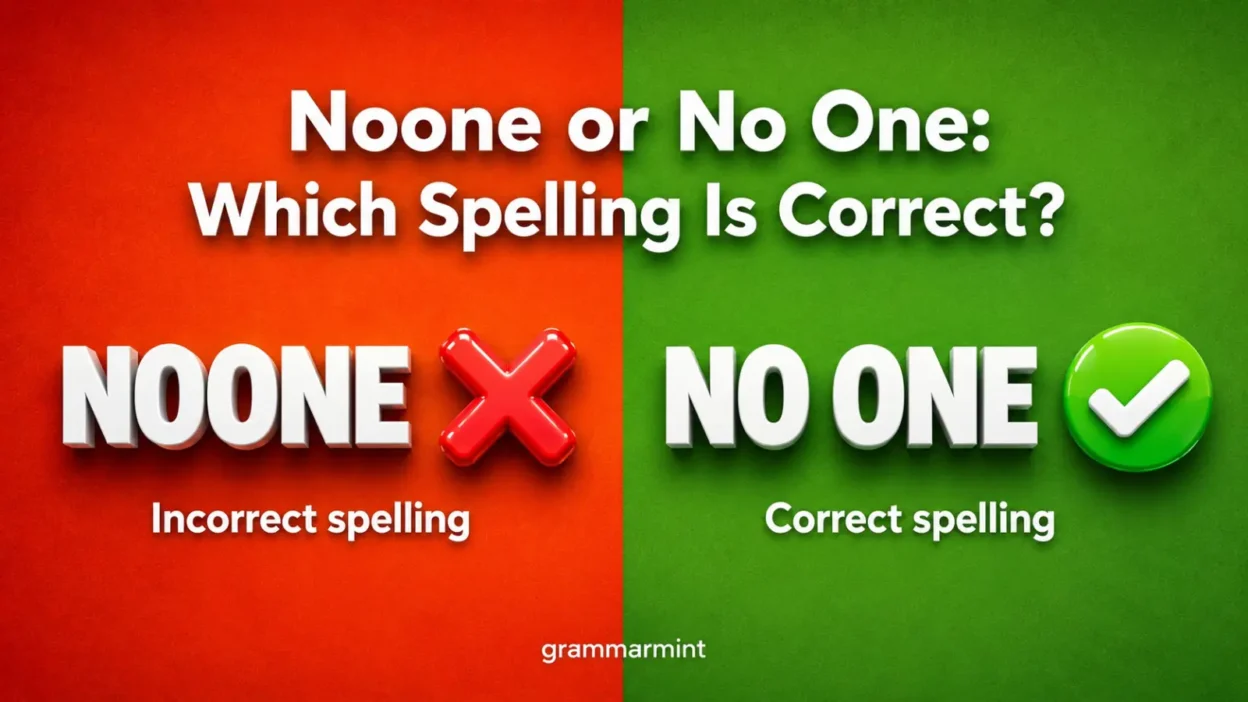
“No one” is the correct spelling in standard English. “Noone” is incorrect, while “no-one” appears occasionally in British English but is uncommon in the United States.
TL;DR
• “No one” is always safe to use
• “Noone” is incorrect English
• “No-one” appears mostly in UK writing
• “No one” takes singular verbs
• “Nobody” has nearly the same meaning
• American English prefers two words
No One Meaning
“No one” means not a single person. It works as a pronoun and replaces names or groups in sentences. In modern English, it’s common in casual and professional writing alike.
• Indefinite pronoun meaning “not any person”
• Similar meaning to nobody in conversations
• Used in formal and informal writing
• Often appears before singular verbs
• Common in emails and essays
• Shows absence of people clearly
• Works well in simple statements
• Frequently used in spoken English
• Fits academic and business writing
• Easy for readers to understand
• Usually placed before action verbs
• Helps create direct sentences
Is Noone A Word
Many writers assume “noone” should exist because words like someone do. However, standard English dictionaries reject it.
• Misspelling found in casual typing
• Considered an incorrect spelling everywhere
• Not accepted in formal writing
• Avoided in academic papers
• Flagged by grammar tools often
• Common among fast typists
• Looks similar to “someone” incorrectly
• Creates confusion during proofreading
• Should never appear in resumes
• Weakens professional writing quickly
• Not recognized in standard dictionaries
• Frequently corrected by editors
No-One Hyphen Rules
Some readers see “no-one” online and wonder whether it’s correct. The answer depends partly on regional writing styles.
• Hyphenated form appears mainly in UK usage
• Rare in British English publications today
• Uncommon in American writing styles
• Most US editors avoid it
• Some style guides still allow it
• Less popular than “no one”
• Can look outdated to readers
• Often avoided in business writing
• Rare in newspapers and blogs
• Not preferred in classrooms
• Easy to confuse with typing errors
• Best avoided for consistency
No One Grammar Rules
Grammar rules around “no one” are simple once you know them. Because it refers to one person at a time, verbs stay singular.
• Uses singular verb forms always
• Follows normal subject agreement rules
• Fits clear sentence structure naturally
• “No one is” sounds correct
• “No one are” sounds incorrect
• Matches singular pronoun patterns
• Works before helping verbs smoothly
• Supports concise sentence flow
• Often paired with present tense
• Common in negative statements
• Avoids confusing grammar structures
• Easy rule for beginners
No One Singular Or Plural
People often debate whether “no one” counts as singular or plural. In grammar, it’s treated as singular.
• Uses grammar agreement with singular verbs
• Acts as a singular subject always
• Needs proper verb matching carefully
• “No one knows” is correct
• “No one know” is incorrect
• Similar to “everyone” grammatically
• Singular despite group meaning sometimes
• Maintains consistency in writing
• Important for academic grammar tests
• Common on language exams
• Helps improve sentence accuracy
• Supports polished communication
No One Vs Nobody
“No one” and “nobody” mean nearly the same thing. Still, tone and rhythm can differ slightly.
• Nobody sounds slightly more casual
• Pronoun choice affects sentence rhythm
• Changes writing tone subtly sometimes
• “No one” feels slightly softer
• “Nobody” sounds more direct
• Both are grammatically correct
• Used interchangeably in conversation
• Common in spoken English equally
• Accepted in professional writing
• Readers understand both instantly
• Preference depends on style
• Neither changes sentence meaning much
No One In A Sentence
Seeing examples makes grammar easier to remember. Here are common ways “no one” appears naturally.
• Example sentences improve understanding quickly
• Helpful in daily writing practice
• Supports natural language use better
• No one answered the phone
• No one remembered the password
• No one wanted extra homework
• No one arrived before noon
• No one expected the surprise
• No one understood the joke
• No one likes unclear directions
• No one noticed the mistake
• No one stayed after class
No One Formal Writing
Formal writing requires clean grammar and accepted spelling. That’s why “no one” matters professionally.
• Formal English requires correct spelling always
• Common in business writing documents
• Appears in academic use frequently
• Important for college essays
• Essential in workplace communication
• Preferred by professional editors
• Avoids distracting grammar mistakes
• Builds reader trust quickly
• Helps resumes look polished
• Keeps reports grammatically clean
• Supports clear legal writing
• Strengthens professional credibility
No One In Emails
Emails need fast, clear wording. Using “no one” correctly keeps messages professional.
• Email writing benefits from simple grammar
• Improves professional communication instantly
• Common in office language daily
• No one replied yet
• No one confirmed attendance
• No one shared the attachment
• No one updated the schedule
• Works well in customer support
• Useful for internal messages
• Sounds natural and professional
• Keeps communication easy to scan
• Avoids embarrassing typos
No One British Vs American English
Regional English differences sometimes affect spelling. Still, “no one” remains the safest choice worldwide.
• American English strongly prefers two words
• UK spelling occasionally includes hyphens
• Regional preference changes slightly abroad
• US publications avoid “no-one”
• British writers sometimes accept hyphens
• Both regions reject “noone”
• International readers expect “no one”
• Global business writing favors clarity
• American classrooms teach two words
• UK newspapers still prefer spacing
• Consistency matters across audiences
• Simple spelling avoids confusion
Common No One Mistakes
Grammar mistakes happen quickly during typing. Fortunately, most errors are easy to fix.
• Common errors appear during fast typing
• Typing mistakes often create “noone”
• Grammar habits affect spelling choices
• Forgetting the space frequently happens
• Autocorrect sometimes misses mistakes
• Writers imitate “someone” incorrectly
• Proofreading catches most issues
• Double negatives create confusion too
• Wrong verb agreement appears often
• Hyphen misuse changes readability
• Spellcheck tools help greatly
• Reading aloud reveals errors
No One Pronunciation
Pronunciation partly explains why “noone” never became standard English. The spelling creates sound confusion.
• Pronunciation influences spelling history strongly
• Common in spoken English conversations
• Creates reading confusion for beginners
• “Noone” resembles the word “noon”
• English avoids unclear sound patterns
• Readers pause at double vowels
• Two words improve readability instantly
• Spoken rhythm feels more natural
• Teachers emphasize pronunciation clarity
• Helps learners understand grammar faster
• Avoids awkward visual spelling
• Supports smoother sentence flow
No One Usage Tips
Small habits can help you remember correct spelling every time. These tips make writing easier.
• Writing tips improve grammar confidence quickly
• Strong grammar habits reduce mistakes
• Better proofreading catches errors early
• Always leave a visible space
• Read sentences before sending
• Use grammar tools carefully
• Practice with simple examples
• Compare with trusted dictionaries
• Learn singular verb patterns
• Avoid copying incorrect internet slang
• Save common corrections mentally
• Keep sentences short and clear
Why No One Stays Two Words
English changes constantly, yet some phrases stay separate for clarity. “No one” is one example.
• Word evolution shapes modern English slowly
• Influenced by English spelling traditions historically
• Language patterns change unevenly sometimes
• “Someone” merged into one word
• “No one” stayed separated intentionally
• Double “o” creates visual confusion
• Readers misread “noone” easily
• Clarity matters in language growth
• Older English influenced modern usage
• Publishers favored readable spacing
• Schools reinforced traditional spelling
• Dictionaries preserved two-word formatting
Quick Tricks To Remember No One
Memory tricks make grammar easier during busy writing sessions. A few simple reminders help immediately.
• Memory trick links “noone” with “noon”
• Supports easy grammar learning faster
• Useful writing shortcut for beginners
• Think “no one person” clearly
• Remember the visible space always
• Compare with accepted dictionary forms
• Practice correct examples daily
• Read professional writing often
• Notice spelling in newspapers
• Save grammar notes digitally
• Use proofreading before publishing
• Repeat correct usage consistently
Best Alternatives To No One
Sometimes another phrase sounds smoother in context. These alternatives work well in different situations.
• Alternative words improve sentence variety naturally
• Helpful replacement phrases for smoother writing
• Better vocabulary choice strengthens style
• Nobody answered the call
• Not a single person responded
• None of them arrived
• Nobody understood the warning
• Not anyone showed interest
• Zero people attended today
• Nobody completed the assignment
• No person volunteered early
• None were available yesterday
FAQs
Is “no one” one word or two?
“No one” is always written as two words in standard American English. Most editors, teachers, and dictionaries recommend this format.
Is “noone” ever correct?
No. “Noone” is considered a spelling mistake in modern English and should be avoided in formal or casual writing.
Can I use “no-one” with a hyphen?
You can occasionally see “no-one” in British English. However, American English strongly prefers “no one” without a hyphen.
Is “no one” singular or plural?
“No one” is grammatically singular, so it takes singular verbs. For example, “No one knows the answer” is correct.
What’s the difference between “no one” and “nobody”?
Both words mean the same thing. However, “no one” sometimes sounds slightly softer and more formal than “nobody.”
Why doesn’t “no one” become one word like “someone”?
English spelling evolved differently for certain words. Many experts believe “noone” looked too similar to “noon,” so the space remained.
Conclusion
When choosing between noone or no one, the correct answer is simple: use “no one.” It’s the accepted spelling in modern American English, professional writing, and everyday communication.