If you write for school, work, or a general U.S. audience, this guide will help you choose between dreamed or dreamt without second-guessing yourself. The difference is small, but it matters when you want clear, natural wording in American English, British English, the past tense, the past participle, and everyday sentences. Both forms mean the same thing, and both are accepted by major dictionaries. Still, one usually sounds more natural in the United States, while the other often feels more British or more literary.
Quick Answer
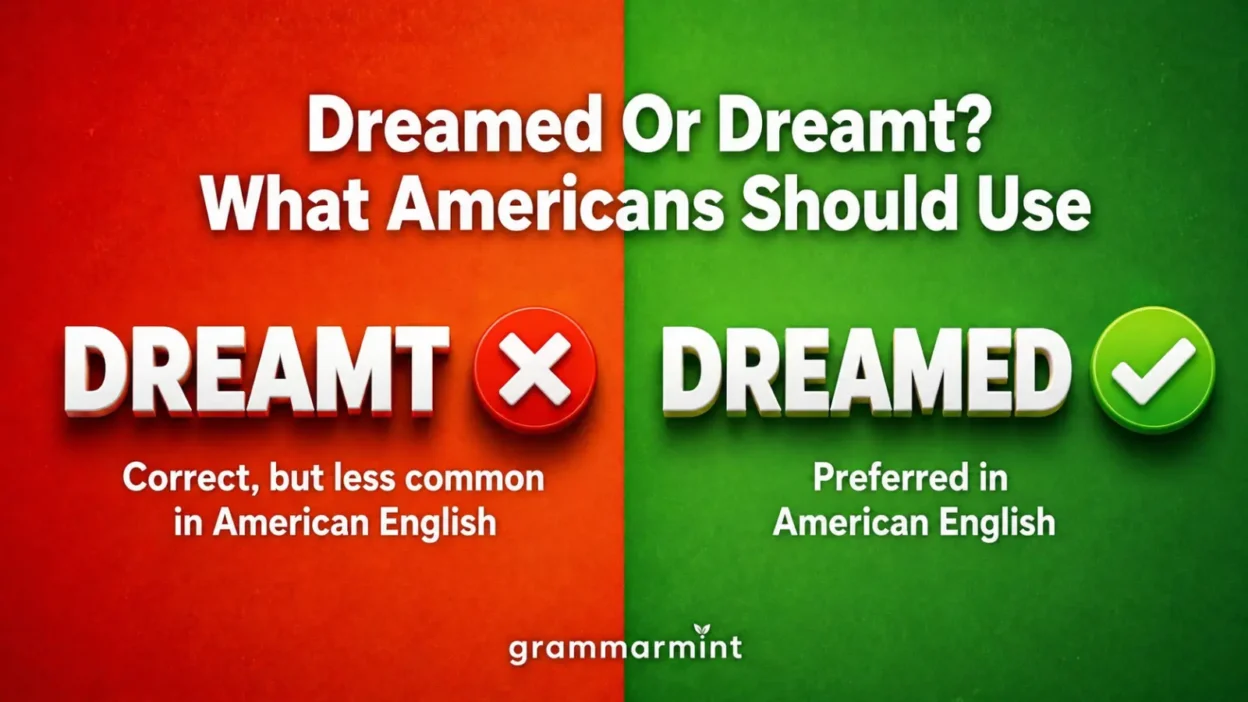
Dreamed or dreamt are both correct. For a U.S. audience, dreamed is usually the best choice, while dreamt appears more often in British English and sometimes in more literary writing.
TL;DR
• Both forms are correct
• Americans usually prefer dreamed
• Britons often use dreamt more
• Both work as past tense forms
• Both work as past participles
• Stay consistent in one piece
Dreamed Or Dreamt: The Short Answer
Both words are correct, and both come from the verb dream. Still, most American readers expect dreamed first.
If your audience is in the United States, dreamed usually sounds smoother. On the other hand, dreamt can sound slightly more British or literary.
• Dreamed is the usual U.S. choice
• Dreamt is also correct
• Both are past tense forms
• Both are past participle forms
• Meaning stays the same
• The difference is mostly style
• U.S. readers expect dreamed more
• UK readers accept both forms
• Dreamt can feel more literary
• Dreamed looks more neutral
• Both appear in dictionaries
• Pick one form and stay consistent
The Past Tense Of Dream
The simple past talks about something that happened before now. In that role, both dreamed and dreamt work.
So, you can say “I dreamed about the ocean” or “I dreamt about the ocean.” The grammar is fine either way.
• Use it for one finished action
• “I dreamed last night” works
• “I dreamt last night” works too
• It answers what happened earlier
• It often follows time words
• It fits sleep-related meaning
• It fits hopeful meaning too
• It works after “last night”
• It works after “when I was young”
• It stays singular or plural alike
• It doesn’t change the main meaning
• Simple past is the key tense
The Past Participle Of Dream
The past participle appears with helpers like have, has, and had. Both forms still work there.
That means “I have dreamed about this” and “I have dreamt about this” are both correct. Still, U.S. readers usually see have dreamed more often.
• “I have dreamed of this” works
• “I have dreamt of this” works
• “She had dreamed it before” works
• “She had dreamt it before” works
• It appears in perfect tenses
• It follows have dreamed naturally
• It follows had dreamt correctly
• It keeps the same meaning
• The helper verb controls the tense
• Dreamed feels more American here
• Dreamt feels slightly marked here
• Perfect tense uses the participle
Dreamed Vs Dreamt In Everyday Use
In daily writing, readers care less about strict grammar and more about what sounds natural. That is where preference matters most.
For most American emails, school papers, and web writing, dreamed feels safer. Meanwhile, dreamt can add flavor, but it may stand out more.
• Dreamed sounds more everyday
• Dreamt sounds more styled
• Both remain fully correct
• Reader expectation matters a lot
• Tone changes the better choice
• Audience matters more than rule
• Everyday prose favors dreamed
• Poetic lines may welcome dreamt
• Casual texts can use either
• Formal U.S. writing prefers dreamed
• Fiction gives more freedom
• Consistency helps the sentence flow
Dreamt Or Dreamed In British And American English
This is the most useful difference for most readers. In general, dreamed is the standard American choice, while British English uses both and often leans more toward dreamt.
That does not make either form wrong. It simply means one form may feel more familiar in one region than another.
• American English favors dreamed
• British English often favors dreamt
• Both regions understand both forms
• Neither form changes the meaning
• Regional preference shapes tone
• American readers notice dreamt more
• British readers see dreamt often
• Dictionaries accept both variants
• Usage depends on audience
• Style depends on publication
• Region can guide your choice
• Standard choice matters in editing
Why Dreamed Fits U.S. English Best
For a USA audience, dreamed is usually the clearest pick. It matches the form American readers expect in neutral writing.
That makes it a strong choice for student work, articles, landing pages, and business messages. Because of that, it usually causes less friction.
• It matches standard American usage
• It feels natural to U.S. readers
• It suits school assignments well
• It suits business writing well
• It fits plain modern prose
• It avoids unnecessary distraction
• It looks familiar on the page
• It works across most audiences
• It fits web writing naturally
• It is easy to scan quickly
• It sounds neutral and clear
• It is the safer default
Why Dreamt Feels More British
Dreamt is not wrong at all. Still, many readers hear a slightly British or literary note in it.
Because of that, some writers choose dreamt for mood, rhythm, or character voice. It can feel softer, older, or more story-like.
• It carries a British style feel
• It may sound more literary
• It can add regional flavor
• It often fits fiction well
• It can suit poetry better
• It may feel older-fashioned
• It still sounds natural
• It is accepted in dictionaries
• It works in dialogue well
• It may shape character voice
• It can soften sentence rhythm
• It stands out more in U.S. prose
Is Dreamt Correct In American English
Yes, dreamt is correct in American English. The question is not correctness. The real question is whether it matches your audience.
In U.S. writing, dreamt is usually less common, so it may look more noticeable. That is why many editors still prefer dreamed for general American readers.
• Acceptable in American English
• Not the usual U.S. default
• Readers may notice it faster
• Editors may switch it to dreamed
• It is not a grammar mistake
• It may sound more British
• It can suit creative writing
• It can fit personal voice
• It works in quoted speech
• It still means the same
• Reader expectations should guide you
• Uncommon does not mean incorrect
What Dreamed Means In Real Sentences
Dreamed can refer to sleep, imagination, or a hope for the future. The meaning comes from context, not from the spelling itself.
That means the same form works in literal and figurative sentences. Still, in U.S. writing, dreamed usually feels like the most natural fit.
• It can describe sleep dreams
• It can describe future hopes
• It can show imagination
• It can show ambition
• It often fits neutral tone
• It works in simple narration
• It suits real-life stories
• It can sound straightforward
• It works in speech too
• It depends on context clues
• It fits both main senses
• It stays clear for U.S. readers
What Dreamt Means In Real Sentences
Dreamt means the same thing as dreamed. The difference is tone, not definition.
Because of that, dreamt often appears when a writer wants a slightly more stylized line. It may feel more poetic, but it does not change the action.
• It shares the same definition
• It may carry a different tone
• It can feel more poetic
• It can feel more textured
• It suits stylized prose
• It suits some story voices
• It can change sentence rhythm
• It does not change grammar
• It does not change tense
• It may feel less neutral
• It adds a poetic feel sometimes
• It still stays fully correct
I Dreamed Or I Dreamt: Which Should You Write
If you are writing for Americans, use I dreamed unless you have a style reason not to. That is the easiest rule to follow.
If your audience is British, literary, or mixed, I dreamt may also fit. Just avoid switching forms back and forth without a reason.
• Write for your audience first
• Choose the more natural form
• “I dreamed” fits U.S. readers
• “I dreamt” can fit UK readers
• Keep your choice consistent
• Match the tone of piece
• Match your style guide
• Don’t alternate without reason
• Personal voice can matter
• Reader comfort still matters more
• First person needs no special rule
• Edit with audience in mind
Dreamed Up Or Dreamt Up
The same pattern appears in the phrasal verb dream up. Both dreamed up and dreamt up are correct.
For U.S. readers, dreamed up is usually the safer and more expected choice. In British-flavored writing, dreamt up may feel more at home.
• It is a phrasal verb
• It means imagined or invented
• “She dreamed up a plan” works
• “She dreamt up a plan” works
• U.S. writing prefers dreamed up
• UK writing may prefer dreamt up
• Meaning stays exactly the same
• Tone guides the best choice
• It often suggests creativity
• It often suggests invention
• It fits speech and prose
• Audience still leads the decision
Dreamed In A Sentence
Examples make the choice easier. In U.S. English, dreamed usually sounds direct and natural.
Here are short models you can copy or adapt. They work in school, personal, and general writing.
• I dreamed about missing the bus
• She dreamed of opening a bakery
• We dreamed that summer would last
• He had dreamed of this moment
• They dreamed up a kinder plan
• I never dreamed it would happen
• She dreamed about her old school
• We dreamed of moving west
• He dreamed he could fly
• I have dreamed of quiet mornings
• They had dreamed about success
• She dreamed up the whole scene
Dreamt In A Sentence
These examples are also correct. They simply carry a different flavor for many readers.
In particular, dreamt may feel smoother in fiction, lyrical prose, or British-leaning writing.
• I dreamt of rain and thunder
• She dreamt about the same road
• We dreamt of brighter days
• He had dreamt it before
• They dreamt up a strange machine
• I never dreamt you’d arrive
• She dreamt of the sea
• We dreamt that spring returned
• He dreamt about home again
• I have dreamt of that place
• They had dreamt of peace
• She dreamt up the ending
Other Verbs Like Dreamed And Dreamt
Dream is not the only verb with two accepted past forms. English has several pairs like this.
That is why dreamed/dreamt feels familiar once you compare it to similar verbs. The pattern is not unusual.
• Learned/learnt follow a similar pattern
• Spelled/spelt work the same way
• Burned and burnt are comparable
• Smelled and smelt are similar
• Leaped and leapt are similar
• Regional preference shapes these too
• U.S. English often likes -ed
• UK usage often keeps -t forms
• Both forms can be standard
• Meaning usually stays unchanged
• Style can drive the choice
• Audience still decides the winner
How To Choose The Best Form Every Time
A simple rule solves most cases. If you write for Americans, choose dreamed.
If you write fiction, poetry, or British-leaning prose, dreamt may fit the voice better. Above all, keep the choice steady across the piece.
• Start with your audience
• Use dreamed for general U.S. writing
• Use dreamt for stylistic flavor
• Check the publication style guide
• Keep one form throughout
• Don’t force a fancy variant
• Read the sentence aloud
• Choose the smoother rhythm
• Favor clarity over novelty
• Let tone guide exceptions
• Edit for consistency at the end
• When unsure, pick dreamed
FAQs
Is it dreamed or dreamt?
Both are correct. In U.S. English, dreamed is usually the standard choice, while dreamt appears more often in British English.
Is dreamt correct in American English?
Yes, dreamt is correct in American English. It is simply less common than dreamed, so many U.S. writers use dreamed for a more natural fit.
What is the difference between dreamed and dreamt?
The meaning is the same. The main difference is usage preference, tone, and regional style, not grammar accuracy.
Is dreamed or dreamt more common in British English?
British English accepts both, but dreamt is often more common there than it is in American English. Even so, dreamed is still correct in British usage.
Is it I dreamed or I dreamt?
Both are correct. For a general U.S. audience, I dreamed is usually the safer and more natural wording.
Is it dreamed up or dreamt up?
Both are correct. In American English, dreamed up is more standard, while dreamt up may sound more British.
Conclusion
Dreamed or dreamt both work, but American readers usually expect dreamed. If you want the safest U.S. choice, use dreamed and stay consistent from start to finish.