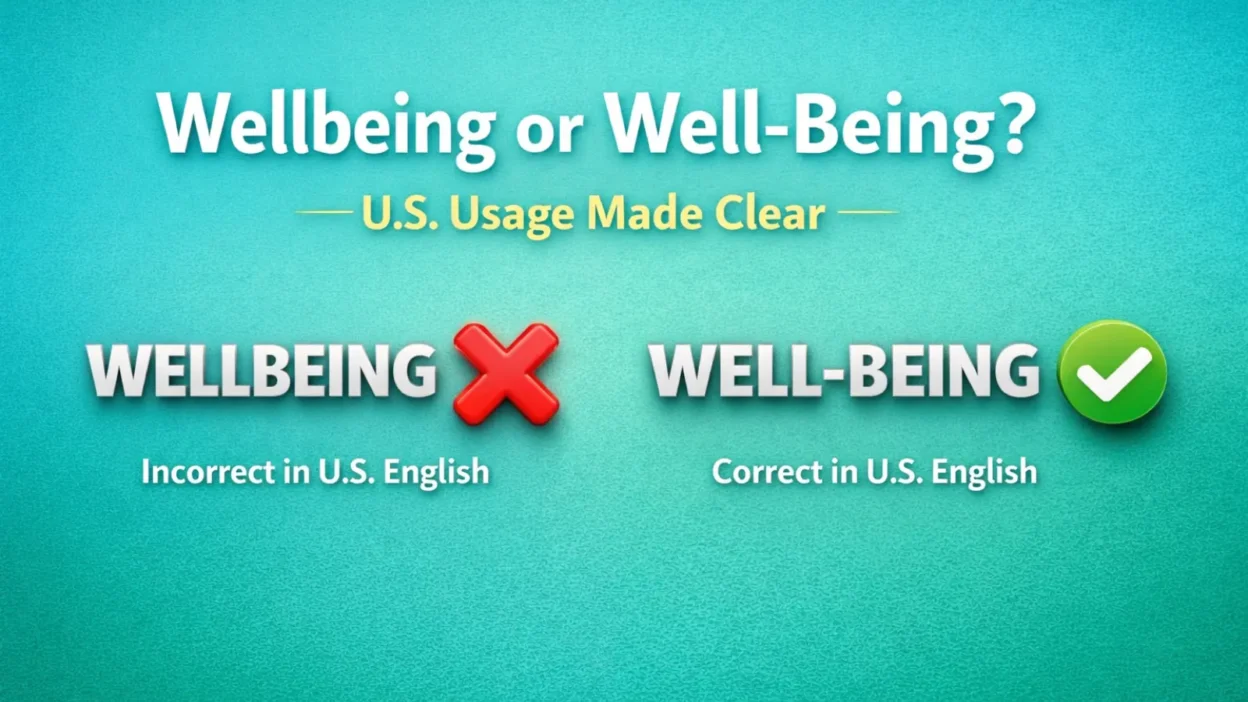
If you write for American readers, the Wellbeing or Well-Being question matters more than it first seems. This spelling choice shows up in health articles, school policies, workplace handbooks, nonprofit pages, and everyday blog posts, so one small hyphen can affect clarity, trust, and tone. The confusion grows because American English usually prefers the hyphenated compound noun, while British English more often accepts the closed form. Add formal writing, casual writing, style expectations, public-health language, and quality-of-life topics, and it becomes easy to hesitate. This guide clears it up with a U.S.-first answer, simple rules, real examples, and practical context.
Quick Answer
For a USA audience, well-being is the safer standard spelling. Wellbeing appears in some British usage, but if you want a clear American default, use the hyphenated form. Avoid well being when you mean the noun.
TL;DR
• Use well-being for U.S. English
• Wellbeing is more accepted in British English
• Avoid well being as the noun
• Match your audience before choosing
• Keep one spelling throughout the piece
• Formal copy should use the hyphen
Well-Being Definition
The meaning comes first. In practice, the term points to overall health, happiness, and welfare, not just one good moment.
• Definition covers health, happiness, and welfare together
• Quality of life sits close to the meaning
• Life satisfaction often overlaps in broader discussions
• It covers people, groups, and public policy
• The term can sound personal or institutional
• It often includes physical and mental health
• It may also include security and stability
• Writers use it for individuals and communities
• It’s broader than a passing good mood
• It’s narrower than every life circumstance
• In plain English, it means doing well overall
• Use it when whole-person health matters
Is Well-Being Hyphenated
For U.S. readers, this is usually the real question. Yes, the hyphen is the safest choice when you mean the noun.
• Hyphenation signals one clear compound noun
• Compound noun form is safest for U.S. writing
• Copyediting checks should flag missing hyphens
• Use the hyphen in formal definitions
• Keep the hyphen in headlines and subheads
• Keep the hyphen in reports and policies
• Keep the hyphen in school and HR pages
• Don’t drop it just for visual style
• Search fields may show both spellings
• Your house style should pick one form
• In U.S. copy, the hyphen wins
• When unsure, use well-being
Wellbeing Vs Well-Being
This choice depends on audience more than emotion. So, once you know who will read the piece, the decision gets easier.
• Audience matters more than personal habit
• Region often decides the preferred spelling
• Consistency matters more than trendiness
• U.S. readers expect well-being more often
• U.K. readers may accept wellbeing readily
• Both forms point to the same idea
• Brand style can override general preference
• Don’t swap forms inside one article
• Match the publication’s existing spelling
• Pick one form for menus and headings
• In mixed audiences, hyphenated is safer
• For American sites, lead with well-being
Well Being Vs Well-Being
This is where many quick guides stop too early. Usually, well being is wrong for the noun, but context can still make the open form possible.
• Two words usually miss the noun meaning
• Grammar changes when well modifies being separately
• Context decides whether separation is correct
• “Well being” looks wrong in health copy
• “She did well being patient” can work
• “Well being calm helped” still sounds awkward
• Most editors avoid the open form
• Spellcheck may miss this exact issue
• Read the whole sentence before changing it
• Noun use almost always needs the hyphen
• Separate words rarely improve readability here
• Treat well being as a special case
Well-Being In American English
For American English, the answer is steady and simple. If you want clean, standard U.S. copy, choose the hyphen.
• American English strongly favors the hyphenated spelling
• U.S. editors usually standardize to well-being
• Style guides lean toward the hyphen
• Use it in essays and research papers
• Use it in HR and benefits pages
• Use it in nonprofits and healthcare copy
• Use it in school counseling materials
• Use it in government or grant writing
• Readers notice consistency more than novelty
• The hyphen feels natural in U.S. prose
• It also matches major U.S. dictionary treatment
• This is the safest default for Americans
Wellbeing In British English
British usage is looser, so this is where many U.S. writers get mixed signals. Still, the meaning stays the same even when the spelling changes.
• British English often accepts wellbeing as one word
• Cambridge has an entry for wellbeing
• Collins labels wellbeing in British English
• You’ll still see well-being in the U.K.
• British organizations may choose either form
• Closed spelling feels normal in many U.K. settings
• Imported U.S. copy may keep the hyphen
• Local house style matters more than rules alone
• Don’t “correct” a U.K. brand automatically
• Match audience, publisher, and existing materials
• The meaning stays the same either way
• Only the spelling preference shifts
Well-Being In Formal Writing
Formal writing rewards predictability. Because of that, the hyphenated form is usually the strongest choice for American work.
• Formal writing benefits from predictable spelling
• Professional tone usually favors the hyphen
• House style should settle the choice early
• Use well-being in reports and proposals
• Use it in medical or academic contexts
• Use it in contracts, surveys, and handbooks
• Use it in thesis titles and abstracts
• Use it in donor and grant materials
• Formal readers prefer fewer spelling surprises
• Hyphenated compounds look more settled on the page
• One standard form strengthens editorial trust
• In U.S. formal copy, choose well-being
Wellbeing In A Sentence
Examples make the rule easier to remember. So here are simple lines that sound natural in real copy.
• Example sentences make the spelling easier to remember
• Copy fit matters as much as correctness
• Usage pattern becomes obvious through repetition
• Her sleep improved, and so did her well-being
• Employee well-being matters during major company changes
• Student well-being should guide school policy decisions
• Financial stress can hurt long-term well-being
• Daily walks support physical and mental well-being
• Community trust shapes neighborhood well-being
• The report measured emotional well-being over time
• Our program supports social well-being too
• For U.S. copy, keep the hyphen throughout
Mental Well-Being
This collocation is common, current, and easy to scan. In U.S. writing, the hyphen keeps the phrase unified and clear.
• Mental health commonly appears beside well-being
• Stress management fits naturally with the phrase
• Resilience language often uses this collocation
• “Mental well-being” reads clean in U.S. copy
• It suits counseling pages and wellness blogs
• It works in school and campus materials
• It also fits therapy resource pages
• Use it when emotional load is central
• The hyphen keeps the noun visually unified
• Avoid wellbeing on strict U.S. health sites
• Keep surrounding terms simple and human
• This phrase sounds balanced, not clinical
Emotional Well-Being
This version leans toward feelings, coping, and stability. As a result, it works well in warm, supportive writing.
• Emotional well-being emphasizes feelings and coping
• Mood regulation often belongs in this cluster
• Self-awareness language fits here naturally
• Use it for feelings, stability, and support
• It works in parenting and education copy
• It fits HR, coaching, and nonprofit pages
• The phrase sounds warm and accessible
• It is broader than a single emotion
• It pairs well with empathy and connection
• Keep the hyphen in U.S. materials
• Avoid switching to wellbeing midsection
• Choose examples readers can picture quickly
Physical Well-Being
This phrase is practical and concrete. It usually points to sleep, movement, energy, strength, and daily health habits.
• Physical health is the closest neighbor here
• Energy levels often support this meaning
• Daily habits make the phrase concrete
• Use it for sleep, movement, and nutrition
• It fits patient guides and gym blogs
• It works in benefit plans and wellness programs
• The phrase is broader than fitness alone
• It can include rest, mobility, and safety
• Hyphenation improves scanability in health copy
• Keep the wording plain and specific
• Readers grasp it fast in practical guides
• It sounds broader than body health alone
Social Well-Being
This collocation moves from the individual to relationships. Because of that, it fits school, family, and public-health writing especially well.
• Relationships sit near social well-being
• Belonging is a key nearby idea
• Connection helps define the phrase
• Use it for friendship, family, and community ties
• It fits school, nonprofit, and public-health copy
• It works when loneliness or support matters
• The phrase centers people, not just habits
• It can describe groups, not only individuals
• Hyphenation keeps the concept visually tight
• Avoid mixing social wellness and social well-being loosely
• Use examples with real human situations
• This wording feels inclusive and readable
Economic Well-Being
Now the phrase becomes more institutional. In reports and policy writing, it often means security, stability, and the ability to function well.
• Economic well-being often appears in policy writing
• Income security is a close related idea
• Financial stability sits nearby too
• Use it for households, regions, or nations
• It fits surveys, reports, and research summaries
• This phrase sounds broader than salary alone
• It can include savings, debt, and resilience
• It often overlaps with quality-of-life discussions
• Keep the hyphen in U.S. reports
• Avoid shortening it if meaning could blur
• This collocation sounds formal and precise
• It works well in public-facing explanations
Workplace Well-Being
This is one of the most useful modern phrases. However, it should sound practical, not trendy or vague.
• Workplace well-being fits modern HR language
• Employee support is a frequent partner term
• Burnout prevention often appears nearby
• Use it for policies, programs, and culture
• It fits manager guides and benefit pages
• The phrase covers more than gym perks
• It can include flexibility, safety, and respect
• It also includes mental and social factors
• Hyphenated spelling suits U.S. business copy
• Keep headings and body text aligned
• Avoid mixing workplace wellness and well-being carelessly
• Readers expect practical, not vague, examples
Student Well-Being
In education writing, this phrase feels current and useful. It also reaches parents, teachers, counselors, and students at once.
• Student well-being is common in education writing
• Campus support often connects with this phrase
• Learning environment also belongs nearby
• Use it for schools, colleges, and youth programs
• It fits counseling, attendance, and climate pages
• The phrase covers more than grades
• It may include safety, sleep, and belonging
• It also includes stress and emotional support
• Hyphenated spelling suits U.S. school materials
• Keep examples age-appropriate and concrete
• This phrase feels supportive, not bureaucratic
• It works in both parent and student copy
Community Well-Being
This phrase scales the idea outward. So, instead of one person, it looks at how groups live, function, and thrive together.
• Community well-being scales the concept beyond one person
• Public health often overlaps with this phrase
• Shared resources help shape the meaning
• Use it for neighborhoods, cities, and regions
• It fits planning, policy, and nonprofit writing
• The phrase suggests collective quality of life
• It may include safety, housing, and trust
• It also includes access and participation
• Hyphenated spelling suits U.S. civic copy
• Keep examples rooted in everyday community life
• This wording feels broad but still human
• It helps connect personal and public outcomes
FAQs
Is wellbeing hyphenated?
In U.S. English, the safest noun form is well-being with a hyphen. In some British contexts, wellbeing without the hyphen is also accepted. When writing for Americans, keep the hyphen.
Is wellbeing one word or two?
For American readers, it is usually neither one word nor two words. The standard form is the hyphenated noun well-being. The open form well being is usually only right when the words function separately in a sentence.
Is wellbeing a real word?
Yes, wellbeing is a real word. Some major dictionaries, especially British-oriented ones, list it as a valid spelling. Even so, U.S. readers still expect well-being more often.
How do you spell wellbeing in American English?
Use well-being. That is the clearest American default for essays, articles, school writing, health copy, and business pages. It is the safest choice when you want polished U.S. English.
Is wellbeing correct in British English?
Usually, yes. British English often accepts wellbeing as a closed form, and many U.K. organizations use it. Still, some British publishers keep well-being, so house style still matters.
What’s the difference between wellbeing and wellness?
Well-being is the broader state of doing well overall. Wellness often points more to habits, programs, or active health practices. The two can overlap, but they are not always the same.
Conclusion
For a USA audience, Wellbeing or Well-Being usually comes down to one safe choice: well-being.
Use the hyphen unless you are matching British copy or a brand’s existing style, and then stay consistent from the title to the final line.