
People often wonder whether customer or client is the right word when writing about someone who buys from or works with a business.
On the surface, these words look very similar. Both can describe a person or organization that receives something of value from a company. However, they do not always communicate exactly the same relationship.
In modern American English, customer usually emphasizes a purchase or transaction, while client often suggests a professional, personalized, or ongoing service relationship. These are useful patterns rather than absolute rules, so context matters.
Choosing the right word can make business emails, reports, websites, proposals, and everyday writing sound more natural and professional.
This guide explains the difference between customer and client, when each term works best, common mistakes to avoid, and how the words are used in real business situations.
Quick Answer
Customer usually refers to someone who buys a product or service, especially when the relationship is mainly transactional.
Client usually refers to someone who receives professional, personalized, or ongoing services.
For example:
- A person buying coffee is a customer.
- A company hiring a consultant is a client.
- Someone buying shoes from a store is a customer.
- Someone receiving legal advice from an attorney is a client.
The simplest rule is:
Customer = purchase-focused relationship
Client = service-focused relationship
However, some industries use the terms differently, so the business context should always guide your choice.
Key Differences at a Glance
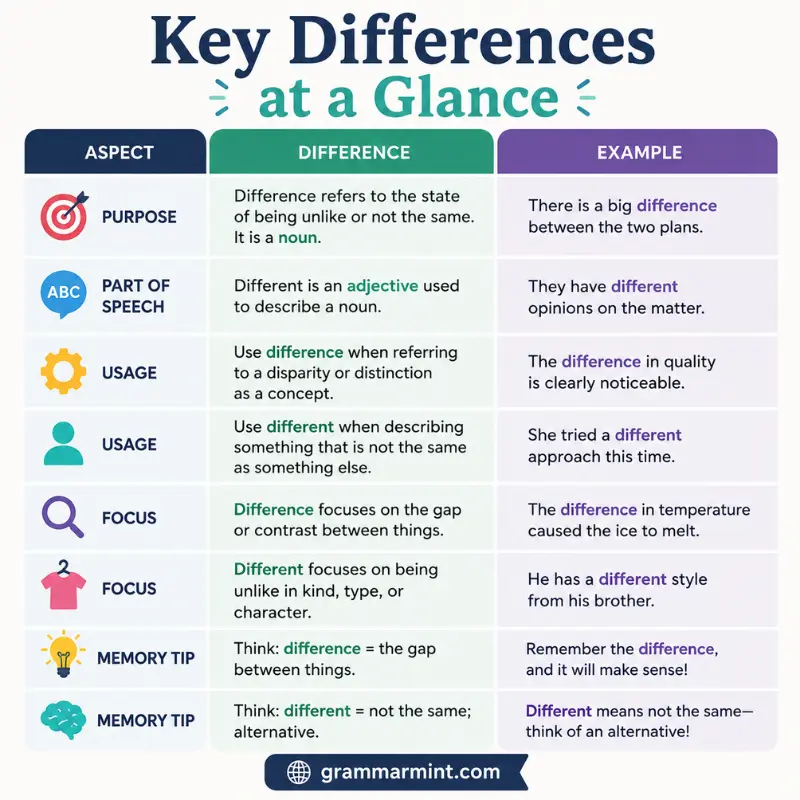
| Context | Customer | Client |
|---|---|---|
| Main focus | Buying | Receiving professional service |
| Relationship | Often transactional | Often ongoing |
| Common in retail | Yes | Less common |
| Common in consulting | Less common | Yes |
| Personalized service | Sometimes | Often |
| Professional advice | Less typical | Very common |
| Formal business tone | Neutral | Often slightly more professional |
| Can refer to companies | Yes | Yes |
The difference is not simply that one person pays and the other does not. Both customers and clients can pay for products or services.
The more important difference is usually the nature of the relationship.
What Does Customer Mean?
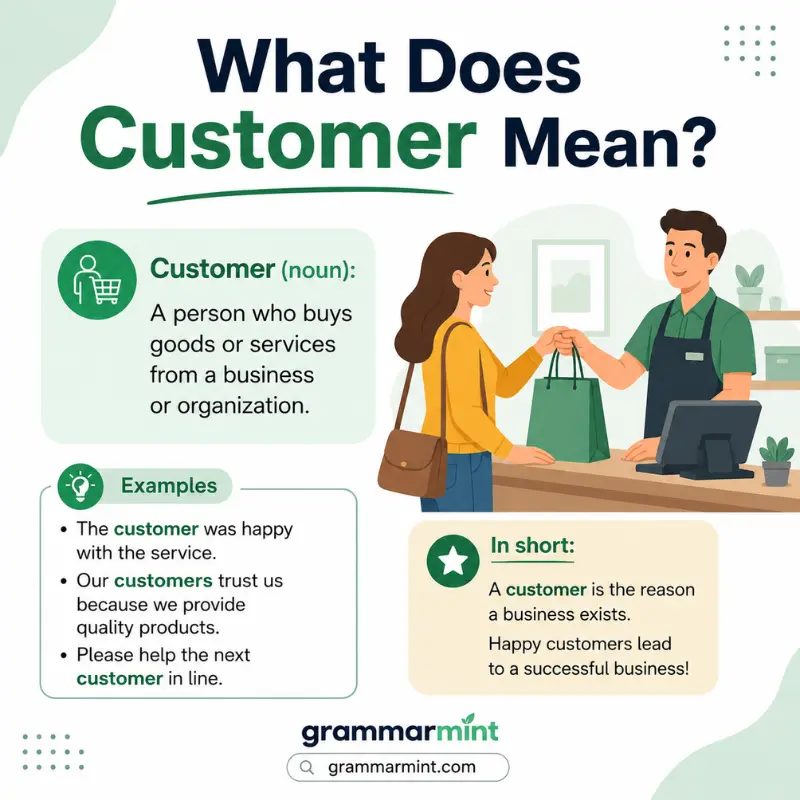
A customer is generally a person or organization that buys goods or services from a business.
The word is especially natural when the focus is on a transaction.
For example:
- The store had more than 100 customers today.
- Customers can return unused products within 30 days.
- We offer free shipping to returning customers.
- The restaurant gives customers several payment options.
- Our customers asked for a cheaper subscription plan.
The term is extremely common in retail, restaurants, e-commerce, banking, telecommunications, transportation, software, and many other industries.
A customer relationship can be brief or long-term.
For example, someone who buys one cup of coffee is a customer. Someone who visits the same coffee shop every morning for ten years is also a customer.
Therefore, customer does not necessarily mean one-time buyer. It simply tends to put more emphasis on purchasing or commercial interaction.
What Does Client Mean?
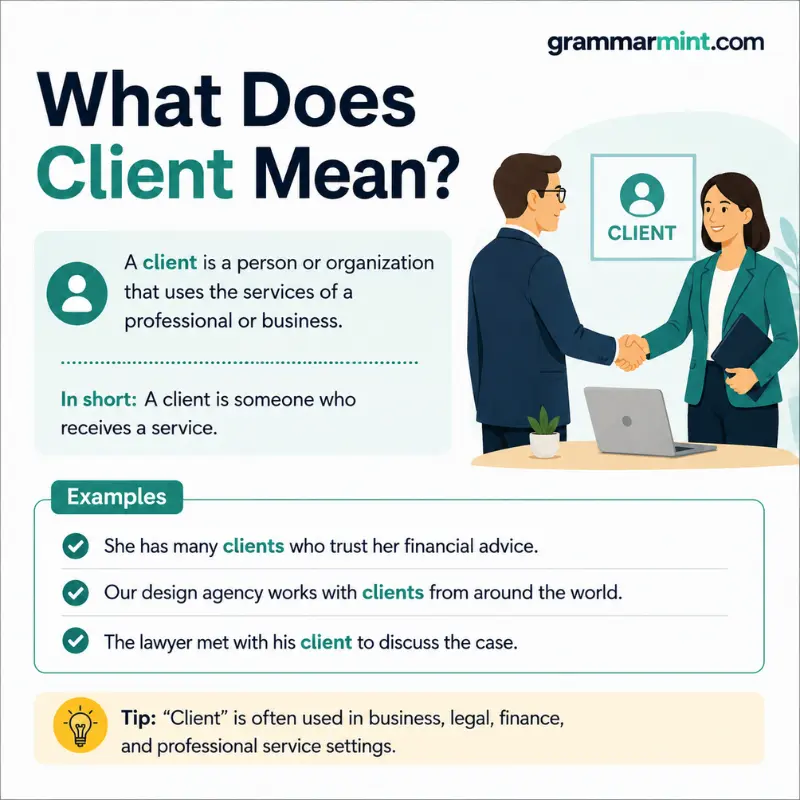
A client is usually a person or organization receiving professional, specialized, or personalized services.
For example:
- The attorney met with her client.
- Our agency presented the campaign to the client.
- The accountant prepared tax documents for several clients.
- The consultant scheduled a meeting with a new client.
- The designer asked the client to approve the final layout.
The word often appears in industries where the service provider works closely with the person or organization.
Common examples include:
- law
- accounting
- consulting
- marketing
- advertising
- financial planning
- design
- architecture
- real estate services
- professional coaching
- personal services
A client relationship often involves communication, customization, advice, planning, or ongoing work.
That is why client can sound more relationship-focused than customer.
Customer vs. Client: The Main Difference
The easiest way to understand customer vs. client is to compare what the business relationship emphasizes.
A customer usually buys something.
A client usually works with someone.
Consider these examples:
Customer:
A person walks into an electronics store and buys headphones.
Client:
A company hires an IT consultant to redesign its technology systems.
Both relationships involve money. However, the first centers on a purchase, while the second involves expertise, communication, and an ongoing professional service.
This distinction explains why some industries strongly prefer one term over the other.
A grocery store naturally talks about customers.
A law firm naturally talks about clients.
Transactional vs. Relationship-Based Business
One useful way to choose between the terms is to ask whether the interaction is primarily transactional or relationship-based.
Transactional relationships
A transactional relationship focuses mainly on buying or selling.
Examples include:
- purchasing groceries
- ordering a meal
- buying clothing
- booking a movie ticket
- purchasing electronics
- ordering a product online
In these situations, customer usually sounds most natural.
Relationship-based services
A relationship-based business often involves repeated communication, customized work, professional judgment, or advice.
Examples include:
- hiring an attorney
- working with a marketing agency
- receiving financial advice
- hiring an accountant
- working with a consultant
- commissioning a designer
In these contexts, client is usually the stronger choice.
Does a Customer Have to Buy a Product?
No.
A customer can buy either a product or a service.
For example, these are all natural:
- airline customer
- bank customer
- internet service customer
- insurance customer
- restaurant customer
- mobile phone customer
This is important because a common oversimplification says that customers buy products while clients buy services.
That rule is not reliable.
Customers frequently buy services.
The better distinction is that client is especially common when the service is personalized, professional, advisory, or relationship-based.
Can a Client Buy a Product?
Yes.
A client can sometimes buy products as part of a larger professional relationship.
For example, an interior designer may purchase furniture for a client. A financial adviser may recommend financial products to clients. A salon may sell hair-care products to its clients.
The person does not suddenly stop being a client because a product is involved.
Again, the word describes the overall relationship, not simply the object being purchased.
Which One Should You Use?
For Retail and Everyday Purchases
Use customer when the relationship mainly involves buying a product or standard service.
Examples:
- Our customers loved the new flavor.
- Customers can pay by card or cash.
- The store gives regular customers a discount.
- We received several customer complaints.
For Professional Services
Use client when someone receives specialized expertise, advice, or customized work.
Examples:
- The client approved the proposal.
- We have a meeting with a new client tomorrow.
- The lawyer contacted her client.
- Our agency provides monthly reports to clients.
For Long-Term Business Relationships
Either term may sometimes work.
A subscription company, software provider, bank, or insurance company may call people customers, even when the relationship lasts for years.
A consulting firm may call organizations clients from the first day of the relationship.
The industry and company style often determine the preferred word.
Is Client More Professional Than Customer?
Client can sound slightly more professional or service-oriented, but it is not automatically better.
Calling everyone a client simply to make a company sound more sophisticated can feel unnatural.
For example:
- grocery store client — unusual
- coffee shop client — possible in rare contexts, but customer is more natural
- supermarket client — generally unnatural
- law firm client — standard
- consulting client — standard
- design client — standard
Professional writing is not about choosing the more formal-sounding word. It is about choosing the word that accurately describes the relationship.
Customer vs. Client in Different Industries
Different industries develop their own preferences.
Retail
Customer is the standard choice.
The customer returned the jacket.
Restaurants and Cafés
Customer is generally more natural.
The café gives loyal customers a free drink after ten purchases.
Restaurants may also use guest, especially when emphasizing hospitality.
Law
Client is the standard term.
The attorney explained the agreement to her client.
Consulting
Client is usually preferred.
The consulting firm presented its recommendations to the client.
Marketing and Advertising
Agencies commonly use client.
We sent the campaign report to the client.
Banking
Customer is widely used, although other terms may appear depending on the service.
Customers can access their accounts online.
Graphic Design
Client usually sounds most natural.
The designer sent three logo concepts to the client.
Hair Salons and Beauty Services
Client is very common because appointments often involve personalized and repeated services.
The stylist recommended a new treatment to her client.
E-Commerce
Customer is generally the clearest term.
Customers receive an email after placing an order.
What About Software Companies?
Software is one area where either word may appear.
A software company might call people customers when emphasizing subscriptions, purchases, billing, or customer support.
For example:
Customers can upgrade their plans at any time.
A software consulting company may use clients when it develops customized systems or provides professional services.
For example:
We build custom dashboards for enterprise clients.
Another common term is user.
A person can be a user without being the person who paid for the software.
For example, a company may purchase software for 500 employees. The company is the customer, while the employees are users.
Because these roles can differ, choosing precise terminology becomes especially important in technology writing.
Customer vs. Consumer
Customer and consumer are also related, but they are not identical.
A customer is usually the person who purchases something.
A consumer is the person who ultimately uses or consumes it.
For example, a parent may buy cereal for a child.
The parent is the customer because the parent made the purchase. The child may be the consumer because the child eats the cereal.
In everyday conversation, however, the distinction is not always important.
Customer vs. Buyer
A buyer is someone who buys something.
It is a more direct term than customer and may be useful when the act of purchasing is the main focus.
For example:
- home buyer
- first-time buyer
- potential buyer
- online buyer
However, customer often sounds more natural when describing an established relationship with a business.
Compare:
We want to improve the customer experience.
This sounds natural.
We want to improve the buyer experience.
This could work in a specific purchasing context, but it does not have exactly the same broad business meaning.
Client vs. Customer in Formal Writing
In professional documents, consistency matters almost as much as choosing the correct term.
If your company officially uses client, use client throughout the document.
If it uses customer, stay with customer unless there is a genuine reason to introduce another category.
For example, avoid writing:
Our customers receive monthly reports. Clients may contact support at any time. We also ask customers to complete an annual review.
If all three sentences refer to the same group, switching between customers and clients creates unnecessary confusion.
Choose one term and use it consistently.
American vs. British English
There is no simple rule saying Americans use one term while British speakers use the other.
Both customer and client are used in American and British English.
The difference is primarily based on context and type of relationship, not nationality.
In American business writing, client is particularly familiar in professional services such as law, consulting, accounting, marketing, and design.
Customer remains the normal general-purpose term for buyers in retail and many consumer-facing industries.
Singular and Plural Forms
The singular forms are:
- customer
- client
The plural forms are:
- customers
- clients
Examples:
The customer requested a refund.
Several customers requested refunds.
The client approved the contract.
We currently serve twenty clients.
Both words are countable nouns.
Possessive Forms
The singular possessive forms are:
- customer’s
- client’s
Examples:
The customer’s order arrived yesterday.
The client’s request was approved.
The plural possessive forms are:
- customers’
- clients’
Examples:
We reviewed our customers’ feedback.
The agency protects its clients’ confidential information.
The apostrophe comes after the s when the noun is plural.
Safer Alternatives in Specific Contexts
Sometimes neither customer nor client is the most precise term.
Depending on the situation, consider:
- buyer for someone making a purchase
- purchaser for formal commercial or legal contexts
- user for someone using software or a service
- subscriber for someone paying for a subscription
- member for someone belonging to an organization
- patient in healthcare
- guest in hospitality
- passenger in transportation
- attendee at an event
- participant in a program
- account holder in financial contexts
Specific terms often communicate more information than the broad labels customer or client.
Common Mistakes and Quick Fixes
Mistake 1: Calling Casual Shoppers Clients
Incorrect or unnatural:
We had 300 clients visit the supermarket today.
Better:
We had 300 customers visit the supermarket today.
Customer fits ordinary retail transactions better.
Mistake 2: Using Customer in a Consulting Proposal
Less natural:
We will meet with the customer to discuss the strategy.
Better:
We will meet with the client to discuss the strategy.
Consulting normally involves a professional service relationship.
Mistake 3: Calling a Coffee Buyer a Returning Client
Less natural:
She is one of our returning clients.
Better:
She is one of our repeat customers.
For ordinary retail purchases, repeat customer is more natural.
Mistake 4: Mixing Customer and Client Randomly
Avoid using both terms for the same group without a reason.
If your website says clients on one page and customers on another, readers may wonder whether you are describing different groups.
Mistake 5: Assuming Client Always Means Long-Term
A person can become a client immediately.
Someone meeting an attorney for a single legal matter can still be a client even if the relationship lasts only a short time.
The professional nature of the relationship matters more than its exact duration.
Mistake 6: Assuming Customers Only Buy Products
Customers can purchase services as well.
A person buying internet service, transportation, or a streaming subscription can naturally be called a customer.
Everyday Examples in Real Contexts
Text Message
Thanks for your order! Your customer number is 3492.
More formal:
Thank you for placing your order. Your customer ID is 3492.
Social Media Post
Our salon clients love the new styling package!
This works naturally because salons commonly describe regular service recipients as clients.
Workplace Email
We will train our customers on the new dashboard next week.
This can work for a software company.
If the recipients are companies receiving customized professional services, you might instead write:
We will schedule training sessions for our clients next week.
Retail Situation
Ask the customer which size they would like.
Customer is the natural choice because the person is shopping.
Agency Situation
The client requested revisions to the homepage design.
Client is more natural because the relationship involves customized professional work.
Usage Trends
Modern businesses often choose between customer and client based on how they want to describe the relationship.
Retail, restaurants, e-commerce, and mass-market services generally lean toward customer.
Law firms, consultants, accountants, marketing agencies, designers, and other professional service providers generally lean toward client.
Some companies intentionally choose terminology that fits their brand.
A hotel might prefer guest instead of customer. A fitness center might say member. A technology company might prefer user or subscriber.
Therefore, the best word is not always determined by dictionary meaning alone. Industry convention and communication goals also matter.
Customer or Client: Quick Decision Guide
Ask yourself these questions:
Is the main activity buying something?
Use customer.
Is someone receiving professional advice or customized work?
Use client.
Is the person using software but may not have purchased it?
Consider user.
Is someone paying for ongoing access?
Customer or subscriber may fit.
Does your industry already have a standard term?
Follow the established industry usage.
Does your company already use one term consistently?
Use that term unless it creates confusion.
Customer vs. Client Examples Table
| Context | Best Choice | Why |
| Retail purchase | Customer | Emphasizes buying |
| Professional service | Client | Suggests personalized service |
| Software subscription | Customer or client | Depends on business model |
| Consulting relationship | Client | Professional advisory work |
| Restaurant dining | Customer | Common transactional context |
| Law practice | Client | Established professional term |
| Casual sale | Customer | Most natural general term |
| Graphic design agency | Client | Customized professional service |
| Online store | Customer | Product purchase |
| Accounting firm | Client | Professional financial service |
| Coffee shop | Customer | Everyday purchase |
| Marketing agency | Client | Ongoing professional work |
FAQs
What is the difference between a customer and a client?
A customer usually buys a product or standard service, while a client usually receives specialized, personalized, or professional services. Customer often emphasizes the transaction, while client tends to emphasize the service relationship.
When should I use customer vs. client?
Use customer for retail purchases, ordinary transactions, and many consumer services. Use client for professional services such as consulting, law, accounting, marketing, and design.
Is client more formal than customer?
Client can sound slightly more professional or service-oriented, but it is not automatically more correct. The best word depends on the relationship and industry.
Can customer refer to services as well as products?
Yes. Customers can buy services as well as physical products. Banks, airlines, internet providers, restaurants, and software companies all commonly have customers.
Can a business be a client?
Yes. A client can be either an individual or an organization. For example, a marketing agency may have another company as its client.
Are customer and client interchangeable?
Sometimes, but not always. Many businesses could use either term without creating serious confusion, but each word can suggest a different type of relationship.
Is a salon customer or client?
Both are possible, but client is especially common in salons because the service is personalized and people often return to the same stylist.
Mini Quiz
1. Your graphic design studio sends a proposal. Should you write customer or client?
Answer: Client.
2. A coffee shop thanks someone for buying a drink. Which term is better?
Answer: Customer.
3. An accountant writes to a business they advise. Which term fits?
Answer: Client.
4. An online store welcomes people who recently placed orders. Which word works best?
Answer: Customers.
5. A hair salon texts regular visitors about appointments. Which term is natural?
Answer: Clients.
6. A grocery store announces a loyalty program. Which word should it use?
Answer: Customers.
7. A marketing agency discusses companies it manages campaigns for. Which term fits?
Answer: Clients.
Final Rule to Remember
If you are still unsure, remember this simple pattern:
Customer = primarily buys from the business.
Client = primarily works with the business for professional or personalized service.
The distinction is not absolute, but it solves most everyday word-choice questions.
Conclusion
In most US contexts, both customer and client are familiar words, but they communicate slightly different types of business relationships.
Customer is generally the best choice when the focus is on purchasing a product or standard service. Client is usually more natural when someone receives professional expertise, customized work, advice, or ongoing personal service.
Neither word is automatically more professional or more correct. The strongest choice depends on the industry, the type of interaction, and the relationship you want your writing to describe.
For retail, e-commerce, restaurants, and everyday purchases, customer is usually safest. For law, consulting, accounting, marketing, design, and similar professional services, client is usually the better fit.
Once you focus on the relationship rather than simply asking whether money changes hands, choosing between customer and client becomes much easier.