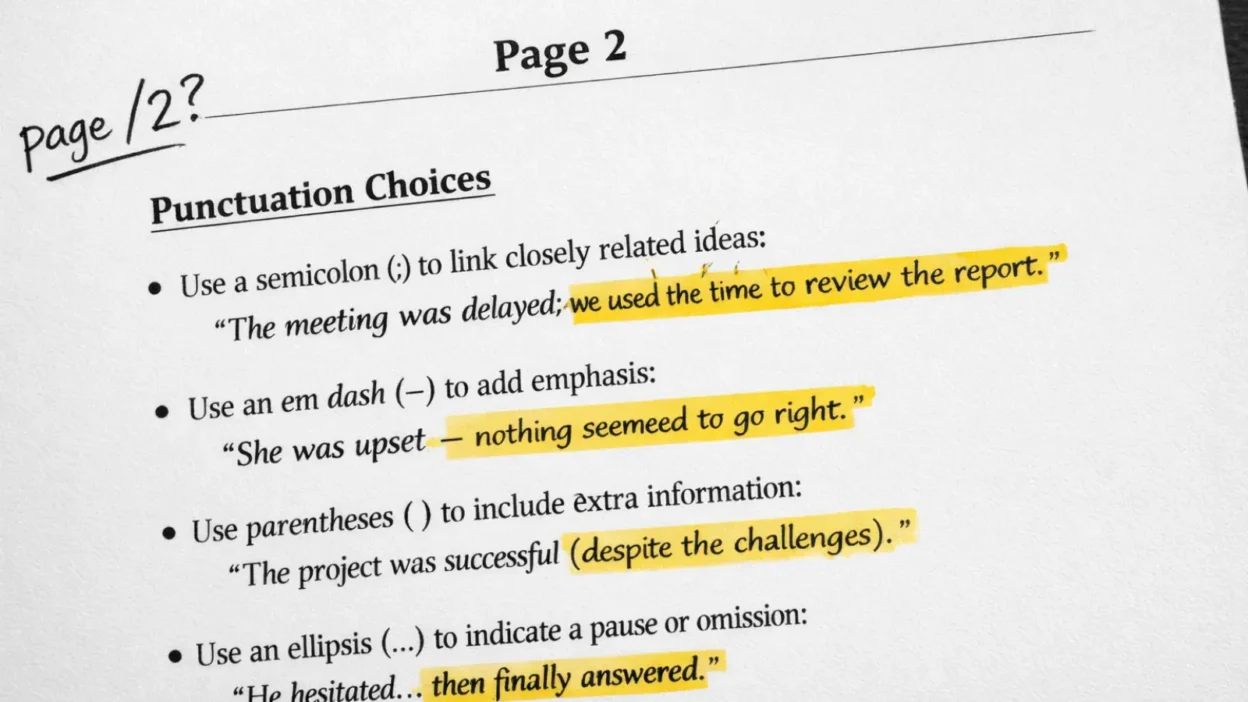
You may have seen both “Page 2” and “page/2” in documents or notes. At first glance, they seem similar. But they do not serve the same purpose in standard American writing.
This confusion often appears in emails, reports, school papers, and online posts. Some writers use a slash to shorten things. Others capitalize “Page” without knowing if it is required.
The difference matters because formatting affects tone. In professional or academic writing, small choices can shape how polished your work looks. This guide explains what each form means, when to use it, and what to avoid.
Quick Answer
“Page 2” is correct in standard American English when referring to a page number in a document.
“page/2” is not standard for general writing. It may appear in technical notes or shorthand, but it looks informal in most contexts.
Key Differences at a Glance
Feature | Page 2 | page/2
Meaning | Refers clearly to the second page | Shorthand using a slash
Formality | Standard and professional | Informal or technical
Clarity | Clear in all documents | Can look confusing
Common Use | Reports, books, emails | Internal notes, file labels
Origin and Why Two Forms Exist
The word “page” comes from Latin roots related to sheets of paper. Over time, it became the standard term for a numbered part of a document.
The slash, on the other hand, is punctuation. It is often used to mean “or,” to show fractions, or to separate items. Writers sometimes use it as shorthand.
“page/2” likely developed from quick note-taking habits. It is not a formal grammar rule. It is more about convenience than correctness.
British vs American English
There is no major US–UK difference here. Both American and British style guides prefer “Page 2” when referring to a document page.
Using a slash for page numbers is not a regional rule. It is generally informal everywhere.
Which One Should You Use?
For general writing, use “Page 2.” It is clear and widely accepted.
In business or academic documents, always choose “Page 2.” It matches style guidance and looks professional.
In casual notes or file names, you might see “page/2.” Still, it is better to avoid it in formal settings.
If you want to be extra polished, follow your style guide. Many recommend lowercase “page 2” in running text unless it begins a sentence.
Common Mistakes (and Quick Fixes)
• Mistake: Writing “See page/2 for details.”
Fix: Write “See page 2 for details.”
• Mistake: Thinking the slash is required.
Fix: Use a space between the word and number.
• Mistake: Capitalizing “Page” mid-sentence without reason.
Fix: Use lowercase unless it starts a sentence.
• Mistake: Using “page/2” in a formal report.
Fix: Replace it with “page 2.”
• Mistake: Mixing styles in one document.
Fix: Stay consistent throughout.
• Mistake: Using slashes for page references in essays.
Fix: Follow your citation style instead.
Everyday Examples
Informal text message:
“I think the answer is on page 2.”
Social media post:
“Check page 2 for the before-and-after photos.”
Parent helping with homework:
“Look at page 2 in your workbook.”
Workplace email:
“Please review page 2 of the proposal.”
More professional rewrite:
“Kindly review page 2 of the attached proposal for revisions.”
Usage/Trends
In general search patterns, “page 2” appears far more often than “page/2.” The standard form dominates books, blogs, and news writing.
The slash version appears mainly in technical contexts, file paths, or shorthand notes. It is not common in polished prose.
Comparison Table
Context | Best Choice | Why
School essay | page 2 | Matches academic style
Business report | page 2 | Looks professional
Email to client | page 2 | Clear and standard
Personal notes | page 2 | More readable
File label shortcut | page/2 | Acceptable shorthand
Published article | page 2 | Follows style guidance
FAQs
Should I write page 2 or page/2?
Write “page 2” in almost all cases. It is the standard form. The slash version looks informal.
When do you use a slash in writing?
A slash can mean “or,” show fractions, or separate items. It is not typically used for page references in formal writing.
Is page/2 correct English?
It is not standard in general prose. It may appear in shorthand or technical labels.
How do you refer to a page number in a sentence?
Use the word “page” followed by the number. For example, “See page 2 for details.”
Is it correct to capitalize page in Page 2?
In the middle of a sentence, lowercase is usually correct. Capitalize only at the start of a sentence or in headings.
What does a slash mean in writing?
A slash can show alternatives, fractions, or breaks. It should be used carefully in formal documents.
Mini Quiz
- Which looks more professional: “page 2” or “page/2”?
- Should you use a slash in a business report?
- Is there a US–UK difference in this rule?
- Should “page” be capitalized mid-sentence?
Answer Key:
- page 2
- No
- No
- No
Conclusion
Between Grammarnestly Page 2 page/2, the clear winner is “page 2.”
It fits standard American writing and looks professional. Context and audience always matter, but formal writing favors the standard form.