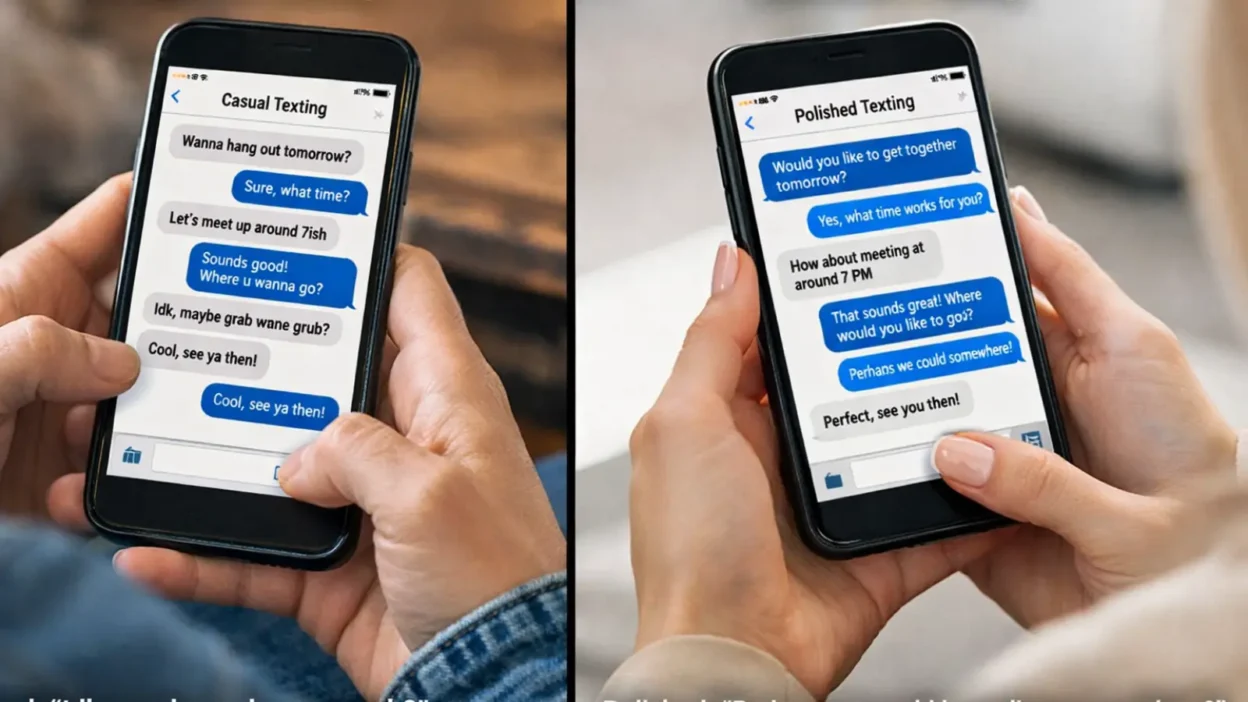
Many English learners and writers pause over “unformal” versus “informal.” You might see “unformal” in quick chats or social posts and wonder if it’s correct.
In standard American English, one of these forms doesn’t belong in textbooks, reports, or professional writing.
This article settles the confusion, shows natural examples from everyday language, and helps you decide what to use in different settings.
You’ll quickly see which term is correct, how tone and audience affect your choice, common mistakes people make and how to fix them, plus real sentences you can adapt. By the end, you’ll know how to use “informal” confidently — and why “unformal” stays out of standard word lists.
Quick Answer
“Informal” is the correct and standard word in English. “Unformal” is not recognized in major dictionaries and is generally considered incorrect or nonstandard. Use “informal” when you want to describe relaxed, casual, or everyday style.
Key Differences at a Glance
• “Informal” — standard adjective for casual style in clothes, speech, writing, etc.
• “Unformal” — nonstandard; typically a mistake or rare in very casual internet use.
• Tone — “informal” feels natural; “unformal” sounds incorrect to native speakers.
• Audience — use “informal” in all clear communication.
Origin and Why Two Forms Exist
English has many negative prefixes. “Un-” often attaches to adjectives like “happy” → “unhappy.” But not all adjectives take “un-.” The prefix for “formal” in standard usage is “in-,” forming “informal.” This pattern matches many English words where “in-” signals the opposite (e.g., “inaccurate,” “incomplete”).
Dictionaries list informal as the correct form with broad meanings like “not formal,” “relaxed,” or “suitable for everyday use.” Because “unformal” looks like a plausible opposite of “formal,” some learners try it, especially in chats or social posts, but it has not been accepted into major English dictionaries.
British vs American English
Both British and American English use informal as the only recognized standard form. There’s no regional rule where “unformal” is correct. If you check major dictionaries in the UK and USA, you’ll find “informal” and not “unformal.” So this isn’t a regional difference — it’s about which form is standard in educated English.
Which One Should You Use?
Everyday Chatting and Casual Writing
Stick with informal. People will understand you clearly, and it sounds natural.
School or Professional Writing
Only use informal when discussing register or style. For formal essays, consider using alternatives like “casual,” “relaxed,” or “everyday.” Avoid “unformal” entirely.
Text Messages
“Informal” works fine if you’re describing tone (“Use a more informal style here”). In quick chat you’ll rarely need to use either — you’ll just write casually.
Common Mistakes (and Quick Fixes)
• Mistake: “The meeting was unformal.”
Fix: “The meeting was informal.”
• Mistake: “We use unformal language here.”
Fix: “We use informal language here.”
• Mistake: “Your email sounds unformal.”
Fix: “Your email sounds too informal for work.”
• Mistake: “Dress unformal today.”
Fix: “Dress informally today.”
• Mistake: “We’ll keep this unformal.”
Fix: “We’ll keep this informal.”
• Mistake: “Write in an unformal way.”
Fix: “Write in an informal way.”
• Mistake: “Unformal category clothes.”
Fix: “Informal category clothes.”
• Mistake: “An unformal response is okay.”
Fix: “An informal response is okay.”
Everyday Examples (Real Contexts)
Texting a Friend
• ❌ “Let’s keep it unformal tonight.”
• ✔️ “Let’s keep it informal tonight.”
Meaning: We want a relaxed vibe.
Social Media Caption
• ❌ “Wearing unformal clothes today.”
• ✔️ “Wearing informal clothes today.”
Meaning: I’m dressed casually.
Parent to Teen
• ❌ “Your essay is too unformal for school.”
• ✔️ “Your essay is too informal for school.”
Meaning: You need a more serious tone.
Workplace Email + Professional Rewrite
• Initial: “Thanks for the informal summary.”
• Professional: “Thank you for the clear summary.”
Here, “informal” is okay when describing casual style, but a more specific phrase can strengthen the message.
When you explain style differences to colleagues, use informal with clear examples.
Usage/Trends (Qualitative)
Across English learning resources and dictionary entries, informal appears as a key word used to describe casual registers of language, clothing, or settings. Language educators teach it as the opposite of “formal.” Writers and teachers correct “unformal” because it’s not recognized as a standard word in educated usage.
Teachers often emphasize learning informal vs formal language as part of style and register lessons. This means students are more likely to see “informal” in writing guides and exercises, not “unformal.”
Context | Best Choice | Why
| Context | Best Choice | Why |
| Casual conversation | informal | Standard term for relaxed speech |
| Writing style discussion | informal | Recognized by dictionaries |
| School essay | informal | Use only if comparing tones; otherwise avoid |
| Emails at work | informal | Clear and professional |
| Clothing description | informal | Accepted adjective for dress codes |
| Chat slang | informal | Readers expect this form |
FAQs
Is “unformal” a correct English word?
No. “Unformal” is considered nonstandard and is not listed as correct in major dictionaries. Native speakers see it as a mistake or very rare informal use.
Which is correct: unformal or informal?
Informal is correct. It’s the standard adjective meaning “not formal” or “casual.”
What does “informal” mean?
It describes a relaxed style in speech, writing, dress, or settings — like talking with friends or wearing everyday clothes.
Can “informal” be used in formal writing?
Yes, when you’re discussing styles or registers. But in formal essays, you often describe the style instead of using the word itself.
Why is “informal” spelled with “in-” instead of “un-”?
English uses “in-” as the standard prefix for this adjective pattern. “Un-” doesn’t form this particular opposite.
Mini Quiz
- Choose the correct word: “His tone was ___ in the meeting.”
Answer: informal - Rewrite: “Your report is too unformal for class.”
Answer: “Your report is too informal for class.” - What does “informal” usually describe?
Answer: A relaxed, casual style. - True or False: “Unformal” is standard English.
Answer: False - Pick the best rewrite of a casual email reference: “Thanks for the informal feedback.”
Answer: “Thank you for your clear feedback.”
Conclusion
In modern American English, informal is the correct and recognized word for describing relaxed or casual style.
“Unformal” doesn’t appear in authoritative dictionaries and is considered a nonstandard form.
Whether you’re texting, writing essays, or talking about tone, using informal will keep your English clear and correct.
Save “unformal” as something to avoid in careful writing and replace it with “informal” or a specific description of style.