If you’ve paused over Make Due or Make Do while writing an email, essay, text, caption, or report, you’re not alone. This pair causes spelling confusion because due feels natural around deadlines, rent, bills, and anything owed, while make do is an older idiom about coping, improvising, and getting by with limited resources. That small switch can make polished writing look off. In this guide, you’ll get the correct form, the meaning of make do with, the hyphen rule for make-do, clean examples, and simple ways to avoid the mistake in everyday, academic, and professional writing.
Quick Answer
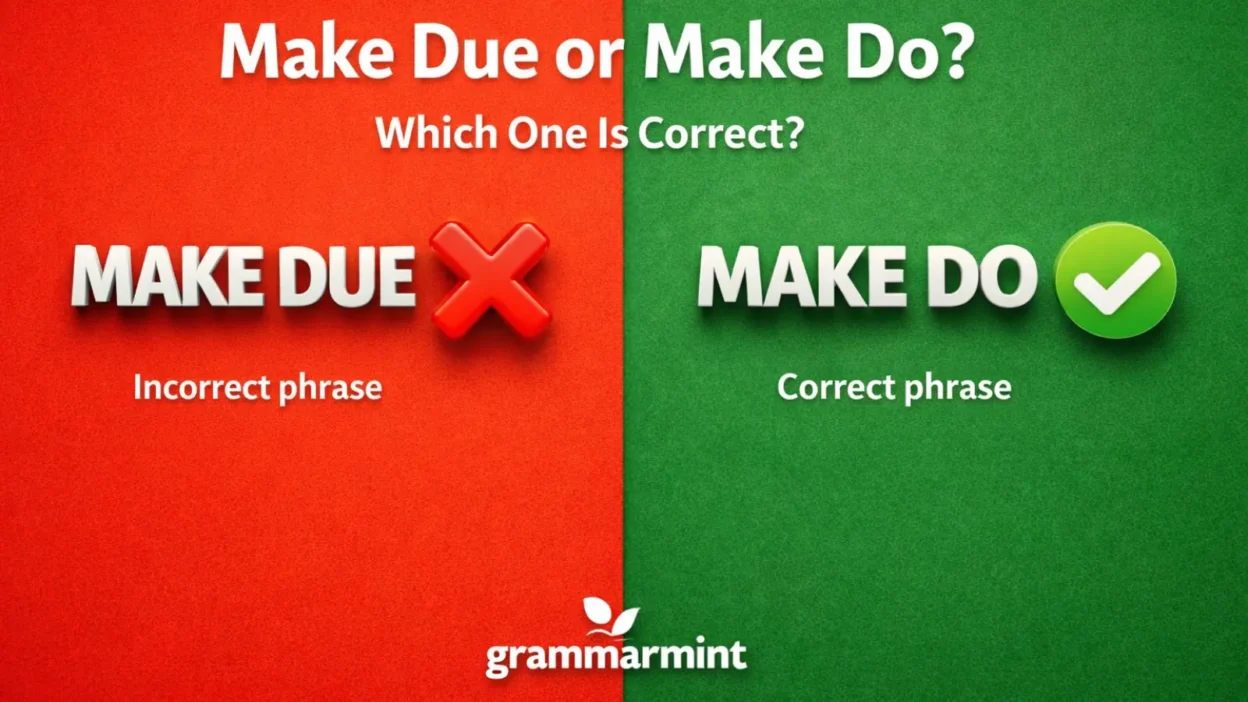
In standard English, Make Due or Make Do has one clear winner: make do. Use it when you mean manage with what you have; save make-do for the hyphenated adjective before a noun, and avoid make due in normal edited writing.
TL;DR
• Make do is the standard phrase.
• Make due is usually a mistake.
• Use with to name the substitute.
• Hyphenate make-do before nouns.
• This rule holds in US and UK.
Why This Pair Gets Mixed Up
The confusion is easy to understand. The two phrases sound almost the same, and due already feels familiar in contexts about money, deadlines, and obligations. Still, the accepted idiom is make do, not make due.
• Both phrases are sound-alike forms.
• Many writers rely on memory.
• The phrase is a fixed idiom.
• Idioms often ignore neat logic.
• Due feels linked to obligation.
• Do feels too plain at first.
• Fast typing invites sound-based spelling.
• Spellcheck may miss the slip.
• Bills and rent push readers toward due.
• Deadlines make due look tempting.
• Casual posts spread the confusion.
• Edited writing still favors make do.
What Make Do Means
Make do means manage, get by, or cope with what is available, even when it is not ideal. In other words, it is about settling for what you have and still moving forward.
• It means manage with less.
• It often suggests cope and continue.
• It points to limited resources.
• The tone is practical.
• It often implies compromise.
• It can suggest creativity too.
• It works for food, tools, space.
• It fits temporary shortages well.
• It often sounds humble.
• It can sound slightly resilient.
• It works literally and figuratively.
• It does not mean thrive.
Why Make Due Usually Misses the Mark
The problem with make due is that due usually points to something owed, expected, scheduled, proper, or sufficient. That meaning does not match the established idiom, so the phrase usually reads like an error in standard writing. Some usage pages note older appearances, but current edited English still treats make do as the safe choice.
• Due usually means owed or expected.
• That sense shifts the phrase wrongly.
• Standard writing rejects the swap.
• Many readers spot it fast.
• It can weaken polished prose.
• The logic still feels tempting.
• It appears in casual mistakes online.
• It remains nonstandard for most editors.
• It distracts from your point.
• It may look like a typo.
• Formal writing should avoid it.
• Make do is the safer choice.
How Make Do With Works
The most common pattern is make do with followed by the thing you have available. You can also use the phrase without with, but the full pattern is often clearer for readers.
• Use make do with before substitutes.
• Name the available thing next.
• It works with concrete nouns.
• It also works with pronouns.
• Past tense becomes made do.
• Present form is making do.
• Future form is will make do.
• It often follows have to.
• It can stand alone too.
• Keep the verb phrase open.
• Don’t hyphenate it here.
• Avoid pairing it with due.
Make Do In Everyday Speech
In casual conversation, make do sounds natural, human, and easy to understand. It works best when you are talking about a temporary compromise, not a permanent solution.
• This fits everyday English well.
• It sounds natural in casual speech.
• The phrasing feels simple and direct.
• We can make do with takeout.
• I’ll make do with sneakers today.
• They made do with folding chairs.
• She made do with screenshots.
• We made do until payday.
• He made do with instant coffee.
• I can make do for now.
• They make do every winter.
• Sometimes the phrase sounds warm.
Make Do In School Writing
For school papers, personal essays, and classroom responses, make do is correct when you mean manage with less. It is clear, familiar, and easy for most readers to process, but you still want to match the tone of the assignment.
• Use make do in essays.
• Avoid make due in papers.
• Teachers may mark it wrong.
• It fits reflection writing well.
• It works in narrative assignments.
• It can describe supply shortages.
• It sounds clearer than muddle through.
• Past tense still stays made do.
• Add concrete details after it.
• Keep examples simple and specific.
• Don’t force it into every paragraph.
• Replace it when tone must stiffen.
Make Do In Work Emails And Reports
At work, make do is fine in internal messages, practical updates, and candid team notes. However, it can sound a bit casual for external reports, client-facing writing, or formal documents, so sometimes a cleaner alternative works better.
• It fits internal notes better.
• Watch the formal tone carefully.
• Use alternatives for stricter documents.
• We may make do this quarter.
• The team can make do temporarily.
• It can sound refreshingly candid.
• Clients may prefer plainer wording.
• Better options include manage or proceed.
• Avoid it in contract language.
• Use specifics after with.
• Proofread for due before sending.
• Keep the message solution-focused.
Money And Budget Talk
This is where many writers get tripped up. Due belongs with bills, payments, and dates, while make do belongs with coping, stretching, and living within what remains.
• A budget may feel tight.
• A bill can be payment due.
• Families still stretch resources somehow.
• Students make do on thin budgets.
• Startups often make do early.
• The phrase suits lean months.
• It suggests stretching what remains.
• It never means paying something owed.
• Bills are due, not do.
• The contrast helps memory.
• Financial writing should stay precise.
• Use do for coping.
At Home And Around The House
Home life is one of the most natural places for this phrase. It works well for temporary furniture, limited supplies, simple repairs, and everyday compromises people make without much drama.
• We made do with boxes.
• He made do with a stool.
• She made do using blankets.
• They made do with one burner.
• We made do through renovations.
• A spare crate became seating.
• Kids made do with crayons.
• Gardeners make do with scraps.
• Hosts made do with paper plates.
• Campers made do with flashlights.
• Roommates made do all summer.
• Small repairs often start temporary.
Travel, Delays, And Emergencies
When plans change and options shrink, make do becomes especially useful. The phrase naturally fits delays, shortages, weather problems, and short-term disruption.
• A short-term fix may be enough.
• Disruption often changes the plan.
• The phrase hints at resilience.
• Travelers make do with carry-ons.
• We made do at the airport.
• She made do after the delay.
• Hikers made do with one map.
• Drivers made do without chargers.
• Storm weeks force quick compromises.
• Emergency kits help people adapt.
• Delays make the phrase feel natural.
• It suits temporary pressure well.
Make-Do As An Adjective
This is the form many pages skip: make-do can be a hyphenated adjective before a noun, where it means makeshift or temporary. The verb stays open as make do, but the modifier becomes make-do.
• Use the hyphenated adjective before nouns.
• It means makeshift or temporary.
• Put it before a noun.
• A make-do desk works.
• A make-do fix buys time.
• A make-do bed feels temporary.
• A make-do plan is not final.
• Don’t hyphenate the verb phrase.
• We made do is correct.
• A make-do answer sounds provisional.
• Makeshift is a close synonym.
• This form appears in current dictionaries.
Make Do And Mend
Make do and mend is a related phrase about repairing, reusing, and stretching the life of what you already have. It is especially associated with Britain’s wartime thrift culture, though people still use it today in reuse and sustainability talk.
• The phrase joins repair and reuse.
• It carries a thrift mindset.
• It has clear reuse energy.
• It feels slightly British today.
• It suits sustainability conversations.
• It can sound nostalgic.
• The core idea is resourcefulness.
• Make do comes first on purpose.
• Mend adds maintenance and care.
• It fits clothing examples well.
• It also suits household habits.
• The tone stays practical.
Is Make Due Ever Correct
In modern standard writing, make due is usually not the form you want. A few usage references note that it appears in older material or as a historical variant, but that does not make it the best choice for present-day edited English.
• In modern writing, usually no.
• Older texts may show it.
• Rare sightings don’t guide today.
• Most readers expect make do.
• Historical traces confuse beginners.
• Modern editors prefer the standard.
• Style safety matters more now.
• Search exposure is not acceptance.
• Keep due for bills.
• Keep do for coping.
• Context rarely rescues the phrase.
• Safer wording prevents distraction.
American And British English Check
This is not one of those cases where Americans prefer one form and British writers prefer another. Current dictionary coverage shows make do in both British and American English, so the standard choice stays the same across audiences.
• Both varieties use US English coverage.
• Both varieties use UK English coverage.
• The same standard phrase appears.
• This is not a regional split.
• British writers use make do.
• American writers use make do.
• The difference is not dialectal.
• Learners often expect a divide.
• Here, that myth fails.
• Edited English aligns cleanly.
• Use one spelling internationally.
• Only tone may shift slightly.
Common Mistakes And Easy Fixes
Most mistakes here are small, but they are easy to prevent once you know what to check. A quick proofread is usually enough.
• Mistake: make due. Fix: make do.
• Mistake: made due. Fix: made do.
• Mistake: make-do verb. Fix: open it.
• Mistake: make do of. Fix: with.
• Mistake: bill do. Fix: bill due.
• Mistake: due with leftovers. Fix: do with leftovers.
• Mistake: overusing it. Fix: vary wording.
• Mistake: vague context. Fix: name the substitute.
• Mistake: stiff report use. Fix: choose manage.
• Mistake: wrong tense. Fix: check made do.
• Mistake: noun confusion. Fix: use make-do desk.
• Mistake: trusting autocorrect. Fix: reread idioms.
Example Sentences You Can Use Today
These examples sound natural in modern American English and give you different contexts to copy, adapt, or learn from.
• We’ll make do with leftovers tonight.
• I made do with an older laptop.
• They made do until supplies arrived.
• She can make do for now.
• We had to make do quickly.
• Can you make do with tea?
• The cabin made do without heat.
• He made do using borrowed tools.
• We’ll make do during repairs.
• Students made do with shared notes.
• I can make do, thanks.
• They built a make-do table.
FAQs
Is it make due or make do?
The standard phrase is make do. In modern edited English, make due is usually treated as a mistake or, at most, an old variant that is not the safest choice today.
What does make do mean?
It means manage, cope, or get by with what is available, even if what you have is not ideal. The phrase often suggests compromise, practicality, and a temporary solution.
Is make due ever correct?
For current everyday, academic, and professional writing, you should usually avoid it. Some usage pages note historical appearances, but modern readers still expect make do.
Do you say make do with or make do without?
Both can appear, but make do with is the clearer and more common pattern when you name the substitute. Make do without can work when you mean continue despite lacking something.
Is make-do hyphenated?
Yes, when it works as an adjective before a noun, as in a make-do fix. No, when it is the verb phrase, as in we made do.
Is make do American or British?
It is both. Current dictionary coverage shows make do in British and American English, so this is not a US-versus-UK spelling split.
Conclusion
If you’re choosing between Make Due or Make Do, go with make do for modern standard writing.
It’s the clear, safe form when you mean manage with what you have.
Once you separate due for payments from do for coping, the choice gets much easier.