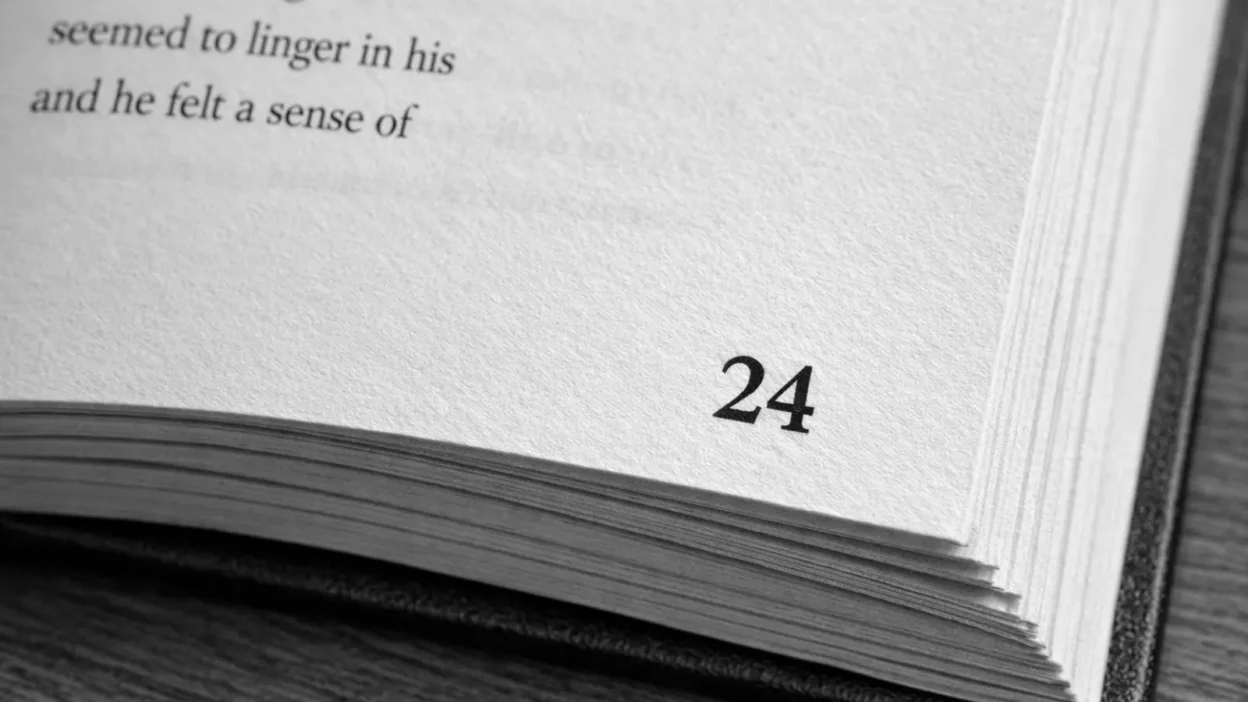
People often pause when writing a page reference. Should it be “Page 24,” “page 24,” or even “page/24”? The confusion usually comes from capitalization rules and informal shorthand habits.
You might see these forms in essays, emails, blog posts, or quick notes. Some writers capitalize “Page,” while others don’t. Some use a slash instead of a space.
Small details like this affect tone and clarity. In academic or workplace writing, formatting choices matter. This guide explains what’s correct, what’s informal, and what works best in American English.
Quick Answer
Use “page 24” in most sentences. Keep “page” lowercase unless it begins a sentence or is part of a formal heading.
Avoid “page/24” in formal writing. It looks like shorthand and is not standard in academic or professional contexts.
Key Differences at a Glance
| Feature | Page 24 | page/24 |
| Capitalization | Capitalized; usually only at sentence start | Lowercase; informal |
| Space vs Slash | Standard space | Uses slash |
| Formal Writing | Acceptable if capitalized correctly | Not recommended |
| Tone | Neutral, standard | Casual, shorthand-like |
Origin and Why Two Forms Exist
The word “page” is a common noun. Common nouns are not capitalized mid-sentence unless they are part of a title. That’s why “page 24” is usually correct in regular writing.
The capitalized “Page 24” appears when it starts a sentence or in headings. For example: “See Page 24 for details.” Here, capitalization follows standard sentence rules.
The “page/24” version likely comes from quick note-taking or digital shorthand. Writers sometimes use slashes to save space. However, this format is not recognized in formal style guides.
British vs American English
There is no real US vs UK difference here. Both follow the same capitalization logic.
In both varieties, “page” remains lowercase in normal sentences. The slash form is informal in either region.
Which One Should You Use?
In casual writing, use “page 24.” It looks clean and natural.
In academic work, follow your style guide. Most require lowercase “page” unless it begins a sentence. Citations may shorten it to “p.” instead.
In professional emails or reports, write “page 24.” Avoid the slash format. It may look rushed or unclear.
If you want a safer formal alternative, write:
• “See page 24 of the report.”
• “Refer to p. 24 for more information.”
Common Mistakes (and Quick Fixes)
• Mistake: Writing “page/24” in a research paper.
Fix: Use “page 24” or the required citation format.
• Mistake: Capitalizing “Page” mid-sentence.
Fix: Keep it lowercase unless it starts the sentence.
• Mistake: Using a slash in a formal report.
Fix: Replace the slash with a space.
• Mistake: Mixing formats in one document.
Fix: Choose one standard style and stay consistent.
• Mistake: Assuming “page” is a proper noun.
Fix: Treat it as a common noun.
• Mistake: Writing “Page/24” for emphasis.
Fix: Use bold or italics instead of unusual punctuation.
Everyday Examples (Real Contexts)
Informal text:
“Check page 24. That’s where the answer is.”
Social media post:
“The recipe on page 24 is my favorite!”
Parenting context:
“Let’s read page 24 together before bed.”
Workplace email:
“Please review page 24 of the contract.”
More professional rewrite:
“Kindly review page 24 of the contract for the revised terms.”
Usage/Trends (Qualitative)
General usage patterns show “page 24” is far more common than “page/24.” The space format appears in books, articles, and academic writing.
The slash version appears mostly in notes, quick references, or internal drafts. It is rarely used in published materials.
Comparison
| Context | Best Choice | Why |
| Academic essay | page 24 | Matches style guide norms |
| Research citation | p. 24 | Standard citation format |
| Workplace email | page 24 | Clear and professional |
| Casual note | page 24 | Natural and readable |
| Text message | page 24 | Simple and understood |
| Formal heading | Page 24 | Capitalized at start |
FAQs
Should “page” be capitalized in a sentence?
No, not usually. Keep it lowercase unless it begins the sentence.
Is “page/24” grammatically correct?
It is understandable but not standard. Avoid it in formal writing.
Is “Page 24” ever correct?
Yes. Capitalize it when it starts a sentence or appears in a heading.
How should page numbers appear in citations?
Most styles use “p.” for one page and “pp.” for multiple pages. Always follow your required style guide.
Is there a British rule that differs?
No. Both American and British English treat “page” the same way.
Mini Quiz
- Which is better in a report: page/24 or page 24?
- Should “page” be capitalized mid-sentence?
- Is “Page 24” correct at the start of a sentence?
Answer Key:
- page 24
- No
- Yes
Conclusion
When deciding between “Page 24” and “page/24,” context matters. Standard writing favors “page 24.”
Use capitalization only when grammar requires it. Avoid slashes in formal work.
Clear formatting builds trust with your reader. When in doubt, choose the simpler, standard form.