
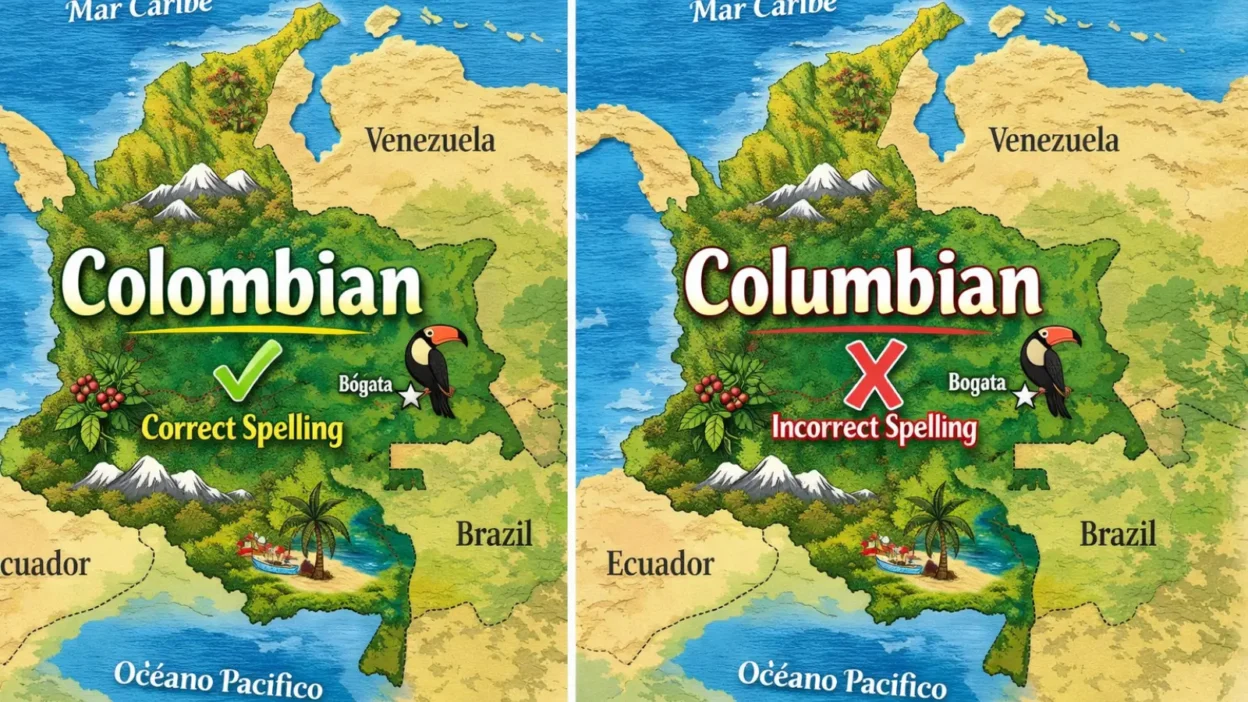
Most people wonder about “Colombian vs Columbian” because they sound alike.
One is the recognized term for people, things, and culture from the South American country, and the other is quite different.
Spelling matters in English, especially in formal writing, travel contexts, and identity references.
This guide explains which is correct, why the confusion exists, and how to use each word in everyday American English.
You’ll find quick answers, tone and context guidance, everyday examples, and a simple comparison chart to make your writing clearer and more accurate.
Quick Answer
“Colombian” (with an O) is the correct spelling for someone or something from Colombia, the country. “Columbian” (with a U) is a different adjective that refers to things linked to Columbia or Christopher Columbus, not to Colombian nationality or culture.
More Examples of Colombian and Columbian in Sentences
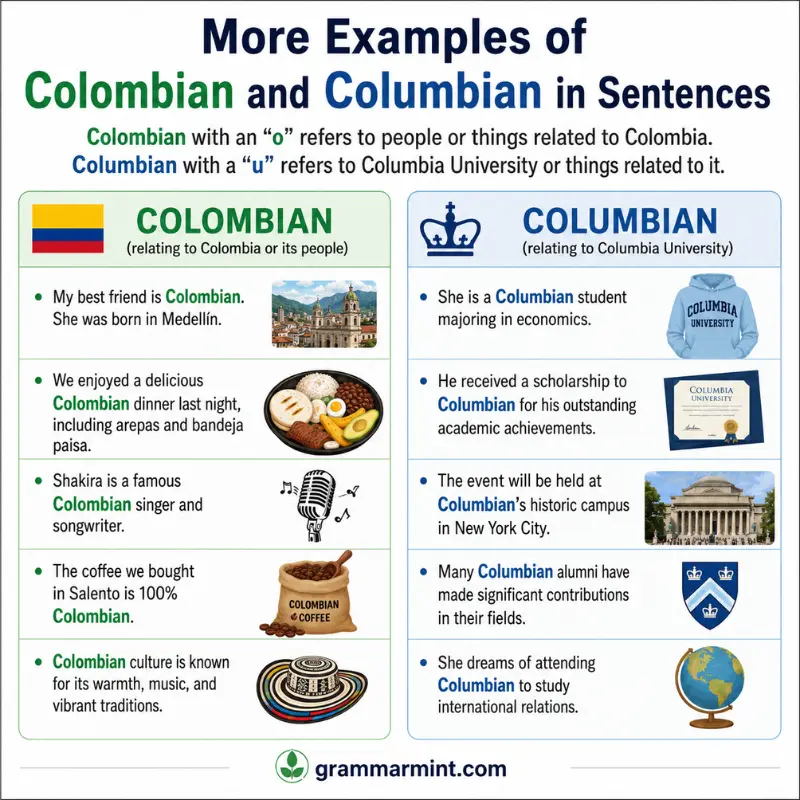
Seeing both words in context can make the difference easier to remember.
Colombian
• My favorite café serves Colombian coffee.
• She grew up in a Colombian family.
• The documentary explores Colombian history.
• They listened to Colombian music during the festival.
• The company recently entered the Colombian market.
• He is studying Colombian literature at university.
• We tried several traditional Colombian dishes.
• A Colombian artist created the painting.
Columbian
• Students learned about the Columbian Exchange in history class.
• The museum displayed several pieces of pre-Columbian art.
• The course covers pre-Columbian civilizations of the Americas.
• Researchers studied the effects of the Columbian Exchange.
These examples show an important pattern.
If the sentence refers directly to the country of Colombia, choose Colombian.
If it uses an established historical expression connected with Columbus or Columbia, Columbian may be correct.
Key Differences at a Glance
• Colombian — refers to the country of Colombia, its people, culture, products, and nationality.
• Columbian — relates to Columbia (names of places/institutions) or historical references linked to Columbus, not nationality.
Colombian or Columbian Coffee: Which Is Correct?
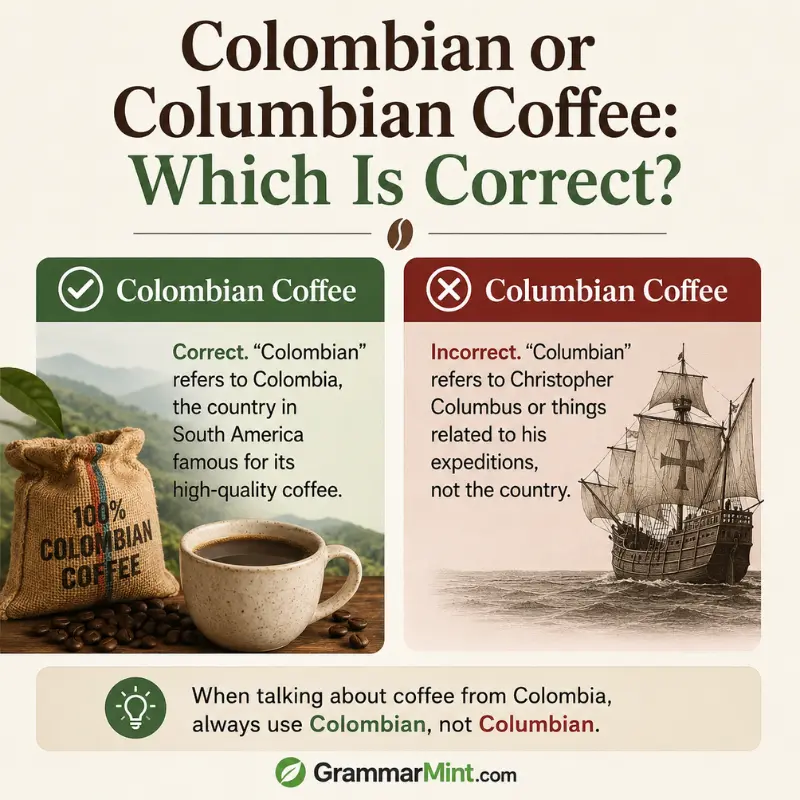
The correct phrase is Colombian coffee.
Coffee grown or produced in Colombia is described using the adjective based on the country’s name:
Colombia → Colombian → Colombian coffee
Correct examples:
• I ordered a cup of Colombian coffee.
• This shop sells Colombian coffee beans.
• She prefers Colombian coffee in the morning.
• We bought Colombian coffee during our trip.
Incorrect:
• Columbian coffee
The mistake usually happens because writers remember seeing the word Columbia elsewhere and accidentally replace the “o” with a “u.”
The same rule applies to other foods and products from Colombia.
Correct:
• Colombian food
• Colombian cuisine
• Colombian chocolate
• Colombian clothing
• Colombian exports
If the product comes from Colombia, the adjective should normally be Colombian.
Where Each Word Comes From

The word Colombia is the official name of the South American country, derived from the name of the explorer Christopher Columbus, adapted through Spanish conventions. Colombian comes directly from that country name and is the standard demonym and adjective for things belonging to Colombia.
On the other hand, Columbian comes from Columbia, a separate word historically used in English as a poetic or geographical name for parts of North America or institutions (like Columbia University). Over time, Columbian developed its own adjective form in that context.
British vs American English
There is no difference between American and British English on this point. Both language variants use Colombian to describe people and things from Colombia. Columbian is a distinct word with different referents and isn’t used for nationality in either variant.
Which One to Use When
Use “Colombian” when referring to:
• People from Colombia
• Colombian culture, food, music, or arts
• Colombian products (like coffee or textiles)
Use “Columbian” when referring only to:
• Places or institutions named Columbia
• Historical terms tied to Columbus (e.g., Columbian Exchange)
• Specific proper names that officially use that spelling
In formal or academic writing about nationality and culture, Colombian is appropriate. In other contexts tied to proper nouns (place or institution names), use Columbian carefully to match the official spelling.
Does Colombian vs Columbian Matter in Formal Writing?
Yes. The difference may involve only one letter, but that letter changes the meaning.
In casual conversation, readers may understand what someone intended even if the wrong spelling appears. In formal writing, however, using the correct form is more important.
For example, consider:
The company works with Colombian suppliers.
This clearly means suppliers from Colombia.
Now compare:
The company works with Columbian suppliers.
The second sentence may confuse the reader because Columbian does not normally mean “from Colombia.”
The distinction is particularly important in:
• Academic essays
• News articles
• Business reports
• Travel guides
• Government documents
• School assignments
• Professional emails
• Biographies
• Cultural discussions
Correct spelling also shows greater care when discussing someone’s nationality or background.
Before submitting formal writing, check whether the reference is to Colombia or to a separate Columbia/Columbus-related term.
Common Mistakes and Simple Fixes
• Mistake: Writing “Columbian coffee” when referring to coffee from Colombia.
Fix: Use Colombian coffee.
• Mistake: Calling someone “Columbian” when they are from Colombia.
Fix: Change to Colombian person/citizen.
• Mistake: Assuming “Columbian” is an alternative spelling for nationality.
Fix: Remember nationality always uses Colombian.
• Mistake: Using “Colombian” incorrectly for places named Columbia.
Fix: Use Columbian for those proper nouns (e.g., Columbian University alumni).
When “Columbian” Is Actually Correct
Although Columbian should not be used for someone or something from Colombia, it is not always a spelling mistake.
The word appears correctly in several historical and geographical contexts.
One of the most familiar examples is:
The Columbian Exchange
The term refers to the widespread movement of plants, animals, people, diseases, foods, and ideas between the Americas and other parts of the world following European contact.
Another common term is:
pre-Columbian
This expression is often used when discussing societies, civilizations, art, or history in the Americas before the period associated with Christopher Columbus and sustained European contact.
Examples include:
• pre-Columbian civilizations
• pre-Columbian art
• pre-Columbian history
• pre-Columbian cultures
You may also encounter Columbian in historical names, organizations, publications, or proper titles that officially use that spelling.
The key point is that Columbian has its own legitimate uses. It simply should not replace Colombian when you mean the country Colombia.
Everyday Examples
Texting/Friend Message:
• I just booked a tour in Bogotá to try Colombian coffee.
• She said she visited Columbia, South Carolina last summer.
Social Media:
• Loving my Colombian playlist today!
• Just toured Columbia University — beautiful campus!
Workplace/Email:
• The report highlights Colombian market trends for Q2.
• The Columbian delegation to the technology summit arrives Monday.
Professional Rewrite:
• Instead of “We met a Columbian team,” write: “We met the Colombian team from Bogotá.”
Colombian in Nationality and Cultural References
When writing about nationality, cultural identity, heritage, or traditions connected with Colombia, Colombian is the correct form.
For nationality:
• She is Colombian.
• He is a Colombian citizen.
• My Colombian friend lives in New York.
• Several Colombian athletes competed in the event.
For culture:
• Colombian culture includes many regional traditions.
• She enjoys listening to Colombian music.
• The restaurant specializes in Colombian cuisine.
• We attended a Colombian cultural festival.
For products:
• Colombian coffee is sold around the world.
• The store imports Colombian products.
• He bought Colombian chocolate while traveling.
For geography or business:
• The company is entering the Colombian market.
• They work with Colombian businesses.
• The report discusses several Colombian cities.
Using Columbian in these sentences would create the wrong meaning.
This distinction becomes especially important when referring to a person’s identity. Nationality terms should be written accurately, particularly in formal documents, news articles, schoolwork, travel writing, and professional communication.
Whenever the reference points directly to Colombia, use Colombian.
Context Comparison: Best Choice
| Context | Best Choice | Why |
| Nationality or people from Colombia | Colombian | It comes directly from the country name. |
| Culture, food, products of Colombia | Colombian | Refers to things from that nation. |
| Places or names with “Columbia” | Columbian | Matches official place/institution spelling. |
| Historical terms tied to Columbus | Columbian | Relates to Columbus’s influence. |
| Formal academic or professional writing about nationality | Colombian | Standard, widely accepted form. |
FAQs
Is “Columbian” ever correct?
Yes, but only when it refers to Columbia — a name used for places, institutions, or historical references tied to Christopher Columbus. It’s not correct for nationality.
What nationality is someone from Colombia?
They are Colombian.
Can I say “Columbian food”?
Not for food from Colombia. Say Colombian food to refer to cuisine from the South American country.
Are there any exceptions?
Only in names/brands that officially use “Columbian” as part of their proper name. Otherwise, avoid it.
Does pronunciation differ?
Yes, they differ slightly, but spelling is what guides correct use, especially in writing.
Mini Quiz
- Someone from Bogotá is ___?
Answer: Colombian - A student at Columbia University is ___?
Answer: Columbian (because it matches the proper name) - Coffee from the South American nation is ___?
Answer: Colombian coffee
Conclusion
In American English today, Colombian is the correct spelling when you mean someone or something from Colombia.
Columbian has its own meaning tied to Columbia or historical references to Columbus, but is not used for nationality or culture from Colombia.
Knowing this difference improves clarity — especially in writing, travel plans, and professional communication.